
Here is my position, and I am not hedging: the most exciting structural shift in New York theater right now is not a revival announcement. It is not a star vehicle or a marquee rehang. It is the infrastructure — the people who have been quietly building the pipeline for the next generation of designers and casting minds, and those pipelines are now producing real work, on real stages, and I am HERE for it with my full chest.
Let me set the scene.
Two weeks ago I was at The Whitmore Studio Theatre watching the Pipeline Design Residency’s end-of-summer showcase, and I will be honest with you: I went in expecting to be politely supportive. I did not expect to walk out genuinely changed by a lighting plot. But that is what happened, and I am going to tell you exactly why.
The residency — now in its third year and this summer accepting a record thirty-one participants from underrepresented communities across the country — culminated in six short works produced specifically to give the residents full creative control. No mentors hovering over cue sheets, no approved safety nets, no senior designer supervising from the back of the house. Their work. Their decisions. Their room.
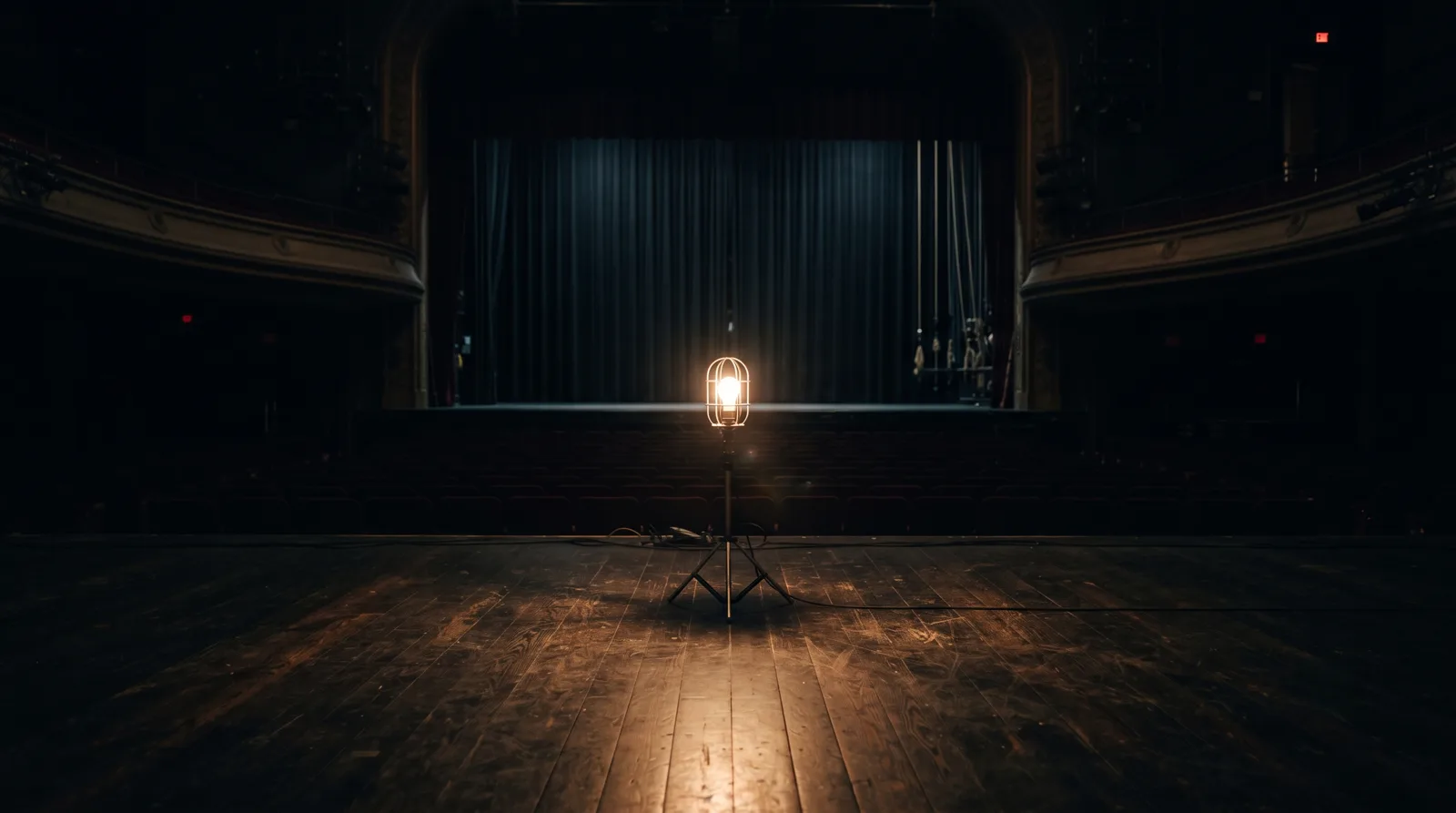
The piece that stopped me cold was a twenty-minute chamber work called The Ache of Open Water — a fictional memory play about a grandmother and granddaughter navigating grief through overlapping kitchen conversations. Nothing about that description should have floored me. But resident lighting designer Zara Mensah did something I have not seen a lighting design do in years: she built the entire visual architecture around what the ceiling was doing, not the stage floor. Every grief sequence was lit from a single high-angle downstage fixture that made the actors’ faces disappear into shadow while isolating the hands, the table, the small domestic objects. The effect was not dim. It was precise. It made absence visible. I have been training my eye on productions with six-figure lighting rigs and this twenty-five-year-old just taught me something about what light can actually do when somebody thinks about it instead of just spending money on it.
That is what a pipeline looks like when it works.
Elsewhere in the industry this week: casting director Yolanda Ferris — who has been the architect behind some of the most interesting ensemble assembling in Off-Broadway over the last eight years — announced the launch of her independent shop, Fulcrum Casting, effective September 1st. I have watched Yolanda work. I have seen what she does when she has latitude. The moment she put Deja Holloway in the room for Crowns of Water three seasons ago — a show most people thought needed a more traditional ingénue type — that was a bet that changed the entire tone of the production. Deja is DEVASTATING in ways that the production would not have survived without, and Yolanda was the one who said: her. Full stop. An independent shop means more of those bets, faster, with nobody above her in a bureaucratic chain telling her to play it safe. The Deja Holloways of the next decade are going to get made by this agency, and I want to be on record saying I saw it coming.
Here is where I have to be honest with you. The Pipeline showcase had one piece that was not ready — a scenic design built around hand-moved modular panels, and the idea was genuinely smart, but the execution relied on performers doing the moving, and those performers were clearly undertrained on the logistics. Every scene transition ran about forty-five seconds over, and in a twenty-two-minute piece that is not a small problem. I am not saying Kira Park is not talented. I am saying a residency director should have caught that in tech. Let the designers design. Give them stage managers who can see what they cannot see from inside their own vision.
But one panel problem does not touch what Zara Mensah did in that room. That is the work. That is the entire point of a pipeline — to produce one moment in a small theater that makes you say: there, that one, we need her on a real stage, and we need her there now.
The industry is building something. The machine is getting fed by people who believe the next great spectacle designer is twenty-five years old and has not had her first big room yet. Yolanda Ferris is betting on it. The Pipeline Residency is betting on it.
Get in that room. Follow Fulcrum Casting. Find out what Zara Mensah touches next and be in the audience when it opens.