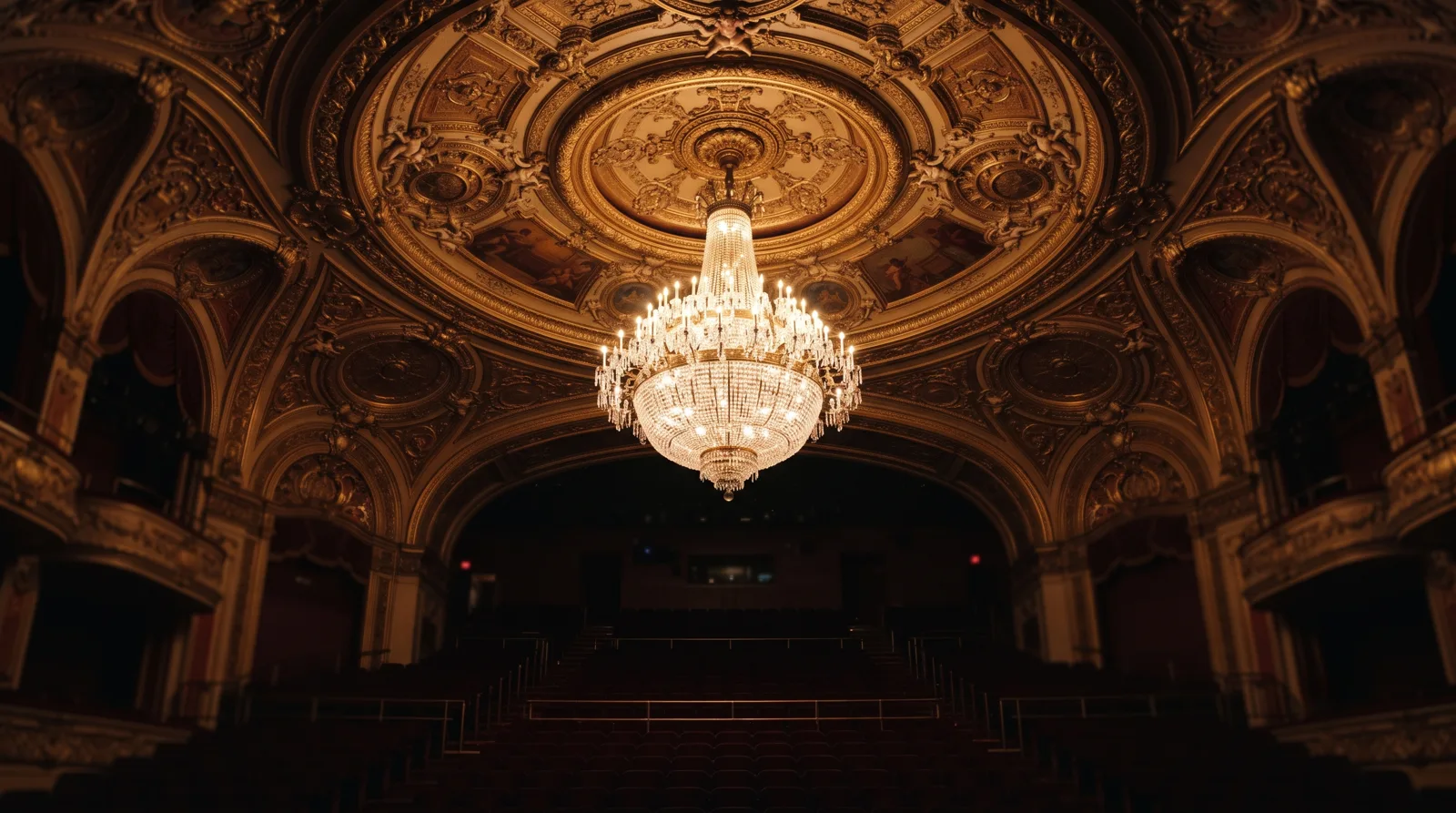

The Olive Street Theatre announced yesterday that Rafaela Nkosi’s The Condition will extend through September 20th, and I mean this without qualification: the play has earned it.
Nkosi’s drama opened six weeks ago to modest notices and a house that was notably not full on the night I attended. That has since changed, and the mechanism of that change matters. Word traveled the way it travels for work that does something nobody knew they were waiting for — person to person, with the urgency that attaches to a thing you feel obligated to testify about.
What The Condition is doing formally is not difficult to describe, but it is difficult to pull off. Each of the play’s nine scenes is staged as a legal deposition: the same two characters, the same conference table, the same institutional lighting. But each scene recontextualizes every exchange that came before it. The structure is cumulative and corrosive simultaneously — the more you know, the less you can trust what you thought you understood. Nkosi has built a grammar out of repetition-with-shift, which is a formal device with deep roots in Caryl Churchill’s structural violence in Top Girls and Cloud Nine. The difference is that Churchill’s time-fracturing is overtly political; Nkosi’s is intimate. The deposition is the most institutional form of speech we have — sworn, sequenced, compelled toward fact — and she has found a way to make it feel like the most exposing language anyone can speak.
Tomás Vega and Adele Corman are extraordinary, which I say not to praise their performances in isolation but because what they’re doing is a technical feat of sustained recontextualization. Every time we return to the table, both actors must carry the full accumulated weight of prior scenes while performing as though arriving for the first time. Corman in particular has solved something the script doesn’t fully account for: the moment when her character’s certainty curdles into something more complicated than doubt. It happens in a silence between scenes. It is the best piece of acting I’ve seen at Olive Street in three seasons.
Where the play earns my honest concern is in its final deposition. Nkosi has built an architecture of accumulating ambiguity for eight scenes, and in the ninth she pivots toward something that wants to be a resolution. I understand the impulse — you cannot hold a structure like this without giving the audience somewhere to land — but the resolution she offers is more emotionally satisfying than formally honest. The play’s own grammar argues against certainty. The ending disagrees. That is a real contradiction, and I think it costs the production something. Jin Subramaniam’s direction is intelligent enough that the seam registers rather than being lacquered over — you can feel the play pressing against the closing — but it is still a seam.
None of that changes the call: go before September 20th, specifically because Nkosi has found a structural form — the deposition as epistemological undoing — that I haven’t seen anyone use with this kind of rigor in a long time. When the form is this precise, even an imperfect ending is still evidence of a playwright who knows exactly what a play is for.
The Condition runs through September 20th at the Olive Street Theatre. Running time is 95 minutes with no intermission.