
The revival of Calle Oscura at the Calderon Theatre is the production this show has been waiting thirty years to get. Go. That’s the review. Everything else is details.
But you want details, so here they are.
Calle Oscura debuted in 1994 — ran 47 performances, got a cult cast recording, became the musical that people who really knew musicals cited in arguments about what Broadway got wrong in the nineties. Book by Tomás Reina, score by Elena Vargas, a story about the Solís family — a Nuyorican household fracturing around a daughter who left and the patriarch who never forgave her. The original production, by most accounts, was miscast and underdesigned. The material survived it. Now director Orion Blake has given it a production that matches what the score always promised, and Valentina Cruz has given the lead role, Milagros Solís, the performance it deserves.
Cruz is the kind of singer who makes you forget she’s singing. That’s not a backhanded compliment — it is the hardest thing a musical theater performer can do, and she does it from the moment she enters in “La Vuelta,” her first number, carrying a suitcase and approximately thirty years of unspoken damage. Her technique is pristine — the voice hits everything cleanly — but the technique disappears into the character, and what you watch instead is a woman figuring out whether she still belongs anywhere. The audience in the Calderon went quiet in a way that audiences don’t always go quiet. Not polite-attention quiet. Stopped-breathing quiet. That kind of quiet.
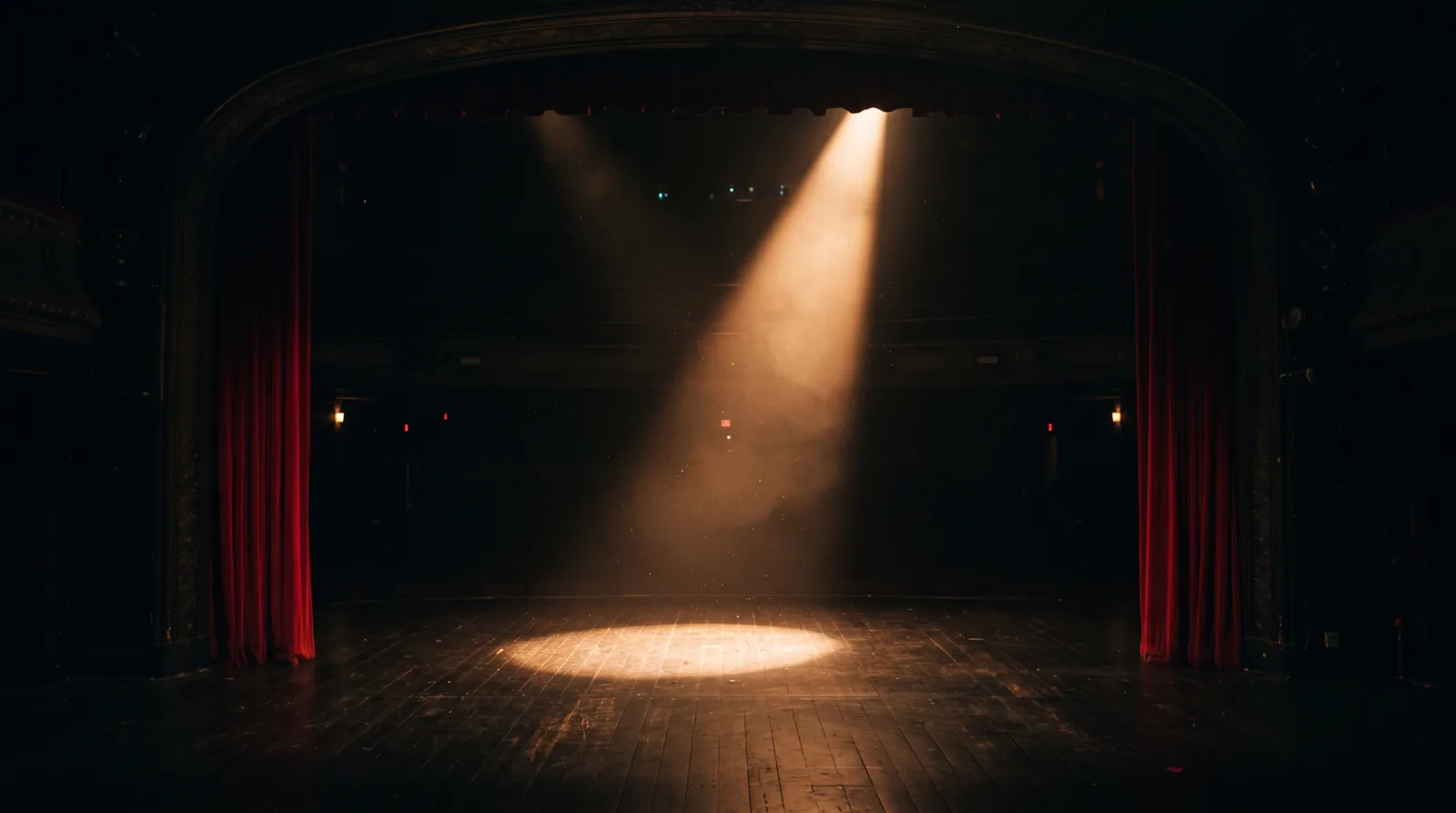
Blake’s direction is clear-eyed and smart about the material’s bones. He’s set the show inside a single apartment — no rotating platforms, no flyware, no spectacle for spectacle’s sake. Scenic designer Marta Fuentes has built a Bronx kitchen that looks like it was assembled by people who actually spent time in Bronx kitchens: the magnets on the refrigerator, the plastic tablecloth, the crucifix at an angle above the doorframe. When the lighting shifts in Act Two — the single overhead work light that designer Kwame Asante uses for the confrontation scene between Milagros and her father — it strips everything down to faces, and that’s when you feel the full weight of what the score was always trying to do.
Marcus Held plays Rodrigo Solís, the father, and I want to say this carefully: he is doing something difficult, and he mostly gets it right. The role is written as a man whose love is real and whose damage is also real, and those two things have to coexist in every scene without the production tipping into either condemnation or excuse. Held tips, occasionally, toward a stiffness that reads like he’s protecting himself from the character. In the Act Two aria “Todavía,” he opens up completely — and you understand, in that moment, what the whole show has been building toward. Ay, bendito, that aria. Vargas wrote something transcendent, and when Held finally lets it breathe, the room catches.
So why four stars and not five? Because the supporting cast, mija, is uneven. Dolores Vega, playing the mother Consuelo, is a genuine stage presence and brings warmth to every scene she’s in — but she’s been directed to underplay in a register that reads as distant rather than restrained, and the family dynamic loses texture because of it. There are also two ensemble numbers in Act One — “El Barrio Waits” and “Sunday Bells” — where the choreography by Femi Okafor feels like it belongs to a different, showier production. They’re not bad numbers. They’re just not in the same conversation as the rest of the evening.
Those are real problems. They’re not fatal ones.
Look — you should be at the Calderon. You should be there because Calle Oscura is a score that has been earning its revival for thirty years, and this production finally makes the case. You should be there because Valentina Cruz is giving a performance that the people who see it will be talking about long after this closes. And you should be there because theater that trusts a small story to carry an entire evening — no chandeliers, no pyro, just four walls and a family coming apart — is rarer than it has any right to be.
Don’t wait for the cast recording. Estamos aquí.