
The verdict first, mija, because that’s how I do business: “Bright Static” has one genuine miracle in it, and it is not enough to save the evening. That miracle is Dominique Alvear, who plays the youngest Larkspur sibling and sings like the technique has evaporated entirely, leaving just the want behind it. Everything around her is competent. Competent is not what you buy a ticket for.
Here’s the premise, invented whole for this page: four siblings from Elyria, Ohio, get famous singing matching harmonies in sequined jumpsuits, and the show tracks them from church basement to arena to the inevitable, grinding apart. You’ve seen this shape before. Fine. Shape isn’t the problem. The problem is that director Teodoro Vasquez has built a production that mistakes volume for stakes at every single turn where the material actually needed quiet. The Act One finale, “Static and Gold,” is staged as a lighting rig assault, strobes cutting across eleven ensemble members in gold lamé, and the number is loud enough that you feel it in your sternum. But nobody in that number is listening to anybody else sing. They’re just performing proximity to each other. Bendito, it’s exhausting.
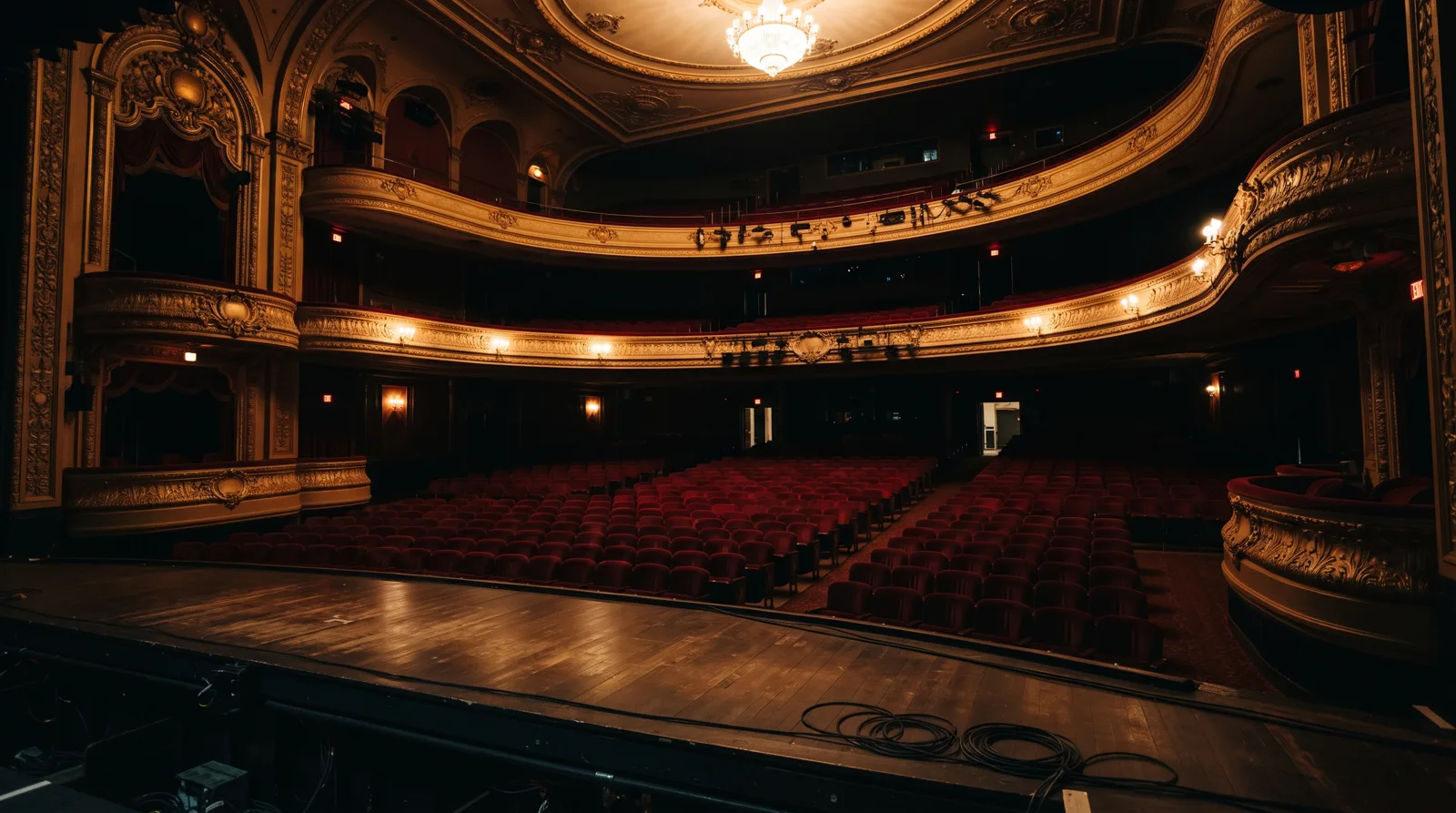
The physical production wants credit, and I’ll give it some. The turntable set by Harriet Oyelaran does real work: a kitchen becomes a tour bus becomes a stadium stage in one continuous rotation, no blackout needed, and the first time it happens the audience actually gasped, a genuine intake of breath you could hear over the overture. That’s a production team that understands transitions are storytelling, not just scenery logistics. I wanted the rest of the show to trust its own machinery that much. It doesn’t.
What’s missing is the sibling at the center of it, the oldest brother, played by Weston Pryce as a collection of furrowed brows and raised voices. Pryce has a decent instrument. But he plays every scene at the exact same pitch of controlled anguish, whether he’s getting signed to a label or burying his father, and by the second act you stop trusting that he means any of it specifically. Contrast that with Alvear, who gets maybe four solo lines in the entire first act and uses every single one of them like it’s the last thing she’ll ever get to say onstage. When she finally gets her Act Two ballad, “Smaller Rooms,” the orchestra under Reyna Castellanos drops down to just piano and upright bass, and the whole house went still. Actually still. Not fidgeting-with-programs still. I checked. People around me had stopped breathing the normal amount.
So why doesn’t the whole evening land? Because the book, credited to Marguerite Holloway, keeps explaining the family’s feelings in dialogue immediately after the songs have already shown us those feelings better. It’s belt-and-suspenders storytelling, and it insults the songs, which deserved a book willing to trust them.
Pero, look, you should see this for Alvear alone, you should see it because “Smaller Rooms” is the kind of eleven o’clock number people will be describing to each other at intermission of other shows for the next year, trust me on that. But go in knowing the rest of the family drama around her is wallpaper, handsomely printed wallpaper, hung by people who know exactly what they’re doing with a turntable and a lighting rig. A great physical production and one true performance aren’t nothing. They’re just not everything, and “Bright Static” needed everything. Estamos aquí, but we deserved more than static.