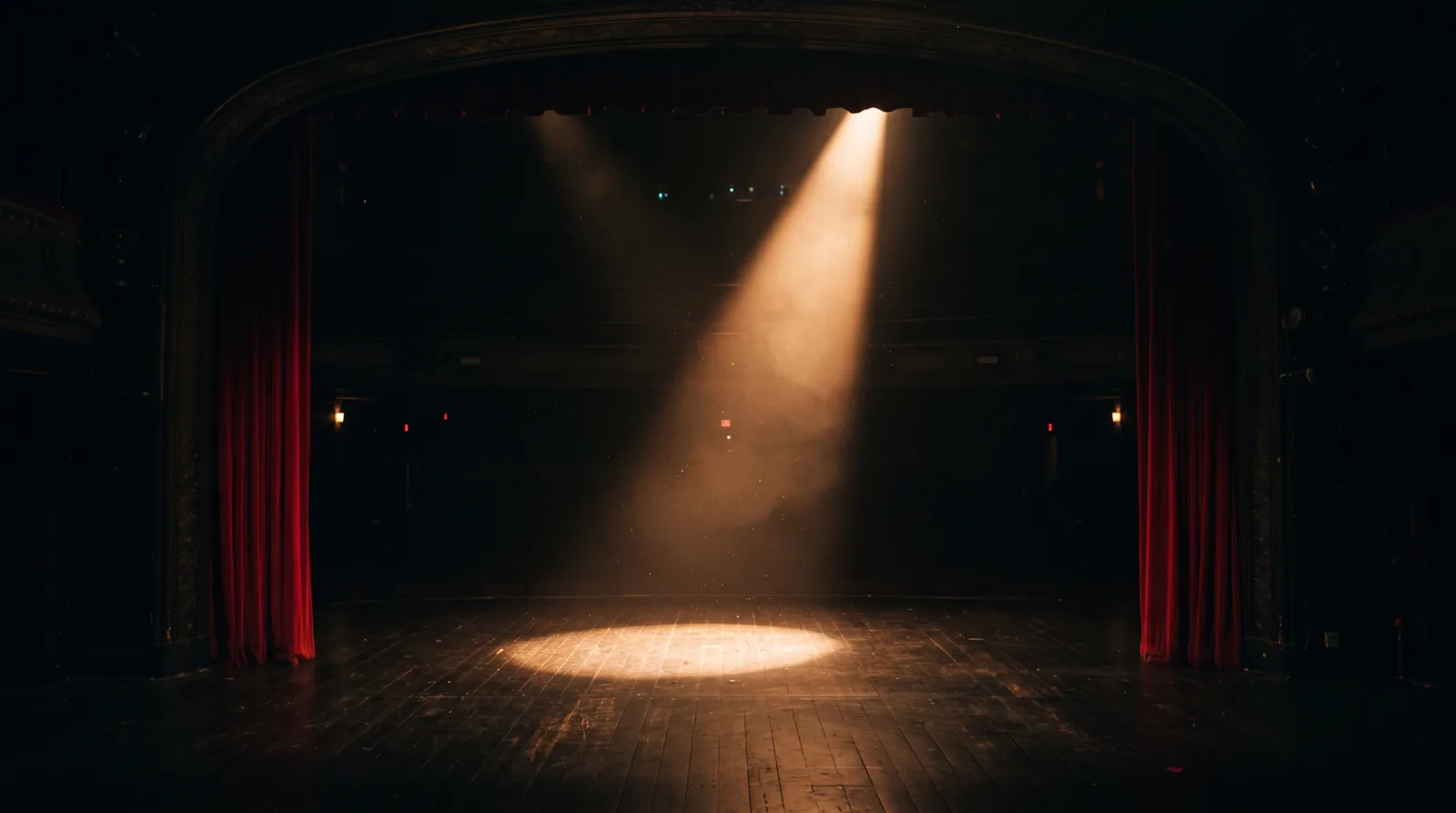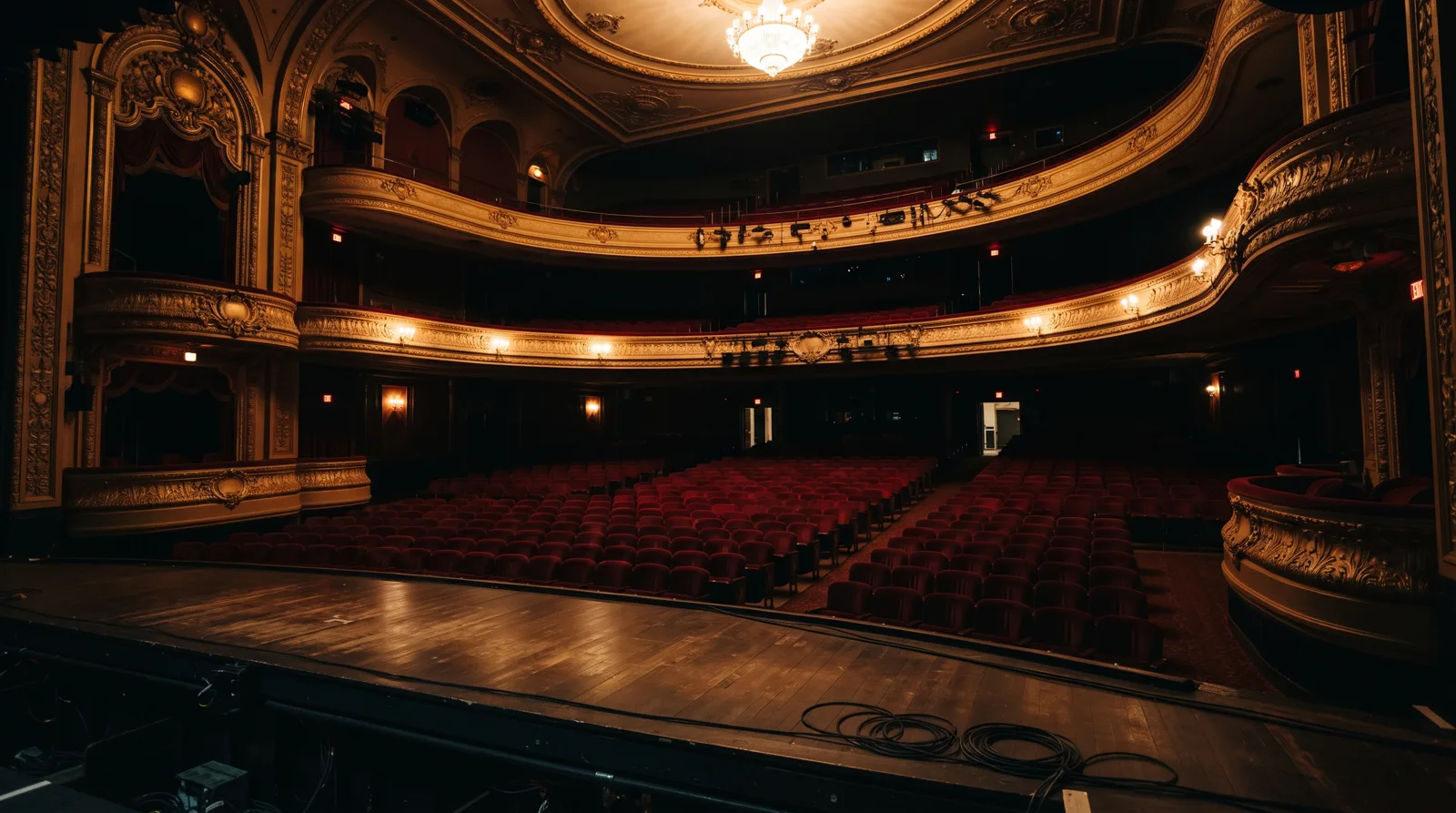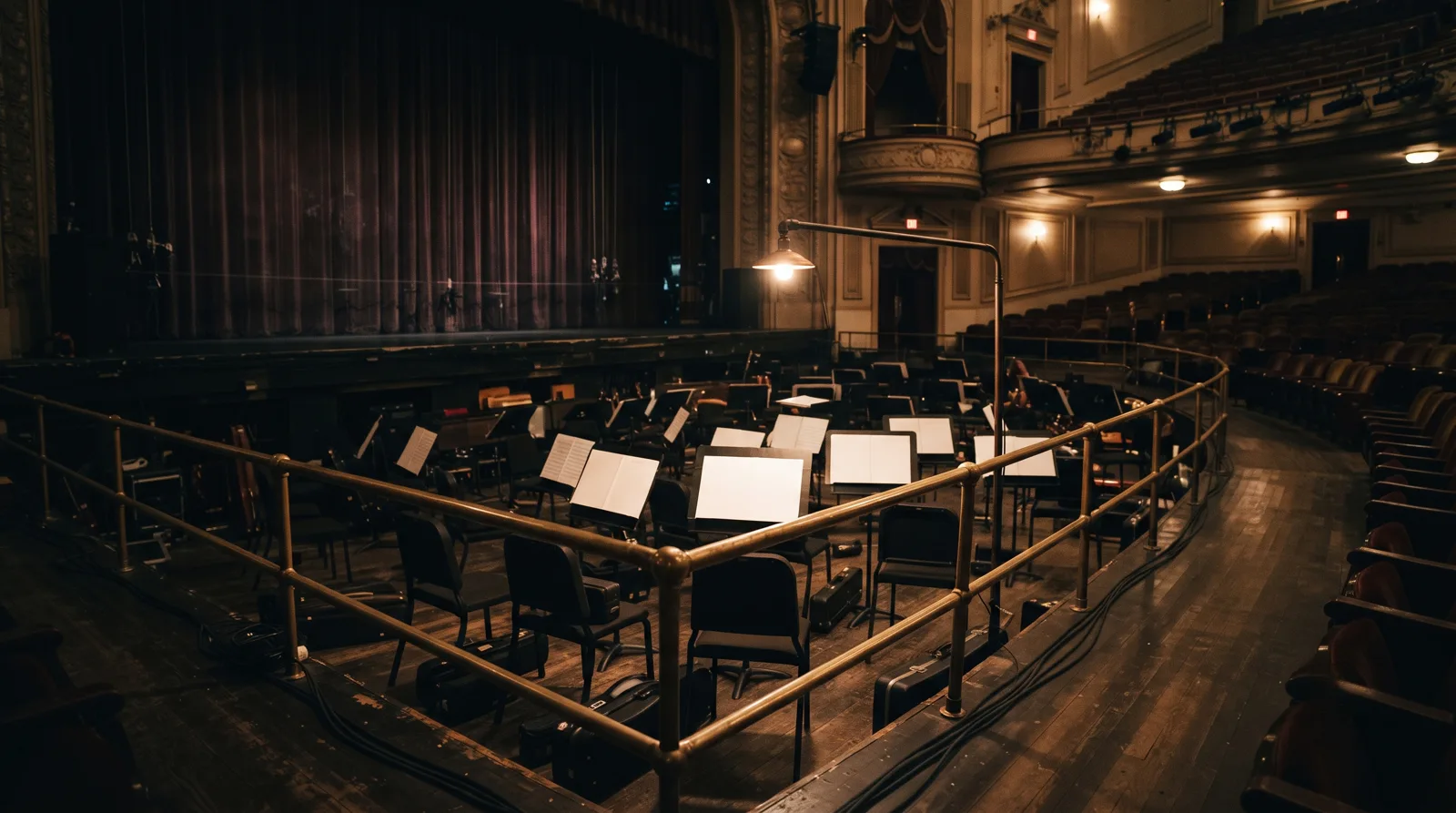

Cascade is the real thing, and Celestine Park is going to be a star.
The show opened at the Harriwell Theatre Friday night to an audience that arrived curious and left shaken — shaken in the good way, the way you feel when theater does something to your chest that you weren’t prepared for. Director Tomás Reyes has built something beautiful around a score that shouldn’t work as well as it does, and he has found in Park a lead performance that carries the whole evening on its back without showing the strain.
The premise: Maya (Park) is a concert pianist, three weeks from her first major debut, who loses her hearing overnight. No cause. No cure. Just silence. What do you do when the thing that made you who you are simply disappears? Composer Marcus Vane, better known for his pop work, has written a score that answers that question with harmony rather than noise — which is not a thing most pop crossover composers actually manage. The opening number, “Before the Break,” is the kind of song where the technique disappears, where Park’s voice stops being a voice and becomes the character thinking out loud. The audience went perfectly still. I was watching the people in the seats around me because I couldn’t help it. Nobody breathed.
Where the show stumbles is in the second act’s framing device — a series of imagined concert performances, staged by Reyes with a bank of piano-wire rigging that descends from the flies and catches the grid lights like the inside of a cathedral. The effect is extraordinary. But book writer Delphine Okafor loses the thread somewhere in the second hour: the relationship between Maya and her former teacher Eli (played by Dov Aaronson with a precision that borders on clinical, which is exactly right for the character, though it costs him warmth when warmth is needed) gets compressed into two scenes that feel rushed when they should feel inevitable. Aaronson is a superb technician. I wanted the show to trust him with more. There is a confrontation in Scene Six where both performers are doing everything correctly, and the audience sits politely — politely, mija, which is the wrong word for that scene — because the script arrives at the moment instead of building to it.
And yet. The orchestra, under conductor Priya Nakamura, plays Vane’s score like they mean it personally. The Act One finale, “What Sound Is Left,” builds through overlapping orchestral lines until the whole theater seems to be vibrating. The woman behind me grabbed her companion’s arm and didn’t let go.
Park does something with the physical language of deafness that I wasn’t expecting from a musical. She carries silence in her body, not just on her face — it’s in how she stills, how she turns, how she stands in a room full of people who are shouting things she cannot hear. She won’t let you look away. She doesn’t do anything with her hands that doesn’t mean something. This is the kind of precision that separates a good musical performance from a great one. It is why this show works as well as it does, even when the book is working against her.
The second act has real work left to do. I believe that Okafor can do it — her instincts are excellent, her structure is sound, she just needs to find the connective tissue that makes those final forty minutes feel as earned as the first. What’s here is a good act looking for the version of itself that will make people call it great.
Look — you should go. You should go because Celestine Park is doing something at the Harriwell that you will not see again in quite this form, and you should see it before the reviews turn it into a phenomenon and the tickets become a month-long wait. Book the center orchestra if you can get it. Reyes has staged the final scene for the full width of that house and you want to feel the whole picture.
Cascade takes a real swing. I have never been able to stay cold about that. Estamos aquí.