
Okay, so: the future of Broadway showed up at the Moorfield Theater on Monday night, and if you weren’t in that room, I need you to understand what you missed, because I am still not recovered.
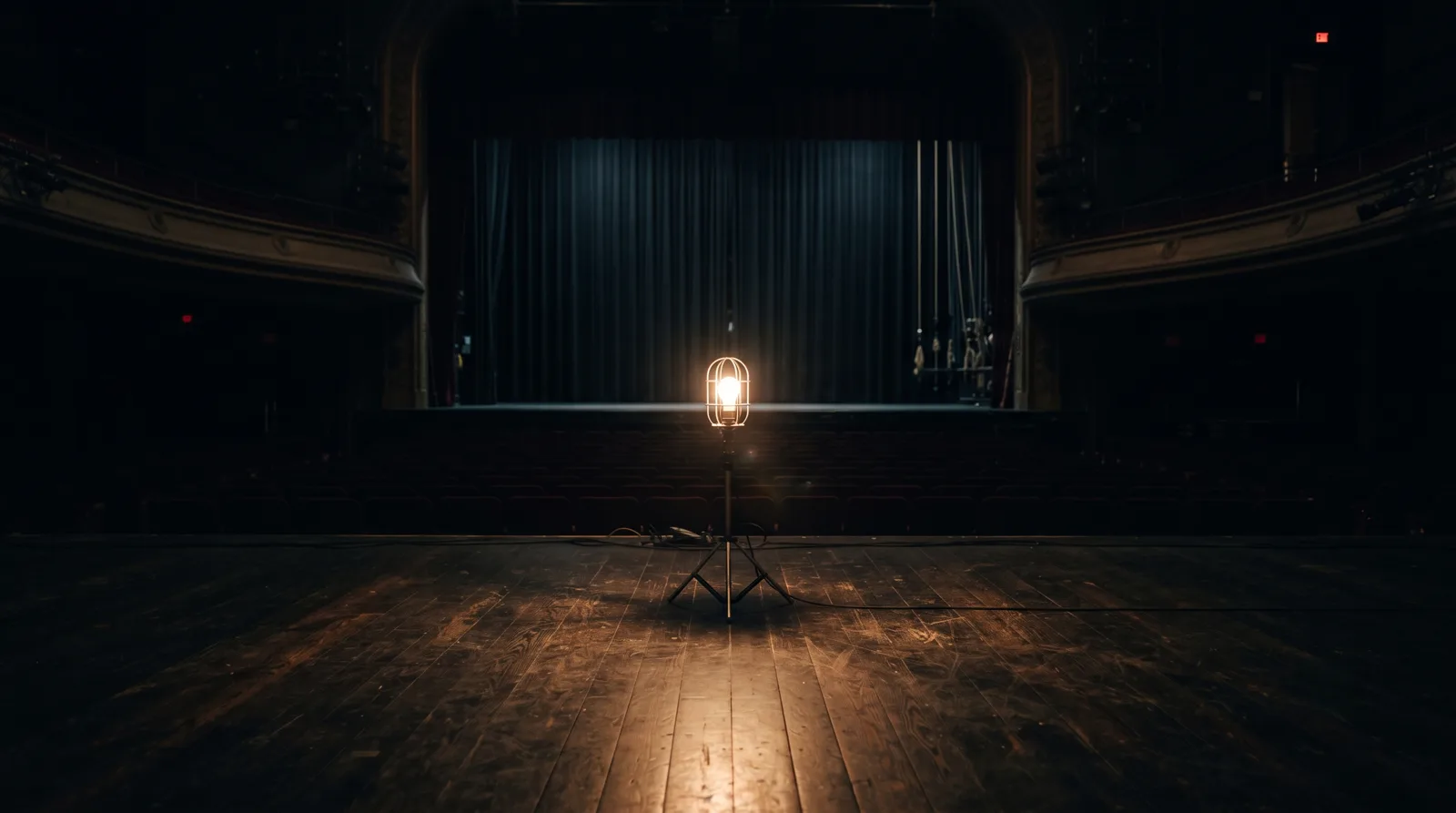
The Broadway Forward Fund’s third annual Circuit Showcase is supposed to be a benefit concert. That’s what it says on the program — “an evening celebrating emerging artists” — and yes, there were paddles raised and donors thanked and a very earnest video package about the fund’s mentorship pipeline. Fine. Important. I’m glad the money was raised. But what this night actually was, in the room, in the body, was a declaration. Twenty-three performers between the ages of nineteen and twenty-seven, hand-picked from open calls across six cities, sharing a stage that most of them have been dreaming about since before they were old enough to have a MetroCard. The Moorfield’s lighting rig was turned over to designer Paz Solano, who opened the night with a single white spot on a bare stage floor and then spent the next two hours proving exactly how much information light alone can carry. By the closing number, she was running forty-seven moving heads in a cascade that built from stage left to a full-grid wash in the time it takes to finish a breath. I clocked it. I am a former dancer and a nerd and I cannot help myself.
Host and evening curator Devontae Pillsbury — who you know from his three years on the West End and his solo concert record that I have had on repeat — set the tone immediately. He walked out to no fanfare, no intro track, just a spotlight and a microphone stand, and told the audience that the artists they were about to see were not tomorrow’s Broadway. They were today’s Broadway, held back only by opportunity. He meant it. The room felt it.
And then the company opened with a fifteen-person ensemble number choreographed by Sasha Ferreira that I will be thinking about for a long time. Ferreira gave them what looked, from the outside, like a big joyful commercial Broadway opening — call and response, counterpoint, full-company unison at the climax. But watch the footwork underneath the arms. The whole number was built in a canon structure where each wave of dancers entered four counts behind the previous one, so the formation was always mid-build, never static, never fully arrived. It meant the audience’s eye was constantly being pulled forward, chasing the next arrival point, which is a physical metaphor for exactly what the night was supposed to be about. I don’t know if every person in that room felt that consciously. I know they felt it. The GASP when the full company finally locked into unison for the first time — eight counts from the top of the finale — was one sound, from five hundred people, simultaneously.
The diva moment I will be processing for weeks: Talitha Wren, twenty-two years old, out of Louisville by way of a regional theater circuit that clearly did not prepare the rest of us for her. She performed a mid-show ballad from a new musical that does not yet have a production — just a reading, a songwriter, a hope. She sang the thing like it had already run a thousand performances. Her breath control on a sustained high G that she held through a fermata, then pulled back from into a spoken moment, and then returned to at full power — that choice alone, the decision to leave and come back, showed a maturity in performance craft that most working Broadway leads don’t reach until their second decade. TALITHA WREN. Write it somewhere. Put it in your phone right now.
Here’s the honest thing I have to say: the second-act pacing lost something in the middle. The programming decision to stack three back-to-back ballads right after intermission killed momentum in a way that no individual performance, however good, could fully recover from. The ensemble numbers bookending that stretch deserved a longer runway. Ferreira and Pillsbury clearly had the right instincts for the big structural moments; the transition logic needed another pass.
But the room at the end of the night — standing, loud, reaching toward people they’d never seen before and wanting those people to know they’d been seen — that was real. That is the promise of a showcase like this done right.
The Broadway Forward Fund’s next open call is in October. If you know an emerging artist in your life, send them the information. And if you are anywhere near New York when Talitha Wren books her first show, you get yourself in that theater.