
The verdict first, mija: go for Dez Okafor, stay for the band, and brace yourself for a second act that forgets it’s allowed to be messy.
Hummingbird Hill tells the life of Opal Jean Castille, a fictional composite of every rhinestone matriarch who ever climbed out of a holler and built an empire on her own voice. The show splits her across two actors: Trinity Suss plays Opal Jean from dirt-poor childhood through her first Nashville contract, and Dez Okafor takes over the moment the character turns forty and starts believing her own legend. That’s a tricky handoff to stage, and director Reva Okonkwo-Lindt pulls it off with one of the better transitions I’ve seen all year: Suss sings the final note of “Six Dollars and a Guitar String” into a blackout, and when the gold wash comes back up, Okafor is standing in the exact same spot, mid-breath, finishing the phrase like no time passed at all. The audience gasped. Not politely. A real intake of breath, the kind you can hear from the mezzanine.
Okafor is the reason to buy the ticket. She has that thing the great musical theater voices have, where the technique disappears and what’s left is just a woman telling you the truth. Watch her hands during “Paper Flowers,” the act one closer: she keeps them perfectly still through two verses of a song about being underestimated, and then on the bridge, when the pedal steel finally comes in under her, her fingers start trembling. Nobody told her to do that. That’s an actor who has lived inside this woman long enough to know where the cracks are.
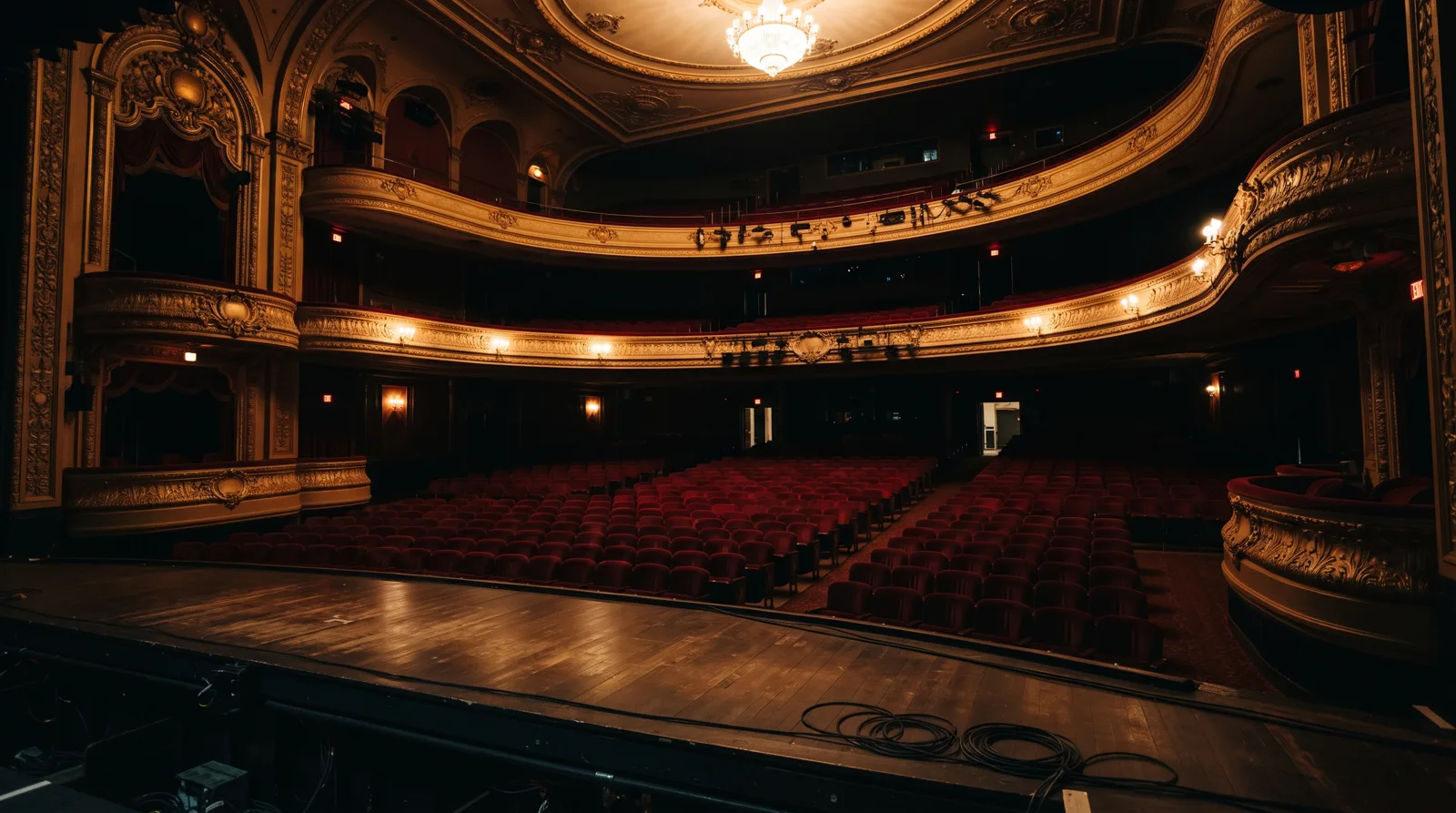
The physical production earns its keep too. Set designer Hollis Van Arden has built a honky-tonk that splits down the middle and rotates into a recording studio, into a stadium stage, into a hospital room, and the scene transitions happen almost entirely on dimmer cues rather than blackouts, so the show never loses its pulse. The ten-piece band, stationed on a riser upstage instead of buried in a pit, plays like they grew up on this material instead of sight-reading it. That pedal steel player deserves a bow of her own.
So why only three and a half stars? Because the book, by Simeon Castellaw, loses its nerve exactly when it should be sharpening its knife. The first act is unflinching about what this industry does to women who get famous too young. Pero the second act turns Opal Jean’s decades of exploitation, bad marriages, and one genuinely devastating late-career comeback into a clean, tidy highlight reel, scored like a victory lap when it should still sting. There’s a scene where her second husband is confronted about missing royalty checks, and the show plays it for a laugh line and a costume change instead of letting the air go cold. Ay, bendito. We earned that silence in act one. Act two just won’t sit in it.
Look, you should see this show. You should see it for Okafor, who is doing the kind of work that makes you forget you’re watching a performance instead of a confession, and for a band that treats the score like scripture instead of homework. Just don’t expect the back half to match the nerve of the front half. Go in knowing the book softens where the woman it’s about never did, and you’ll leave satisfied instead of frustrated. I’d rather sit with a flawed, ambitious portrait than a careful nothing any night of the week. Estamos aquí.