“The Cartographer’s Wife” is a great musical trapped inside an adequate one, and the adequate one runs for about ninety minutes before the great one shows up.
That’s my verdict, and I’m not burying it. The new musical at the Hargrove Theatre — book by Thea Holloway, music and lyrics by David Liang and Celeste Park, directed by Simone Archer — is the kind of show you’ll be glad you saw and slightly annoyed you had to work for. Eleanor Voss, a cartographer’s widow in 1890s New York, discovers that her late husband spent twenty years secretly mapping territories he never mentioned to her. The metaphor isn’t subtle. It isn’t supposed to be. What it’s supposed to be is emotionally devastating by curtain, and that it achieves — but not until it wastes an act getting there.
Let me tell you about Marisol Vega, because she is the reason you go. She plays Eleanor, and she is extraordinary in the specific, defensible way that word should be used. In the second-act number “What He Charted,” she stands center stage for eight full bars before she sings a single note. The Hargrove holds twelve hundred seats. On a Tuesday night, most of them were full. None of them were breathing. That is not something you manufacture. That is what happens when a performer has spent ninety minutes building trust with a room, and the room gives it back.
The trouble is Act One doesn’t let her build that trust. Holloway’s book takes three scenes to establish what one would do, and Archer stages the central discovery — Eleanor finding the hidden maps — as a kind of drawing-room amusement, light on its feet and almost playful, when it should crack the stage open. Jeremiah Cross, sharp as a pin throughout as Eleanor’s skeptical brother-in-law Thomas, is fighting material that hasn’t decided how seriously it takes itself. His Act One number “No Such Territory” is a good song in a confused staging: Cross builds two verses of close, careful character work in a tight downstage spot, and then the scene expands into a full company number that erases everything he just built. You feel the gear shift.
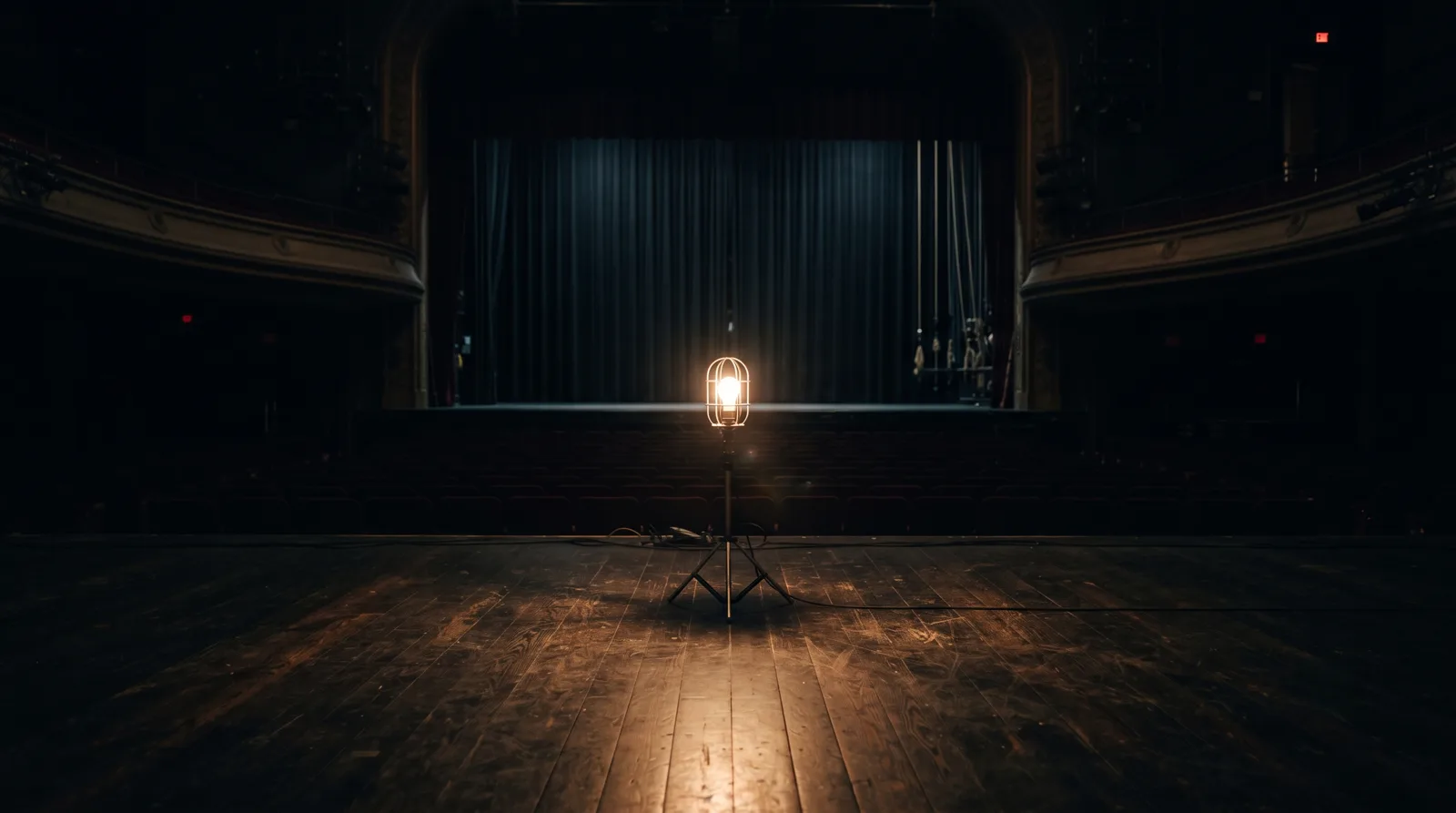
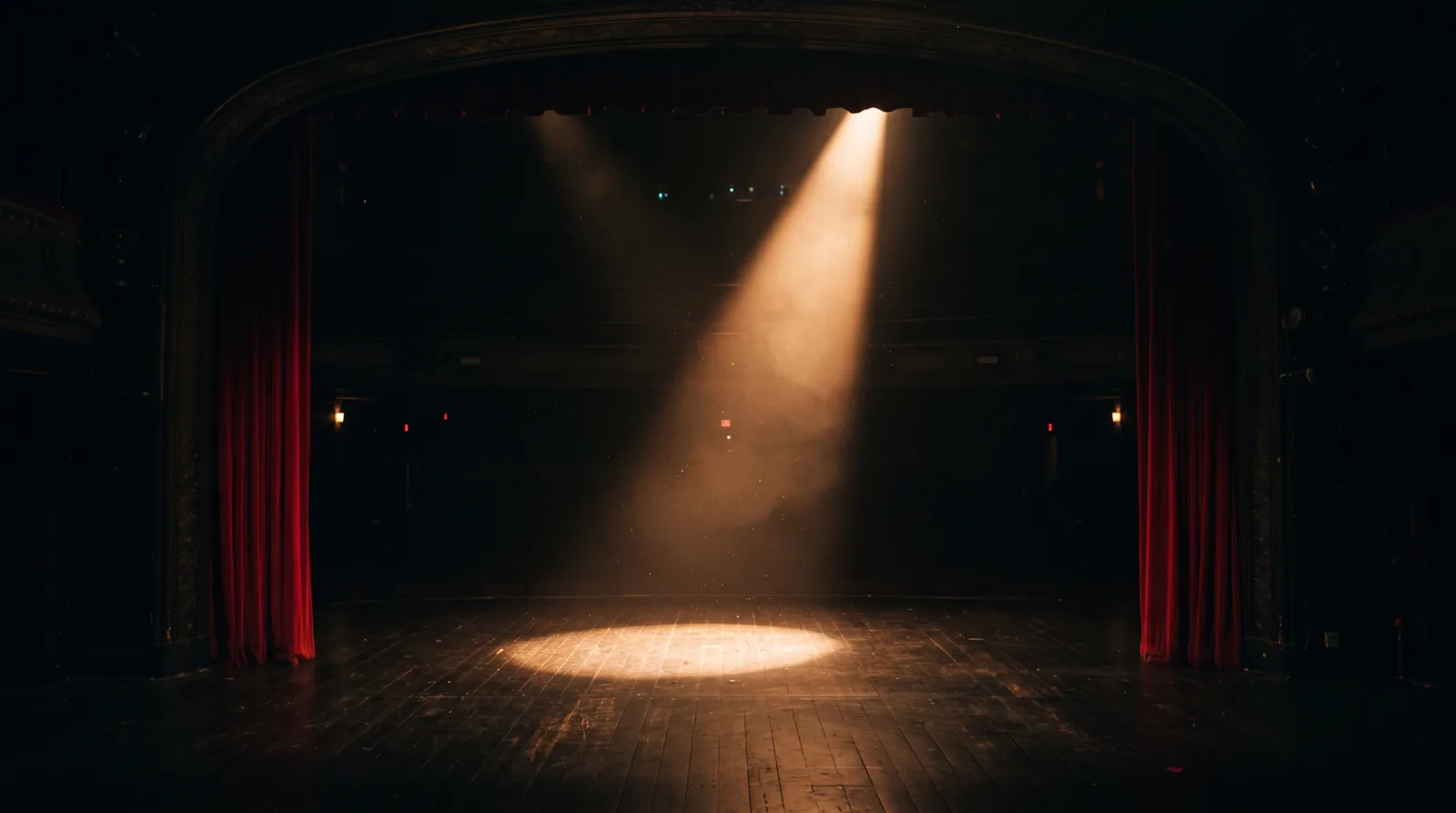
The set doesn’t help. Designer Petra Wolff has made something beautiful in the wrong way: warm paneling, handsome period furniture, maps projected across every surface in the kind of detail that earns its own entrance applause. It looks like a museum exhibit of what this show should look like. When Eleanor’s grief finally lands in Act Two, it’s in a near-empty space under a single overhead light, and that’s when you realize how much the first act’s visual abundance was substituting for feeling. Archer seems to know this. She just makes peace with it too late.
What is not cluttered at all is the orchestra. Conductor Kevin Soo leads Liang and Park’s score with real intelligence — this is music rooted in Victorian parlor song but restless, always reaching for something bigger. The brass arrangement in “The Line Between Known and Unknown” earned the loudest mid-show response I’ve heard at the Hargrove all spring. The room came alive. The room had been warming up all evening, and that was the moment it arrived.
Ay, bendito, the second act. From the moment Eleanor opens the last of the hidden journals, Archer and Vega and the material are in full agreement about what this show is and where it’s going. Two scenes in the second act are better than anything on Broadway right now — I will not name them, because you should find them yourself. What I will tell you is that the final image landed with the specific weight of something actually true, and that almost never happens anymore.
You should see “The Cartographer’s Wife.” You should see it for Marisol Vega and for a score that knows what it wants to do with harmony, and for a second act that remembers why we make musicals in the first place — not to illustrate ideas but to make you feel them somewhere below the ribs. Get there on time. Give Act One the patience it demands but doesn’t always earn. A show this alive in its best moments is worth the work.
I’ll take a beautiful second act over a careful nothing, every single time. Estamos aquí.