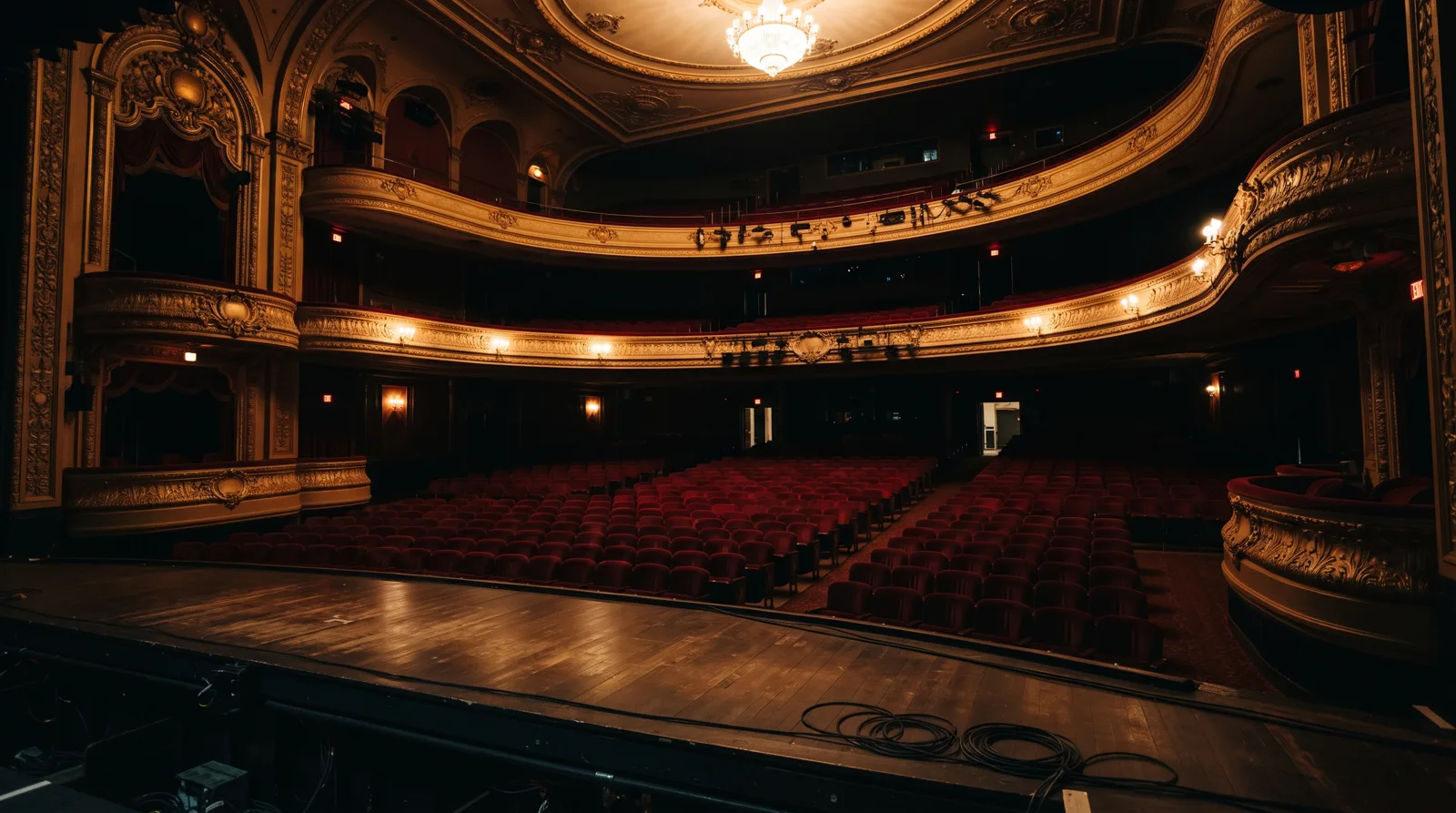

The show that deserves your attention this season isn’t only happening inside the Aldridge. It is also happening on the sidewalk at 7:15pm, where there are two hundred people dressed in wine-dark red because Solenne Beaumont wore it in Act One and now that color is a language. I walked that block on a Thursday before curtain and I had to stop, because what I was looking at was choreography — not intentional choreography, not directed, but choreography in the true structural sense: a mass of bodies organized by a shared idea, moving in the same emotional register, waiting for the same thing to happen to them.
That’s what Crimson Latitude has done to Broadway this summer, and I need to talk about it.
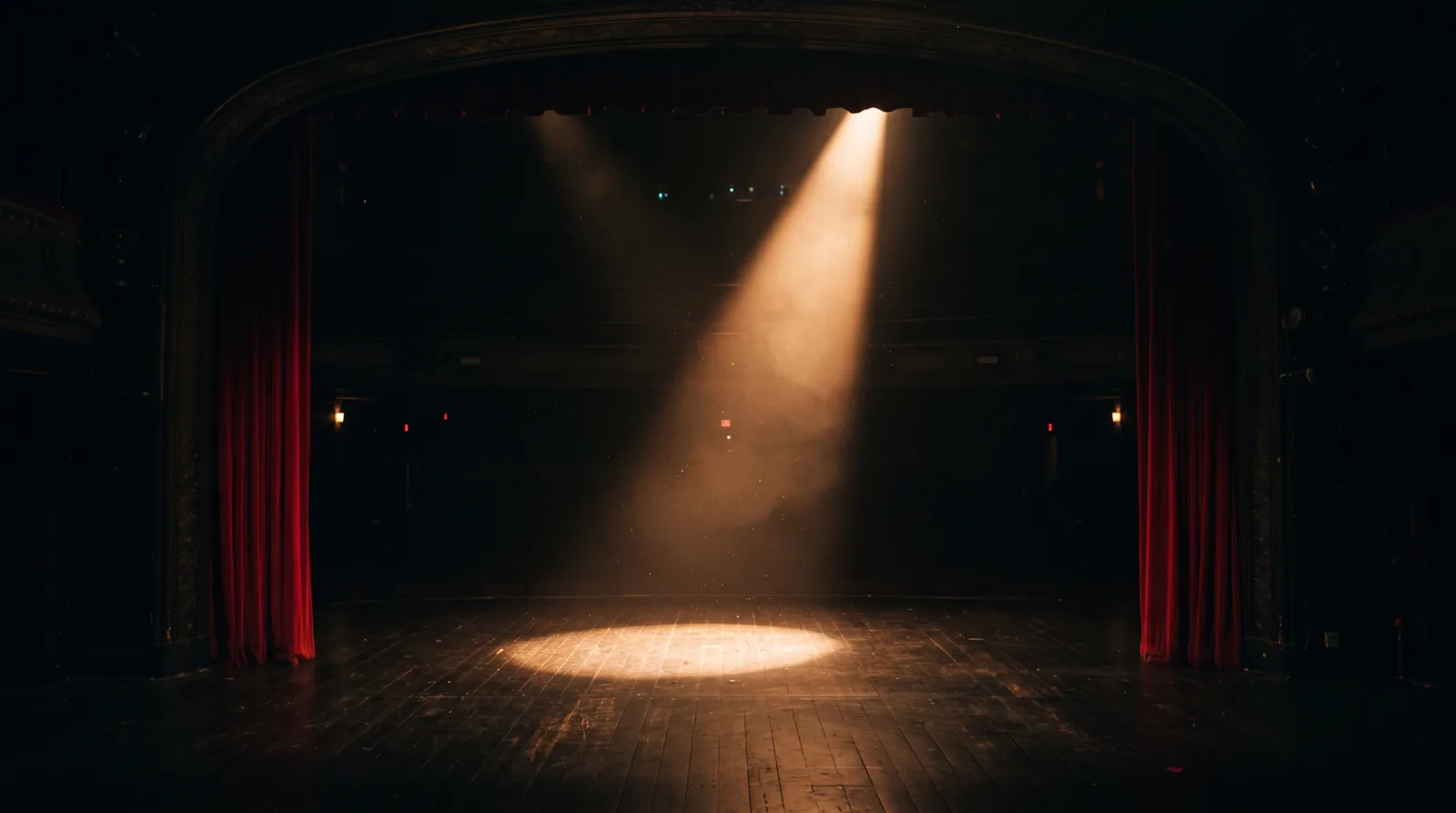
The show itself — a pop-crossover musical built around the fictional studio catalog of a soul singer navigating love, loss, and the transit system of a city that’s clearly New York but never named — has been the industry story of the season. Choreographer Deja Hollins, who you may remember from the ferocious ensemble work she built for Assembly Point two years ago, has constructed something inside this theater that earns every ounce of the devotion you see outside it. Watch the sequence in Act Two where the full company of thirty-one dancers moves from a lateral corridor formation into a dispersal pattern that spreads across the full width of the Aldridge’s notoriously wide stage — they are contracting and expanding in a rhythm that maps directly onto the song’s harmonic tension and release. It is not dancing to the music. It is the music. When those thirty-one bodies reach full extension at the ends of the stage on the same count, the audience BREAKS. I watched it happen three times from different sections of the house. Same count. Same collective gasp. Every night.
Solenne Beaumont in the lead — and let me be precise about what I mean when I say “lead,” because Hollins has made this a true ensemble piece — commands the room in a way I have not seen in years. The thing she does in her stillness is the rarer skill. While the company is in full formation around her in the Act One closer, she stands at downstage center and barely moves, and she is somehow the only thing you can look at. Her hands open, then close, then open again across four measures. That is the entire gesture. And it is DEVASTATING in the best way — because you understand, watching it, that her character is holding herself together by arithmetic, by counting, and the company around her is everything she’s trying not to fall into.
Here is where I have to be honest with you, because I always will be: the second-act book scenes between Beaumont and her counterpart Roshan Tillman slow the production’s momentum in a way that Hollins can’t rescue through choreography, because those scenes contain almost none. The script gives them stillness when it should give them movement, and you feel the room’s energy dip in a theater that otherwise runs on sustained kinetic heat. It is not fatal — nothing in a show this tight is fatal — but it’s the one place where the spectacle promise wavers, and you notice it precisely because the rest of the evening is so relentlessly alive.
What I keep coming back to, though, is the sidewalk. The industry is talking about Crimson Latitude as a ticketing phenomenon, a capacity question, a resale-market disaster. Those conversations are real. The Aldridge is not a large house and the secondary market has made access brutal in ways that hurt the audiences this show deserves most. But I want the industry to also talk about what that line is doing, because it is telling you something important about how spectacle works right now. A production that leaves its mark on the audience so completely that they coordinate their wardrobes to an act-one costume choice, that they turn the sidewalk into mise-en-scène before a single light has been cued inside — that is a production that succeeded at the deepest structural level of what theater is for. It changed their bodies. It told their bodies something. And now their bodies are telling each other, every night, on a public street in ninety-degree heat.
That is Deja Hollins’ choreography still running forty-five minutes before curtain. That is Solenne Beaumont’s Act One gesture playing out on 47th Street in real time.
If you can get in, get in. Add your name to the standby list and stay close.