
“North Wind” is a better musical than its first act deserves to be, and I say that with genuine respect for what Cressida Maye and Theo Ladd have built here.
The show opened last Thursday at the Pemberton Theatre — that renovated house on 45th Street that smells faintly of Pledge and ambition — and it is, despite some genuinely puzzling structural decisions in its opening hour, one of the more emotionally complete new musicals I have seen in three seasons. The story is Renata Cruz, a woman who left her family’s music school in the Bronx fifteen years ago and comes back when her mother gets sick. She hasn’t written a song in seven years. She is thirty-nine and terrified and not about to admit that to anyone.
Delphine Okafor plays Renata, and she is the reason you go. I don’t mean that in the reductive way people mean it when a show has one bright spot — I mean that Okafor is doing something specific and technical that you should witness. She sings from somewhere behind the throat, a placement that gives her voice this quality of being physically held back, and then when she finally releases it fully in “Fourteen Summers” — the Act Two opener that the whole show is building toward — the change in her body is visible before the sound arrives. That moment. The entire Pemberton stopped breathing. I don’t mean that as a figure of speech; the person next to me actually stopped mid-inhale and held it. That’s not a common thing.
The score, composed by Ladd, earns that moment. What Ladd understands is that harmony should tell you something the lyrics can’t. The chord structure under “Fourteen Summers” has been sitting unresolved since the very first number, and when it finally lands, you feel it before you understand it. That’s not an accident. That’s a score that knows what it’s doing.
So why am I not handing this a four-star review without caveats? Because the first act, mija, keeps making the same mistake. Director Ramona Solis has staged the reconciliation scenes between Renata and her sister Clara as if they’re comedic set pieces — quick, jokey, full of defensive humor that works for thirty seconds and then starts to coat the wound instead of showing it. By the fourth time Renata deflects with a joke and Clara lets her get away with it, I am not laughing. I am watching the stakes drain out of the story. The conflict between these two women is the engine of the musical, and Solis has decided to muffle it in a way that makes the reckoning in Act Two feel slightly less earned than it should.
Which is a choice. And it’s the wrong one. But.
The second act corrects almost everything. Solis, freed from whatever tonal hesitancy seems to have gripped her earlier, lets the material breathe and then tear open. The revolving platform that has been sitting center stage — three rooms of the Cruz family home turning slowly — finally stops moving, and when it does, you understand why it was always moving: stillness is what Renata is most afraid of. That’s a production idea worth the price of admission.
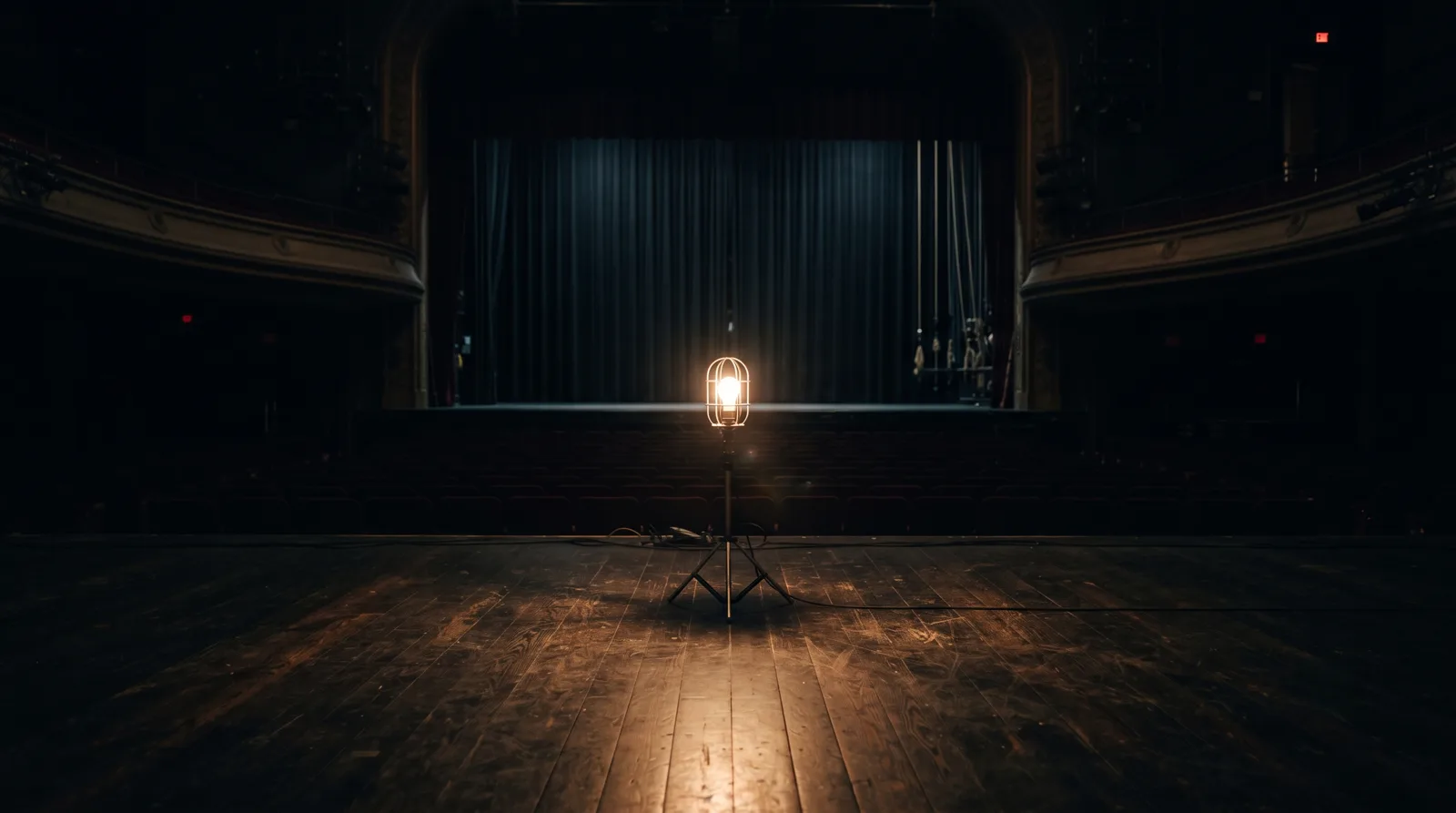
Marcus Pell, as Renata’s father, has approximately twelve minutes of stage time and does not waste a single one. His final scene with Okafor, lit by a single practical lamp the crew leaves on the platform as everything else blacks out, is the most economical and devastating thing in the show.
Look — you should see “North Wind.” Go in knowing that the first act is going to make you work for it, and then go anyway, because the second act pays it all back and charges you interest. Okafor’s performance is the kind you tell people about for years. The score will stay in your chest for days. There are rough edges and I’ve told you exactly where they are. None of them are reasons to stay home.
Estamos aquí.