

Carmen:
Here is what I will tell you about Last Light at the Meridian: it is the most complicated two hours I have spent in a theater seat this season, and I mean that as a compliment — a qualified one, but a real one.
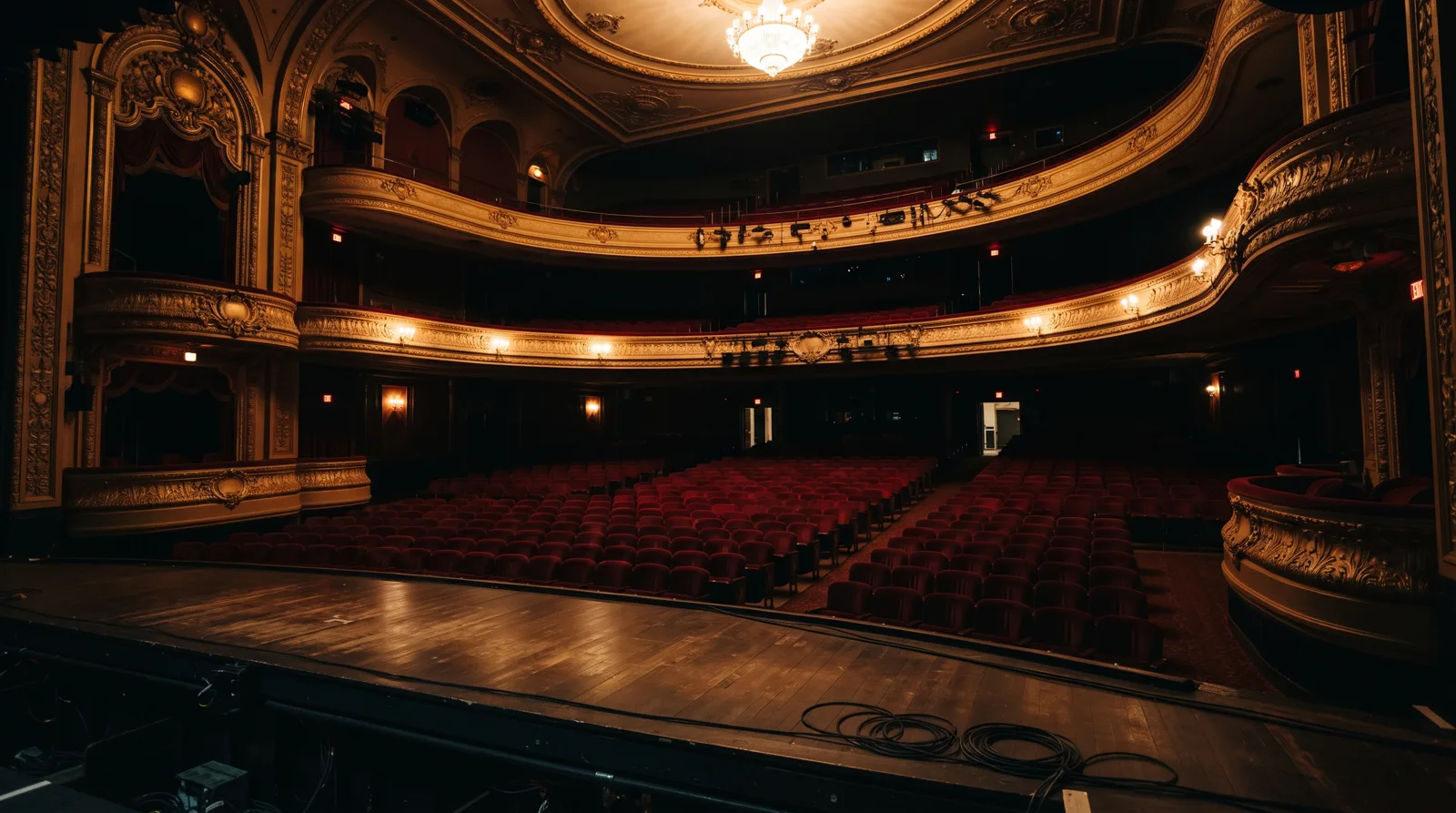
Playwright Teodora Vásquez has written a chamber musical about the final weeks of a woman dismantling her own myth, and director Reuben Ashby has staged it with an almost surgical restraint that reads as either precision or withholding, depending on the night and, possibly, where you’re sitting. I was in the eighth row center at the Calverton. I saw precision.
What made me lean forward was Solange Merritt in the title role. She has a way of landing a line that feels like she’s arriving at it for the first time — not in the soft improv-actor way, but in the way that great musical theater performance works when it’s really working: the technique disappears. You are not watching someone sing. You are watching someone live in sound. In the second act, during “Every Light We Left On,” I heard the woman behind me stop fidgeting. I heard the whole orchestra section stop fidgeting. Ay — that’s the test. That is what a great performance does.
My complaint, and I have one, is the first act. Vásquez is so invested in mystery that the show earns its revelations without properly building their stakes. The audience is doing too much work for too long. But when the Calverton’s lighting rig makes its final statement in the last ten minutes, every loose thread locks into place and you understand what you were watching.
Three stars, going on four. Go see it.
Priya:
Carmen is right that the first act is doing too much — but I’d locate the problem differently. Vásquez isn’t withholding for mystery’s sake. She is trying to build a chamber musical that functions like a lyric essay: accumulative, recursive, working by layering rather than propulsion. It’s a legitimate formal ambition. The problem is that the book hasn’t yet found the grammar to make that structure legible as structure rather than as drift. You can feel her reaching for something in the tradition of Lapine and Sondheim — the way Sunday in the Park with George earns its devastation by making you watch an artist disappear into obsession before you understand what you’ve lost. Vásquez is after that same architecture. She gets there. But in act one, you’re in the drift without the coordinates.
What I kept watching was not Merritt — extraordinary as she is — but what Ashby does with silence. There is a staging choice in the second scene, when three background figures freeze mid-gesture and the stage empties of sound for nearly twenty seconds, that is the clearest formal statement the production makes: this is a play about the gap between a person and the myth that outlives them. Everything else is content. That staging is argument.
Whether the book earns that argument fully: mostly yes, imperfectly. Vásquez has written a play that knows what it wants to say. She hasn’t quite written the play that knows how to say it yet. That gap closes in the final ten minutes, which is enough to make this worth the trip. Just know that you will be working in act one.
Imani:
Okay, Carmen said precision and Priya said lyric essay and they are BOTH right, and I need to add a third thing they did not mention, which is that Reuben Ashby and lighting designer Kezia Drummond built this production around a technique I have been turning over in my head for three days.
Here is what I saw from the fourth row: at the top of the show, every zone of the Calverton stage is lit — eight or nine discrete sources, warm, present, full. As the first act moves forward, zones go dark. Not dramatically. Almost imperceptibly. By the time we hit the second act and Solange Merritt is standing in what amounts to a single hard shaft singing “Every Light We Left On,” the stage is 80 percent darkness, and you realize you have been watching the light leave this woman in real time across two hours. That is choreography. That is a body in space. That is two designers deciding together that the architecture of light IS the argument Priya named.
That said — Carmen is right about the first act. Priya is right that it’s structural. I will add: the movement direction for those three background figures is underutilized everywhere EXCEPT that second-scene freeze. There was more to do with bodies in this production, and I wanted it.
Still. The last ten minutes of Last Light at the Meridian will rearrange you. Get yourself to the Calverton, dress for the occasion, and when that lighting rig makes its final statement, let yourself be taken. This is exactly what theater is for.