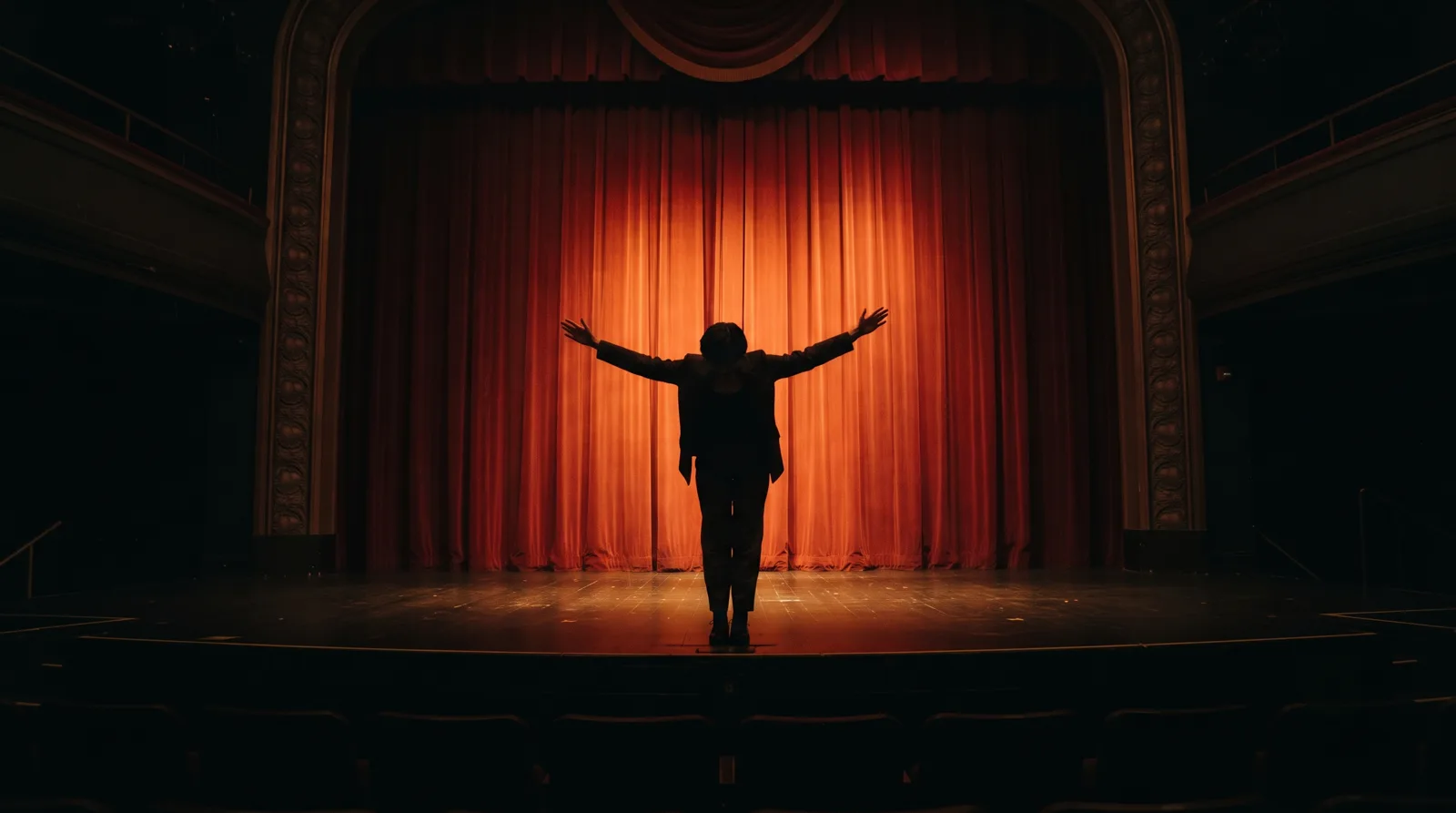

Rajiv Thakur’s newest play, “Whispers of the Burned,” opened last night at the downtown Jewel Box Theater. Directed by Eliza McAllister, the production tackles the contentious issue of book banning with a formal rigor that situates itself firmly within the tradition of Arthur Miller’s work on intellectual freedom and social repression.
Set in an idyllic community meeting hall reminiscent of small-town America, “Whispers of the Burned” centers around a community grappling with the banning of a controversial new novel. Thakur’s script is deceptively simple in its structure—three acts, one setting—but what makes it truly compelling is the way in which he layers his dialogue to create a sense of tension and unease.
McAllister’s direction is precise, using the limited stage space to great effect. The intimate scale encourages an immediacy that heightens the stakes. Thakur’s language is rich with subtext, each line loaded with implications that force the audience to question their own beliefs about censorship and free speech. It’s as if Miller himself is still in the room, guiding the playwright’s hand.
The acting ensemble, led by Priya Das and Jai Patel, brings a sense of urgency to Thakur’s words. They navigate the complex emotional terrain with grace, drawing out the subtle nuances in the text that are crucial for the play’s impact. However, despite the commendable performances, there is one area where “Whispers of the Burned” falls short.
While Thakur’s script offers a critique of book banning through a series of well-crafted arguments and counterarguments, it occasionally fails to fully address the moral ambiguities present in the debate. This leaves certain aspects feeling underdeveloped, as if the playwright’s commitment to structure has come at the cost of deepening character motivations.
Despite this limitation, McAllister’s direction maintains a cohesive vision that brings out the best in Thakur’s writing. The set design by Rohan Shah also deserves mention for its ability to shift and transform subtly to reflect the evolving mood of each scene.
It is a very good play that wants to be greater than it perhaps currently is, but “Whispers of the Burned” is worth your time if you are invested in seeing how contemporary theater handles politically charged issues with formal sophistication. McAllister’s vision for staging such complex themes should not be missed by anyone interested in thoughtful dialogue about free expression.