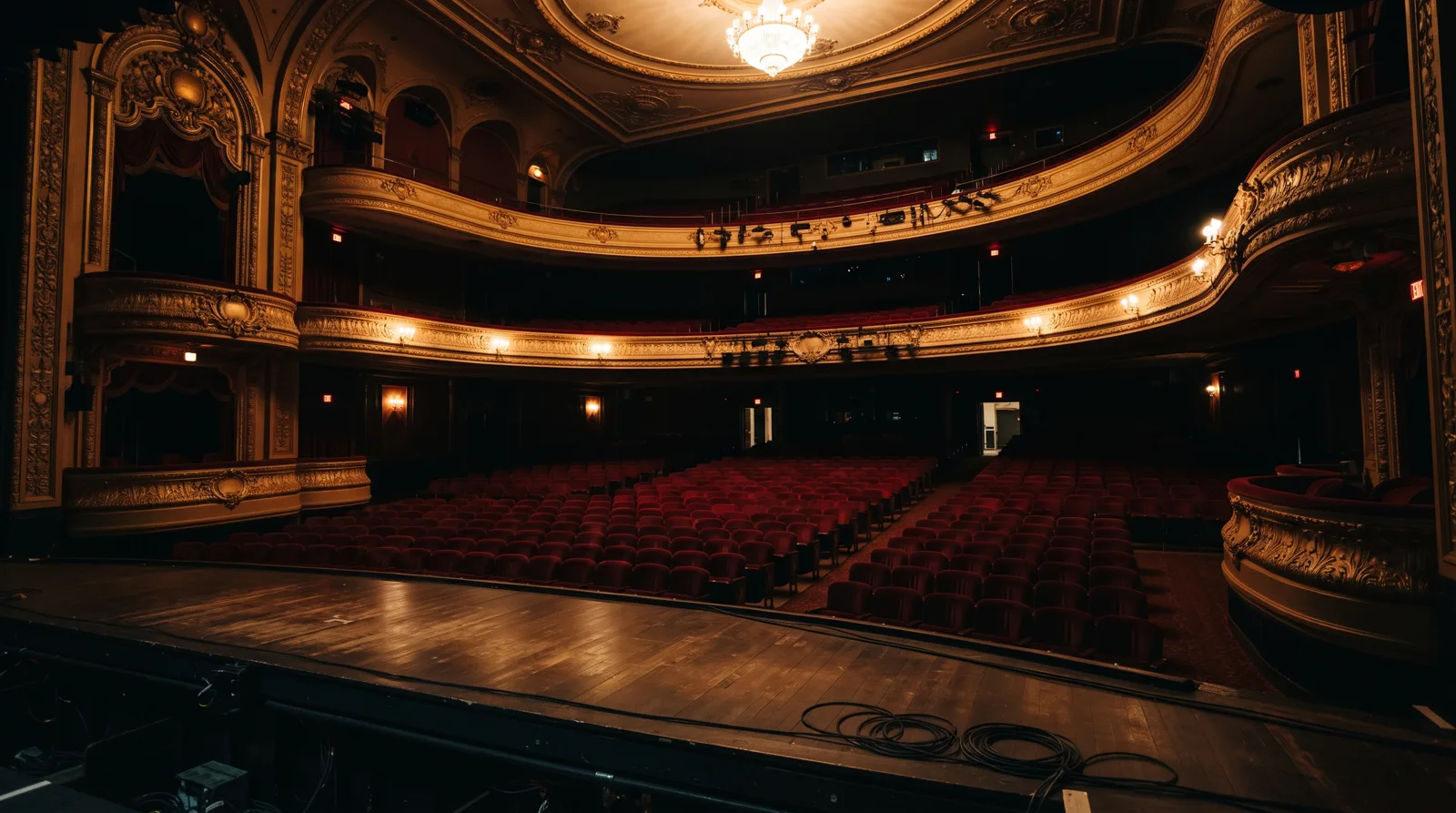

Okay so here’s what I need you to understand: Lenora Vance did not start the Cobalt Stage Collective twenty years ago because the theater world gave her an opening. She started it because the theater world had been very clear about what it was not going to give her, and she decided that information was useful and went and built something better. This past weekend, the Cobalt celebrated two decades of work with a concert spectacular at the Hargrove Center, and I was in that audience, and I need to tell you exactly what I saw.
The Cobalt Stage Collective is, for those who somehow do not know, a nonprofit production company in lower Manhattan that Vance founded in 2006 with a specific mandate: develop, produce, and center the work of Black women artists in the American theater. Not “diverse” programming as a box to check. Not a residency that puts up one show every three years and calls it inclusive. A real, working company with eleven world premieres, six Off-Broadway transfers, and — this is the one — last season’s “House of Signal,” which became the most-talked-about new musical of the year and landed the Cobalt’s name on a marquee it earned. Vance herself has been in half those productions, acting while she ran the entire operation from an office three floors above the stage.
The anniversary concert, “Twenty and Counting,” was not modest. The Hargrove seated twelve hundred people and every seat was filled. Choreographer Zora Whitfield — who is working with the Cobalt for the third time and who I have been telling you about since her debut piece two years ago — built a second-act opening sequence that I am still processing. Twelve dancers started in a single tight cluster upstage, bodies facing away from the house, not moving. Four counts of silence that felt much longer. Then one percussive hit, and they fractured — not outward like an explosion, but diagonally, in offset pairs, each pair timed a half-beat behind the one before it, so the movement rippled through the group the way information passes through a system. By the time all twelve were in their final positions, the stage had transformed from one shape into something that read like signal paths on a circuit board. THAT is what Whitfield does. She doesn’t just move bodies. She makes you see the architecture underneath.
And then Vance walked into the center of it, and the room went completely still.
I have seen Vance perform. I have seen her be good. I have NOT seen her be this. Whatever she is drawing on at this point in her career — twenty years of building something against consistent resistance — it is in her body now in a way that doesn’t separate from technique or emotion. She sang “The Weight of a Room,” the Act Two closer from “House of Signal,” and she was doing something with stillness I can only describe as controlled collapse: the body fully present and fully spent at the same time. The audience was not applauding. The audience was barely breathing. When it ended there was a genuine half-second before the response hit, and that half-second was THE REVIEW.
The ensemble work across the full night was deep. The Cobalt has a roster of performers it returns to, and watching that company hold formation together, the way they listen as a group, the way a look passes between two women who have been in rooms with each other for a decade — you cannot buy that in a cold audition process. You build it. Twenty years of intentional relationship-building is in every inch of how that stage breathes.
Here is my one honest thing: “Twenty and Counting” was long. Not criminally. But the first-act medley of Cobalt archive pieces ran about eight minutes past what the room could hold, and the emotional temperature dipped at exactly the wrong moment, just before intermission. The structure wanted tightening in a way the production team probably knew and chose not to do for sentimental reasons. I understand those reasons. I am still telling you they were wrong.
But that is one section in a night that made the clearest possible argument for what it looks like when a theater company invests in itself and its artists for two full decades without flinching. The Cobalt Stage Collective is not coming. It is here.
Find out what they’re mounting next. Then buy two tickets and bring someone who needs to understand what theater can actually do.