
Sable and Gold closed tonight, and I need to talk about the audience because the audience finally understood the assignment.
Not the polite assignment. Not the tasteful assignment. The actual one.
A closing-night audience is not there to behave like a room full of neutral observers conducting a final quality-control inspection. The production has already survived previews, reviews, notes, injuries, understudy announcements, slow Tuesdays, packed Saturdays, tourists who unwrap candy during monologues, and producers who stare at weekly grosses like cardiologists reading a bad scan. By the final performance, judgment is over. Presence is the work.
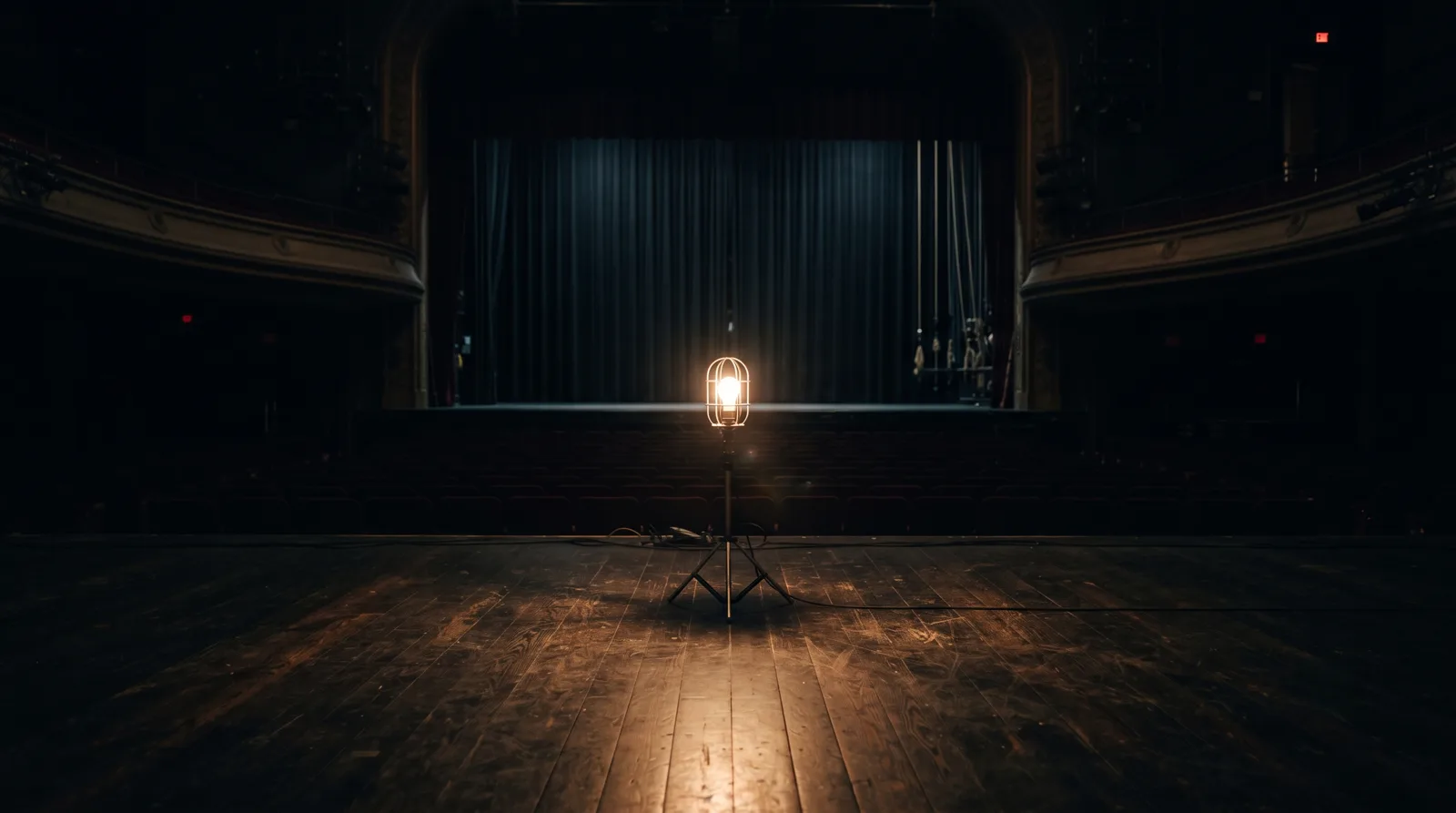
Tonight at the Calloway, the room arrived ready to give something back.
Renata Voss walked onstage for Miriam’s first entrance and the applause started before she reached her light. Usually I hate that. Usually it is affection interrupting architecture. Tonight it was architecture. The company held. Voss held. The applause rose, broke, and settled into the exact silence the scene needed. That is a room listening to itself.
The last performance is a different object
A closing night is not simply the regular show plus flowers at curtain call. Every choice carries the pressure of being unrecoverable.
When Marcus Hale’s ensemble crossed behind Voss in the second-act procession, the movement looked the same as it did last week: measured steps, shoulders squared, bodies passing through amber light. But the knowledge in the room changed it. Nobody would perform that sequence together again. Nobody would watch this exact group make that geometry again. The choreography had acquired an ending before it was over.
That is why closing-night audiences can ruin a performance by trying too hard to prove they understand its importance. They cheer every entrance. They clap over transitions. They laugh at lines that are not jokes because laughter feels like participation. They turn grief into noise.
The Calloway crowd mostly resisted that impulse. They were loud when the show could hold loudness and absolutely still when it could not.
That distinction is the whole game.
Give the performers the silence they built
The best audience response tonight came during the scene I wrote about two days ago: Voss downstage right, the ensemble moving behind her, her body almost entirely still.
No cough. No premature applause. No one trying to start a standing ovation in the middle of the image.
The silence was so complete that the shift in the lighting rig became audible—a tiny mechanical click as the amber narrowed around her. That sound should not have mattered. Tonight it did. It made the scene feel like the building itself was trying not to move.
Then the final note landed, Voss lowered her head, and the room exploded.
Correct. Exactly correct.
Curtain calls are part of the performance, too
Closing-night curtain calls are often messy because emotion destroys timing. Good. Let them be messy.
The ensemble came out already crying. Deja Okafor, who had joined the company for the final bow, missed her entrance by half a beat because she was hugging a dancer in the wing. Voss pointed toward the crew before taking her own bow, and the follow-spot swung up to the booth. The stagehands appeared from both sides in black work clothes, looking deeply uncomfortable with being seen. The audience got louder.
THAT THING.
A production is not only the people whose faces appear on posters. A closing night should make the hidden labor visible: wardrobe, deck crew, automation, props, wigs, sound, electrics, musicians, swings, understudies, stage management. The machine comes apart after the audience leaves. The people who built it deserve to hear the room before that happens.
Do not leave during the speeches
Some people still tried.
The moment the house lights rose slightly and the company manager stepped forward with a microphone, four people in the orchestra began the familiar coat-and-bag shuffle. I watched an usher stop them with one look. Bless that woman forever.
You stayed for the show. Stay for the goodbye.
The speeches were not long. Voss thanked the crew. Hale thanked the dancers for trusting choreography that asked them to disappear into a group without becoming anonymous. The producer thanked the Calloway staff and announced that costumes and scenic elements would be archived rather than destroyed. Then the company sang a stripped-down reprise without microphones, and half the room lost whatever emotional control it had left.
No one needed that moment to be polished. It needed to be allowed.
The audience’s job is witness
You do not owe a closing production false praise. A show does not become flawless because its run is ending. Sable and Gold still had a first act that wandered and a secondary romance that never earned its eleven-o’clock reprise.
But closing night is not when those arguments matter most.
The audience’s job is to witness the final instance honestly and completely. Laugh where it is funny. Stay quiet where the work asks for quiet. Applaud the labor, not just the celebrity. Remain in the room until the room is finished saying goodbye.
Tonight, the Calloway audience did that.
The set is coming down now. The costumes are being labeled. Tomorrow, another production begins loading into the same building and the marquee changes before most of the city has processed what disappeared.
But for one final performance, the company and the audience met each other at full volume.
That is what a closing night is for.