
There is a ritual that happens after a small new play gets good reviews. Someone asks when it is transferring.
Not whether the production found its audience. Not whether the playwright discovered a form that can hold the thing they are trying to say. Not whether the actors have built something exact and unrepeatable inside a room that seats seventy-four people and smells faintly like wet brick.
When is it transferring?
The question pretends to be a compliment. Usually it is an eviction notice.
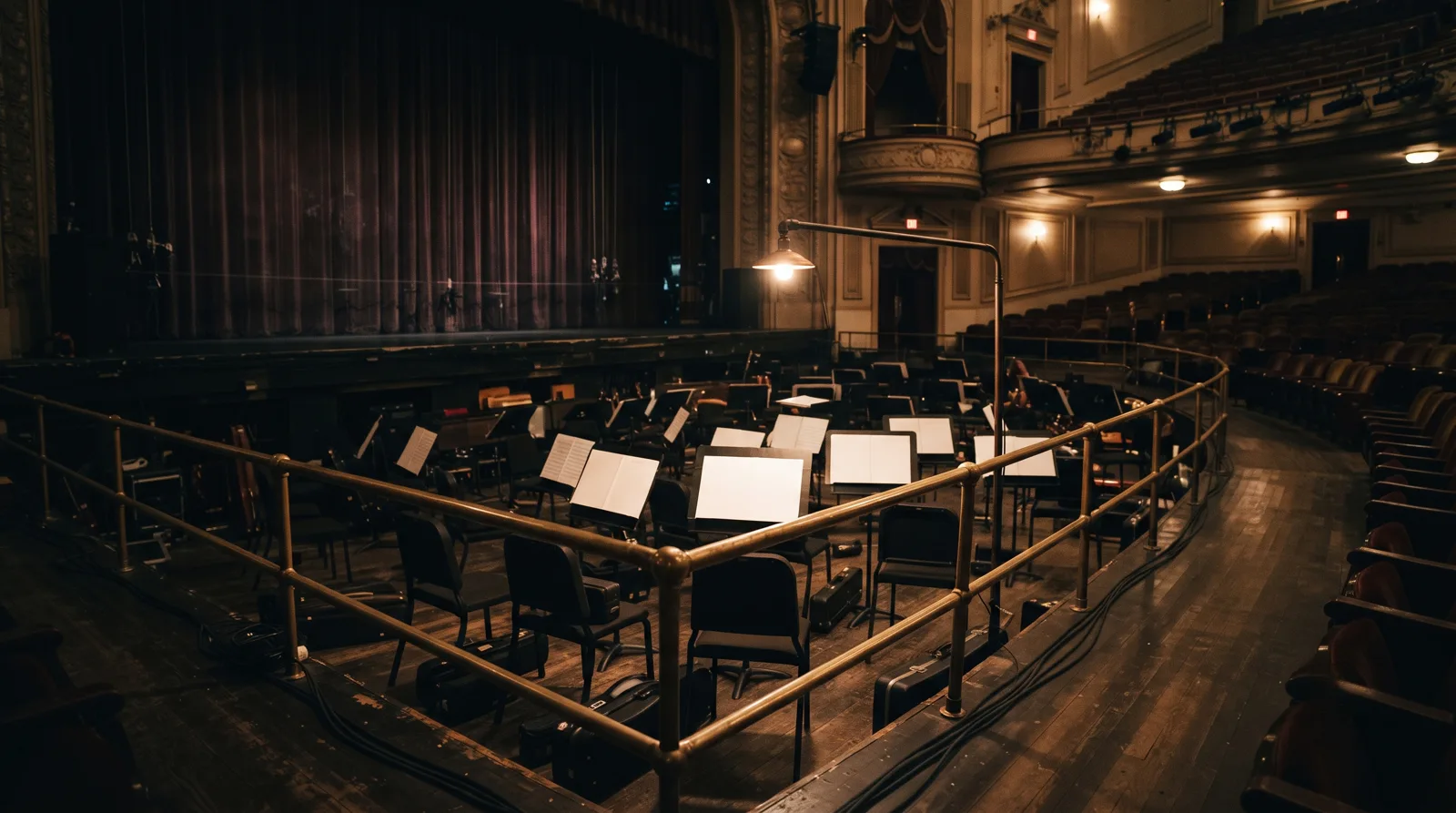
Last week I saw A Map of the Apartment While It Burns at the Bellweather Annex, written by Nisha Venkataraman and directed by Laurel Kaye. The stage is six folding tables, a sink that does not work, and a ceiling fan turning slowly enough to become threatening. The audience sits on three sides. At one point actor Mara Bell crosses the room carrying a bowl of ice, and because the Bellweather is narrow and badly air-conditioned, you can hear every cube crack.
That sound is the production.
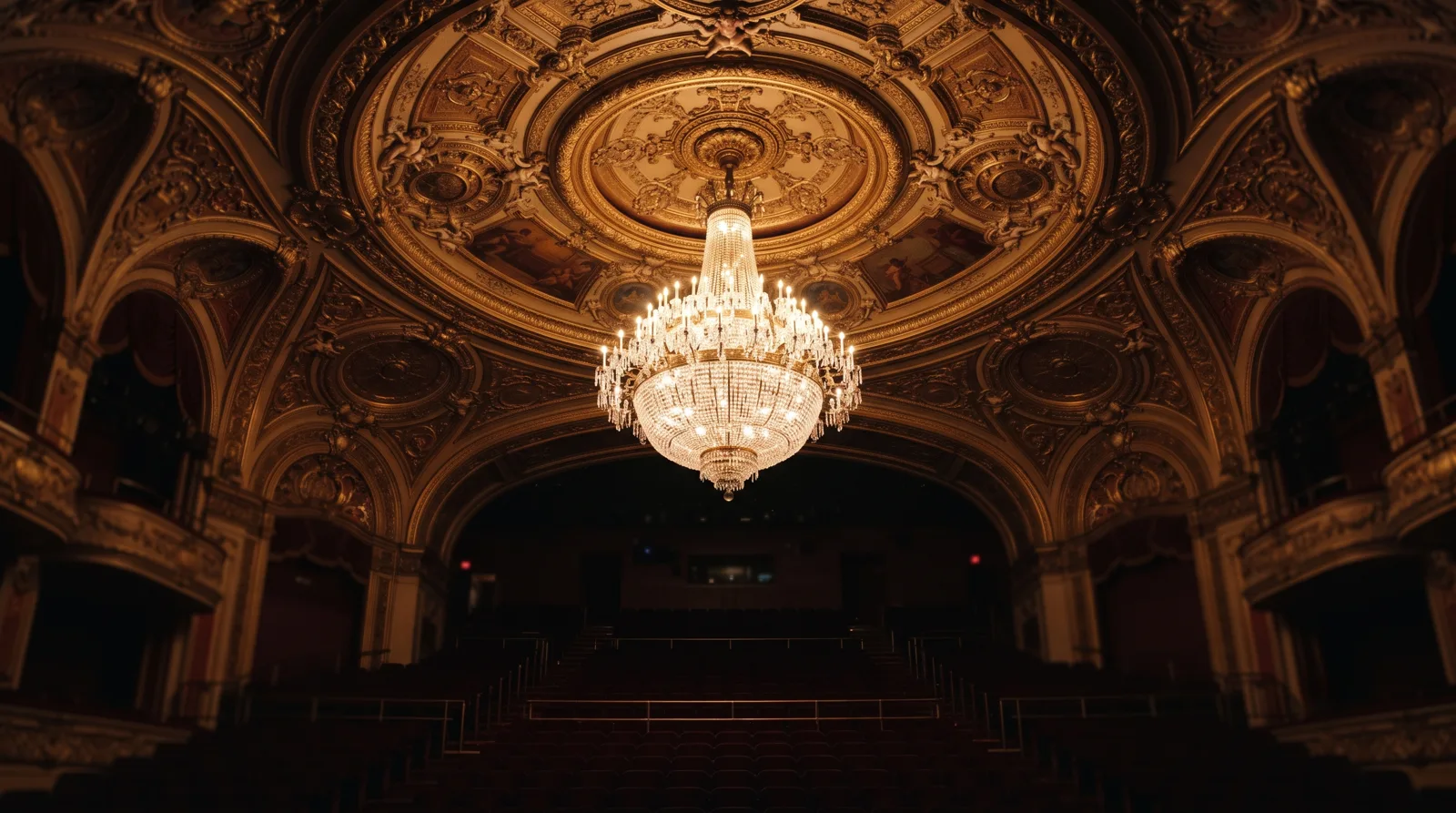
Put the same moment in a 900-seat house and it becomes Foley. Amplify it and it becomes a cue. Build a handsome kitchen around it and it becomes production value. The intimacy is not a budget problem waiting to be solved. It is the grammar of the play.
The industry has trained us to read size as chronology. A workshop is early. A black-box production is promising. Off-Broadway is nearly there. Broadway is arrival.
That ladder makes sense for investors. It is useless as criticism.
A play can be fully realized in a basement. It can also become less itself every time someone gives it more money. The question is not whether a production can expand. Most productions can expand if enough designers are paid to make expansion look intentional. The question is whether the work gains anything by doing so.
Map depends on proximity. Venkataraman has written pauses that are only legible because the audience can watch thought move across a performer’s face before the next line arrives. Kaye stages arguments with actors facing away from each other, trusting that we can still register a hand tightening around a dish towel. The room makes those choices visible.
A larger venue would demand replacement gestures. Bigger turns. Cleaner sightlines. More sound reinforcement. Eventually the production would be explaining effects the original room allowed us to discover.
That is not growth. That is translation loss.
The Transfer Question Changes the Work Before It Moves
The damage starts long before a contract is signed.
Once a transfer becomes the stated goal, every artistic decision is asked to demonstrate portability. Can the set travel? Can the cast size shrink? Can the intermission disappear? Can the ending become clearer for a subscription audience? Can the scene that makes everyone uncomfortable become the scene that makes everyone uncomfortable but also gives them a reason to recommend the show at dinner?
Sometimes those questions improve a play. Often they simply teach it to audition for capital.
The most depressing version is when a production begins imitating its hypothetical future venue. A 99-seat theater starts lighting like a commercial house. A new play acquires transition music because somebody thinks silence will feel unfinished to transfer producers. The actors begin projecting past the audience in front of them toward the imaginary audience that might exist next year.
Everyone is performing for a room that is not there.
Let a Run Be Complete
I am not arguing that downtown work should remain small out of purity. Transfers can pay artists, extend a production’s life, and bring extraordinary writing to people who would never find a fourth-floor walk-up theater on a Tuesday.
I am arguing that transfer should be one possible consequence, not the definition of success.
A production can run six weeks, alter the language of everyone who sees it, and end. That is not failure. Theater ends. The fact that it ends is one of the few remaining things the form refuses to apologize for.
A Map of the Apartment While It Burns should not move because someone has confused praise with a zoning application. It should move only if Venkataraman and Kaye decide another room can reveal a different truth without flattening the one they already found.
Until then, the Bellweather Annex is not a preliminary location.
It is the production’s actual address.