
The labels are not a ladder. Broadway, Off-Broadway, Off-Off-Broadway — people say them like a ranking of ambition, smallest to largest, amateur to arrived. They are nothing of the kind. They are a measurement of real estate and the union contracts that come attached to it, and once you understand that, a great deal of theatrical snobbery collapses on contact.
Here is the actual distinction. “Broadway” is not a street and it is not a grade of quality; it is a house of roughly five hundred seats or more, inside the Manhattan theater district, operating under the industry’s full production contracts. Off-Broadway is the tier below by capacity — conventionally a house between one hundred and four hundred ninety-nine seats, with its own contracts, its own economics, its own tolerance for risk. Off-Off-Broadway is everything under a hundred seats: the black boxes, the church basements, the back rooms with forty folding chairs and a lighting board someone built by hand. The categories are defined by how many bodies fit in the room and what it costs to pay everyone in it. That is the entire taxonomy. It is a spreadsheet, not a value judgment.
What follows from the spreadsheet is the interesting part. A five-hundred-seat house has to sell five hundred seats, eight times a week, for months, or it closes. That arithmetic shapes what can be made there. It rewards work a large and varied audience can be relied upon to buy — the known title, the star, the story the culture has already agreed to like. None of that is an insult. It is a constraint, and constraints produce their own kind of excellence. But it is a constraint the forty-seat room simply does not carry.
The small room is allowed to fail. That is its entire advantage. A forty-seat house can stage a play only three hundred people will ever see and be a complete artistic success at doing it, because it never needed the four-hundredth ticket. This is where the form actually gets built. Suzan-Lori Parks was not handed a Broadway house to work out what a play could be; the downtown and Off-Off ecosystem is where the American theater has always done its laboratory work, and the uptown houses tend to harvest it a decade later, usually once the danger has been sanded off.
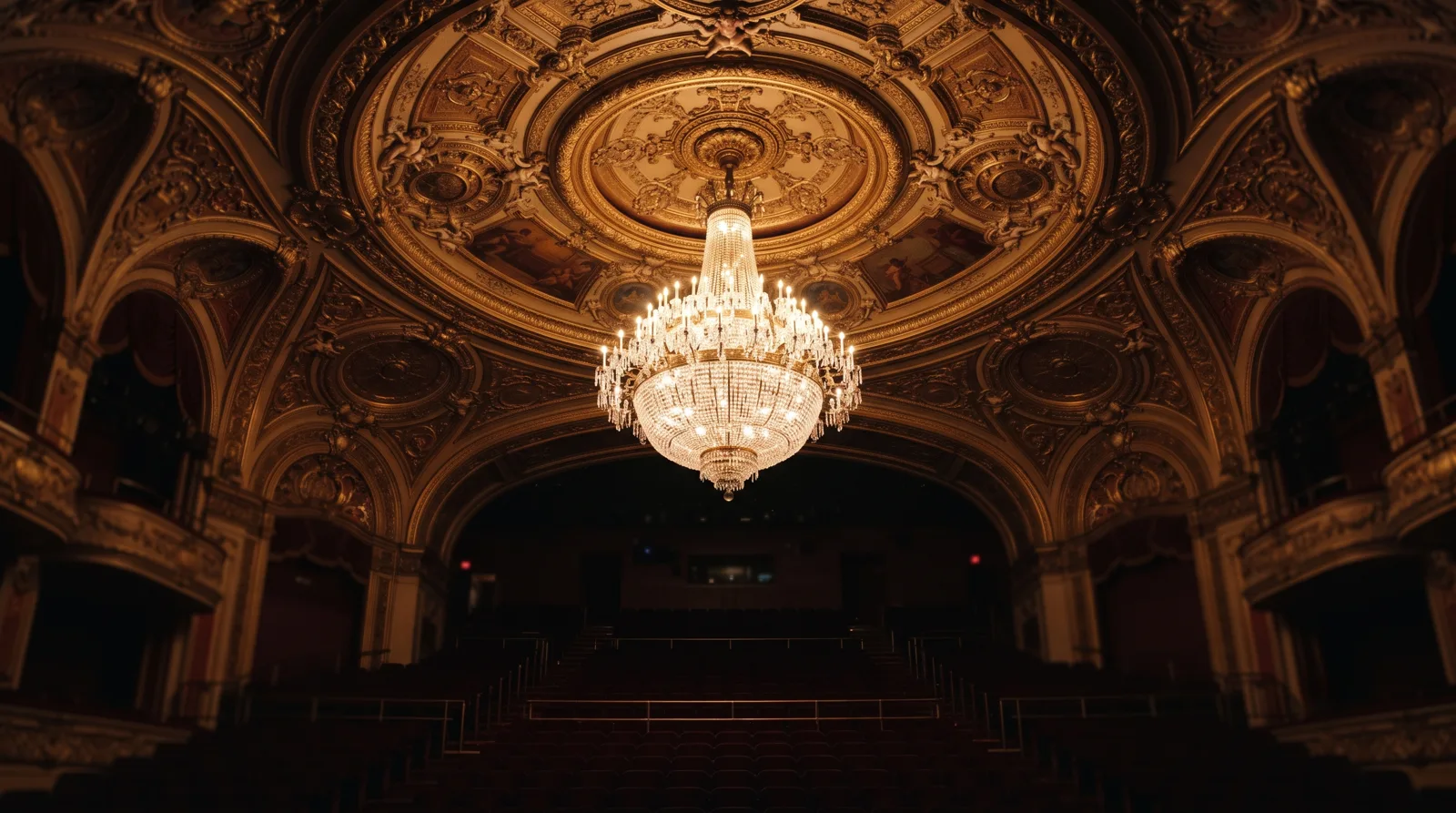
So when someone tells you a show is “only Off-Broadway,” hear what they have actually said: it is in a smaller room, under a different contract, taking a different set of risks. They have described the seating chart. They have told you nothing about the play. Some of the most rigorously constructed theater I have seen this decade sat in rooms where I could hear the actors breathe, and some of the most inert sat under a chandelier.
There is a real limitation to the small houses, and I will not pretend otherwise: money is craft’s silent partner, and a forty-seat budget cannot build what a Broadway budget can. Spectacle needs capital. Some plays genuinely require the machine, and starving them of it is not purity — it is a different way of failing them. The skill is knowing which room a given work actually wants.
Here is the call. Stop reading the labels as a quality scale and start reading them as what they are: a description of size and economics. Then go downtown on a Tuesday, sit in the fourth row of a room that seats seventy, and watch something take a swing it could never afford to take uptown. That is not the minor leagues. That is where the sport gets invented.