


Carmen:
Rock musicals have a credibility problem, and most of them deserve it. For every show that earns its distortion pedals, there are three that mistake a power chord for a personality. The genre has been coasting on nostalgia and brand recognition for so long that when something real comes along — something that actually uses the idiom to say something — you almost don’t believe it.
Neon Saints is real.
I’m not going to pretend I walked into the Hollander Theatre expecting to be changed. I went in skeptical, the way you go into anything that arrives with this much advance heat. Director Ramona Vashti has been telling anyone who will listen that she built this show around the space between songs — the silence, the breath, the moment before the next chord hits. That is either the most pretentious thing anyone has ever said about a rock musical or it is exactly right.
It is exactly right.
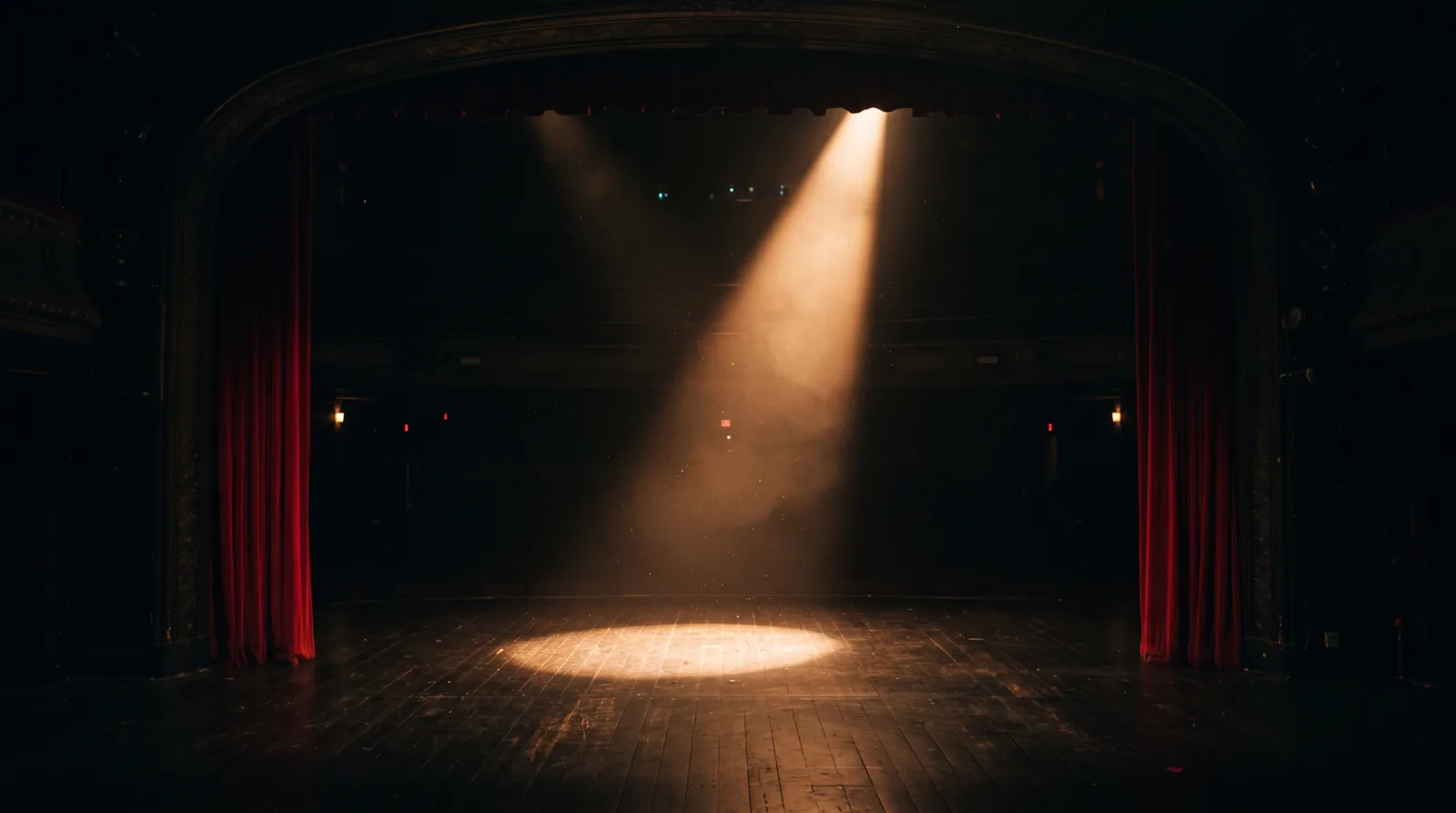
What Vashti has made, with book writer Dex Carillo and a score by the band Séraphine Blanche, is a show that understands rock music at its best is about urgency. Not volume. Urgency. The difference is everything. When Lena Murrow opens her mouth at the top of Act Two and the band drops out completely — she’s just standing there, bare stage, one lyric — the Hollander went so quiet I could hear the woman next to me stop breathing.
That’s the whole argument for this season, and for this show, right there. Priya and Imani have more to say about where it fits and what it costs. Pero — you start with that moment. You hold it. Then you decide whether rock musicals deserve your time.
Neon Saints has earned mine.
Priya:
Carmen is right about the urgency, and I want to name what’s creating it structurally: Dex Carillo’s book is not functioning the way rock musical books usually function. It is not connective tissue. It is not the thing that happens between songs to explain why the next song happens. It is pressure — accumulated, specific, dramaturgically disciplined pressure that makes every song feel like something finally breaking through rather than something scheduled to occur.
That is a real formal achievement, and it puts Neon Saints in conversation with the very short list of rock musicals that have actually thought about what the book is for. Spring Awakening is the obvious reference, not because the shows sound alike but because Duncan Sheik and Steven Sater understood the same thing Carillo seems to understand: that rock music in a theatrical context earns its emotion only if the dramatic structure has already done the work of earning it. You can’t shortcut to the power chord. The book has to mean it first.
Where I have a concern — and Carmen knows this is coming — is the second half of Act Two. Carillo builds an extraordinarily tight first act and then, around the eighty-minute mark, the structure loosens in a way that feels like a loss of nerve rather than a formal choice. The show recovers. Lena Murrow’s final sequence does exactly what Carmen described, and it earns it. But the path to get there has one soft stretch that the best version of this show won’t have.
Go anyway. This is the structural argument for rock musicals this season, and it is worth your attention.
Imani:
Carmen’s talking about urgency and Priya’s talking about structure, and both of them are right, so let me tell you what urgency and structure look like from where I’m sitting: they look like forty bodies holding absolute stillness for eleven seconds before Lena Murrow opens her mouth, and then lighting designer Vance Okafor going from nothing to EVERYTHING in a single cue, and the whole Hollander lifting six inches off their seats at once.
That is spectacle doing the same work Carmen and Priya are describing on the text level. When the physical production and the dramaturgical argument are synchronized like that, the audience doesn’t know why they feel it — they just feel it. That is the whole game.
Choreographer Zola Prescott has built something genuinely restrained for a rock musical, and that restraint is doing heavy lifting. These shows usually go big early, flash the ensemble in the first twenty minutes to prove they can. Prescott holds. The formation work doesn’t open up until late Act One, and when it does — four dancers expanding to eight expanding to the full company of twenty-six, each wave entering on the downbeat of a new measure — it reads like a door getting kicked in. The physics of that expansion is WORKING. I clocked it and I am still thinking about it.
Priya’s right that Act Two goes soft around the eighty-minute mark. The book loses some pressure. But the staging never does. Prescott and Okafor keep their foot on the throttle even while the book is catching its breath, and that’s what carries you to Murrow’s final sequence without losing the thread.
Go to the Hollander. Sit close enough to feel the bass in your sternum, and make noise when that lighting cue hits.