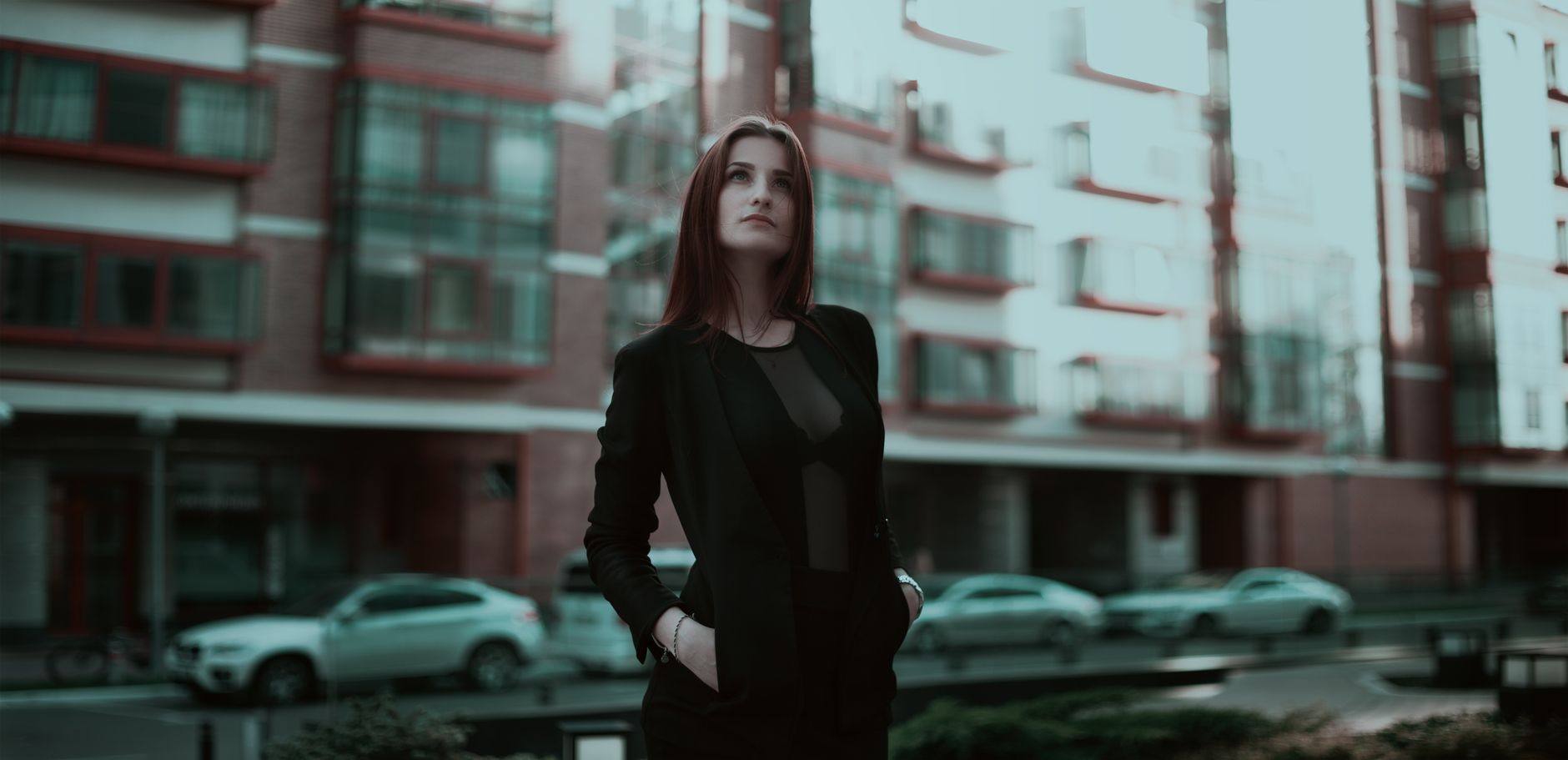
The Cavendish crowd went quiet in Act Two on opening night. Not polite, well-behaved quiet — gone quiet, stopped-breathing quiet, the kind where you can hear the person next to you swallow. That is what The Devotee is capable of. That is also why it’s so infuriating that Act One almost talks you out of staying.
The show — book by Renata Flores, music and lyrics by the team of Osei Bonsu and Clara Mendenhall — is a musical about fandom, which sounds like a bad idea and mostly isn’t. The story follows Margaux, a failed actress turned obsessive superfan who reconstructs her entire identity around a Broadway star named Delia, gets a job in Delia’s orbit, and can’t figure out which version of herself is real anymore. It is a show about parasocial relationships, about the gap between the performance and the person, about how we consume artists and what that consumption costs everyone involved. There is real meat there. Flores mostly gets to it.
The problem is the first forty-five minutes, which behave as if the audience needs to be coaxed into the premise rather than dropped into it. Director Tomás Aguilera stages the early scenes with a deliberateness that softens every edge. The reveal of Margaux’s apartment — obsessively wallpapered with programs, photographs, and handwritten timelines of Delia’s career — should be a gut-punch of a set piece, and the design by Nadia Voss is genuinely striking when the walls finally flip open: layers of printed paper visible through scrim like geological strata of devotion. But Aguilera holds at arm’s length when the show needs to put its nose right against the glass. We should feel the claustrophobia. We feel instead a tasteful remove.
Pero then Vanessa Okafor walks into Act Two and the show becomes something else entirely.
Okafor plays Margaux, and she is the main event. In Act One she does good, careful work — precise with the comedic timing, calibrated in her brittleness. In Act Two she is incandescent. The confrontation scene with Delia, built on a melody that Bonsu and Mendenhall have been wisely withholding for ninety minutes, gives Okafor the chance to show you exactly where the seams of a person come apart, and she does it without a single unnecessary gesture. Her voice in that number — “Margaux, Just Margaux” — has the quality that great musical theater voices actually have, which is that technique disappears and you stop thinking about singing and start thinking about the character’s survival. The room stopped. Just stopped.
Cecelia Park, playing Delia, is required to be charismatic and elusive simultaneously, and it is a harder balance than it looks. She hits it. Her voice is not the most technically formidable instrument in the room, but she knows what she is doing with every note, and there is a scene in Act Two where Delia realizes she has been misread her entire career — not by Margaux, but by everyone — that Park plays with a quietness that could have tipped into nothing and instead becomes devastating.
The orchestra, conducted from the piano by Weston Briggs, is doing something interesting with the score that deserves mention: the orchestrations by Luisa Ferreira thin out as Margaux’s grip on reality loosens, instruments returning only when she is in proximity to Delia. It is compositionally smart and rewards the listening ear. It is also the kind of choice that doesn’t read at all from the cheap seats, which is a problem if you want it to land for the whole house and not just the orchestra subscribers. Ay, bendito — you can be too clever.
Look — you should see The Devotee. You should see it because Vanessa Okafor is doing something that belongs in any serious conversation about what this season has to offer, and because the second act is the kind of theater that makes the whole enterprise feel worthwhile. Get there and be patient with Act One. The slowness is not fatal; it just asks more of you than a tighter production would need to. Flores has written a musical with genuine ideas about obsession and identity, and ideas are rarer than good singing. Estamos aquí.