
“Flood Light” is the best new musical this Broadway season has produced. I am not hedging that sentence. Go buy the ticket and come back to read the part where I explain what it costs you.
The show at the Whitmore Theatre follows Jo Rael, bandleader and impossible woman, steering an all-girl swing orchestra through the 1944 touring circuit while the country is at war and the record labels watch from a cold, skeptical distance. The score, by first-time Broadway composer Cal Rosenberg, sounds like it was written from inside a particular moment in American music. The brass arrangements have the kind of period-specific accuracy that usually shows up in academic papers, not second balconies. These songs know exactly what they are.
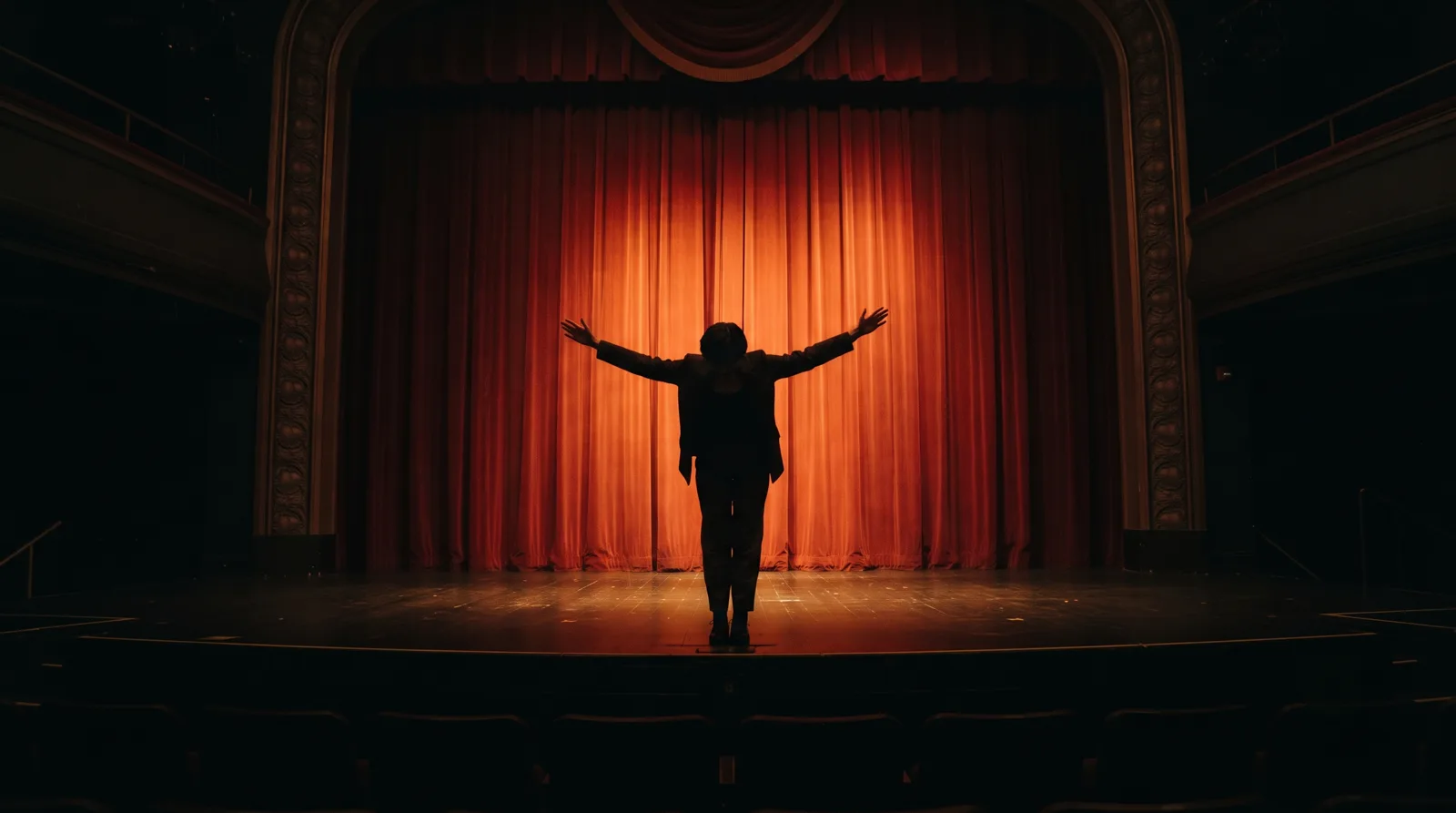
Zara Osei plays Jo, and she is a reason to have a theater industry. What she does in the second-act number “Keep the Beat” is the kind of thing you will try to describe to someone who wasn’t there and fail. She holds a long note at the top of the bridge, and something happens in the release of it: the technique disappears completely, and what is left is just a woman who needs this orchestra to survive. The row I was sitting in didn’t applaud when that number ended. We forgot to. We sat there for a full beat while our hands stayed in our laps, and then the house came apart. I’ve covered enough opening nights to know: that silence before the applause is the real review.
Director Petra Hollingsworth has made the tightest large-scale production I’ve seen from her. Kwame Addison’s set is a traveling miracle: a bandstand that becomes a hotel corridor, becomes a radio studio, becomes a rain-wet bus platform, without a single blackout, the transitions lit from below the stage floor by cues so clean you don’t notice them happening. You just notice you’re somewhere different. That is the work.
So why am I not giving it five stars? Because Act Two has a specific problem: the character of Marcus Delacour, the record label man who spends three scenes explaining his villainy out loud instead of demonstrating it. Raymond Luce plays the role with visible commitment and no room to work. Hollingsworth has staged those scenes at a distance that keeps Delacour theoretical when he should be threatening. The confrontation in the penultimate scene lands with less force than it deserves, because we haven’t been allowed to fear him properly. When Jo finally calls his bluff, the audience leaned back instead of forward. We had lost the stakes for twenty minutes by then.
Ay, bendito, it’s frustrating, because everything around those scenes is so good. Ximena Castillo, as Jo’s second trumpeter and conscience, is doing the kind of quiet work that gets nominated before people realize she stole the show. Her face in the background of the Act One closer, watching Jo make a decision Castillo’s character knows is wrong, is worth more than most solo numbers I’ve seen this year.
The ensemble sings like they’ve been playing together for years. The orchestra, conducted by Parveen Nair, is in the band, not in the pit: visible onstage the whole evening, and that choice alone changes the relationship between sound and story in ways I kept noticing for different reasons every fifteen minutes.
Here is the thing: you should go. You should go because Zara Osei is doing the best work of the season, live, right now, in a room you can be in. You should go because Cal Rosenberg’s score is the kind of score that makes you want to understand music better than you do. You should go and let Marcus Delacour’s underwritten villainy be the thing you complain about on the way to dinner, which is a good problem for a show to give you.
“Flood Light” is not perfect. It is alive in ways that perfect shows often aren’t. Estamos aquí.