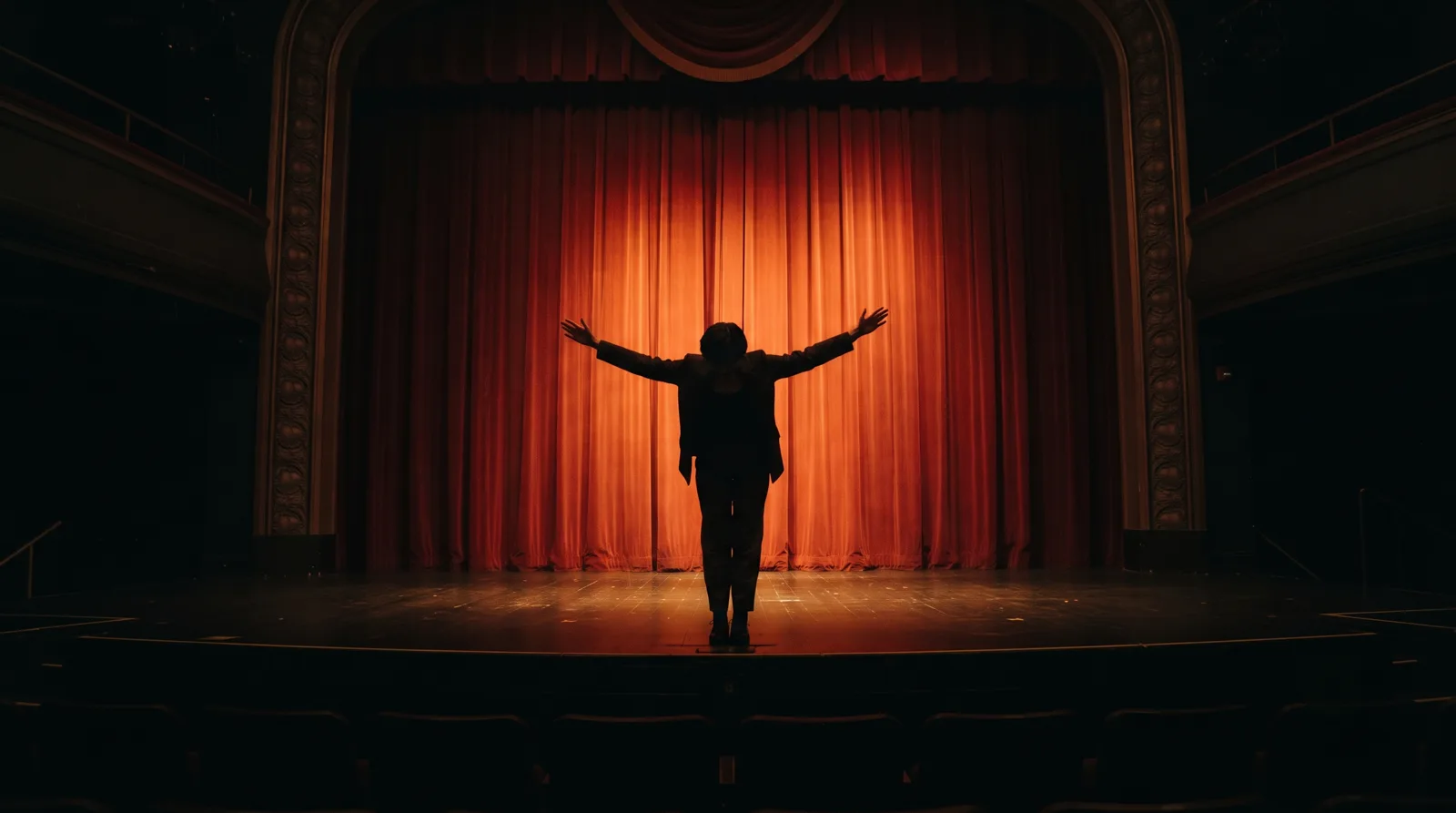

The Sager Theatre has not felt this alive in three seasons. That is the first thing to say about “The Glass Meridian,” Yael Nordstrom’s new musical, and it is not a soft compliment. It means the air in the room changed when the lights went down. It means the audience, a Wednesday matinee crowd that usually settles in for comfort, sat up straight and stayed that way for two hours and twenty minutes without a single person reaching for their phone.
Nordstrom’s book follows three generations of a Bohemian glassblowing family from the immigrant docks of 1910 to a Cleveland workshop in 1968, and the story is genuinely ambitious in a way that musicals rarely are anymore. The score does what great musical theater scores do: it uses harmony to say what words can’t. The opening number, “What the Fire Holds,” sets the family’s trade and stakes in a single six-minute sequence that accumulates the kind of emotional weight most shows spend all of Act One trying to build.
Celeste Amara plays Marta, the family’s matriarch at every age, and she is the reason this show works. Let me be specific. When Amara moves from the young Marta of 1910 to the seventy-year-old Marta of 1968, she does it without a costume change, without a blackout, simply by changing the weight she carries in her shoulders. The audience gasped. The actual physical sound of thirty people breathing in at once. That moment is what live theater exists to produce, and Amara produces it with the kind of technical command that makes you feel slightly ashamed you ever doubted her range.
Pero. There is always a pero.
Director Petra Chase has done extraordinary work throughout, except in the second half of Act One, where the show’s central tragedy, the fire that destroys the workshop and one of Marta’s sons, gets staged with a restraint that reads as timidity rather than taste. The lights go blue. The ensemble freezes. The fire is implied rather than felt. I understand the instinct. I do not agree with it. This is the moment the story turns, and turning it quietly means the audience arrives at intermission unsure whether they’ve witnessed a crisis or a mood. The second act has to do extra work because of this, and it mostly succeeds, but you can feel the drag.
The set, designed by Octavia Brennan, deserves its own sentence. She has built a furnace that breathes. It sits upstage center through the entire show, banked low in the first scenes, blazing in the climax, and its state tells you everything about the family’s fortune before anyone sings a word. The lighting design around it, a live-feel amber that shifts to industrial cool as the decades pass, is the kind of work that critics who only watch the performers miss because they forget to look at where the light is coming from.
Marco Dulce, as the eldest son Alois, handles the mostly comedic material in Act One with warmth and real skill, and then breaks your heart in the second act in a way that earns the break. The transition happens in a single scene. Dulce gives you two men in the same body, and both of them are true.
The orchestra, twelve pieces under music director Yuna Takahashi, sounds like twice that many. Nordstrom writes for the brass in a way that’s practically extinct on Broadway right now, which is a shame, because this score reminds you what a muted trumpet can do to a room full of people who thought they were just watching a show about glassblowers.
Look, mija. You should see this show. You should see it because “The Glass Meridian” is the kind of new work that justifies why we keep building theaters, why people keep writing musicals in a world that gives them every reason not to. It is not perfect. The fire scene is a real problem and I hope Chase revisits it. But the rest of it is so good, and Celeste Amara is so extraordinary, that I am telling you to buy the ticket tonight. Not this weekend. Tonight.
Estamos aquí.