
Camille Dorset is going to win something for this. I don’t know which award and I don’t care which award, but the performance she delivers in “Maravilla” at the Brennan Theatre is the kind that gets remembered long after the production around it closes. The fact that the production is also extraordinary is either luck or design. I’m going with design.
“Maravilla” follows Ivelisse Crespo, an Afro-Cuban jazz singer who arrives in New York in 1952 with a voice, two suitcases, and a legal dispute with her ex-husband over the stage name she made famous in Havana. The book by Tomás Henriquez does not waste a single scene setting up what this woman is fighting for, and composer Alondra Fuentes has written a score that earns its big moments, every one. The songs don’t just serve the story. They are the story. That’s rarer than it sounds.
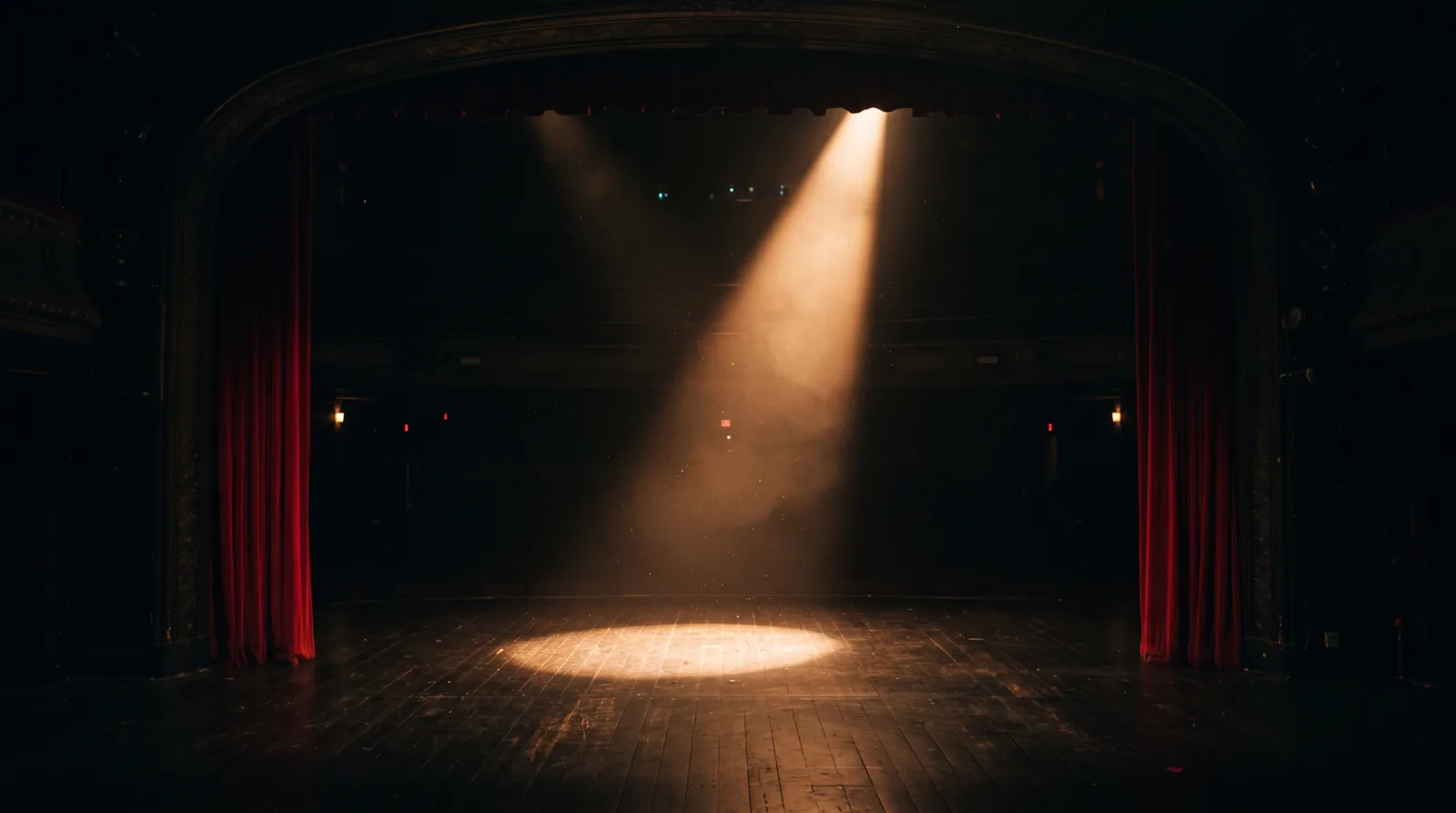
The Brennan’s stage is dressed by set designer Phineas Callaway in a series of overlapping translucent panels that shift between Havana’s warm tobacco light and the cold neon of the 52nd Street corridor, depending on which world Ivelisse is inhabiting. When she crosses between them, lighting designer Yuki Ogata bleeds the two palettes together, neither one quite taking over. It’s not a flashy effect. It’s a smart one. The design is telling you something the book then confirms: this woman is never entirely in one place at once.
Now, Dorset. Mija, I’ve seen her in three shows and I’ve waited for this. Her voice in the middle register has always been distinctive, but in the title number she does something I haven’t heard from her before: she drops below where you’d expect and stays there, building pressure rather than releasing it, so that when the release finally comes, thirty bars later, the room actually gasped. Not applauded. Gasped. That is the difference between singing the emotion and making the emotion happen to the audience. Dorset made it happen. The woman three seats to my left put her hand over her mouth. I watched her do it.
So why do I have reservations? Because Act One has a pacing problem that director Rosario Vives does not fully solve. The scenes establishing the legal conflict are necessary, pero they don’t sing the way the rest of the show sings. Henriquez’s dialogue is crisp and specific, but the staging keeps interrupting the momentum with ensemble numbers that are well-danced and contextually thin. The ensemble, led by choreographer Devon Achilles, is technically excellent. They are also, for three numbers in a row, filling time while the plot waits for them to finish. By intermission, we’ve been told who Ivelisse is approximately four times too many.
The second act fixes this immediately and doesn’t apologize for it. Vives strips the staging back, the ensemble disappears for long stretches, and Dorset is left alone with the material. The result is the best forty-five minutes of new musical theater I’ve seen this year. The confrontation scene between Ivelisse and her ex-husband Rodrigo, played with controlled menace by Alejandro Merced, lands like a slap. Merced doesn’t play the villain. He plays a man who believes he is owed something. Those are different performances, and the distinction makes the scene work.
The orchestra under conductor Priscilla Yuen is playing Fuentes’s arrangements like they mean it, which is to say: loud when the music wants to be loud, quiet when the music needs to be quiet, and not confusing the two. That should be a low bar. In practice it’s not always.
You should see this show. You should see it because Camille Dorset is giving a performance that will be talked about, and because the second act justifies every ticket price in the house. Arrive with patience for an Act One that takes too long to trust itself, and stay through every note of the curtain call because Fuentes adds a coda that recontextualizes everything you just watched. New musicals this willing to do the work, to build a full human being out of sound and light, don’t arrive on Broadway often enough. Get there.
Estamos aquí.