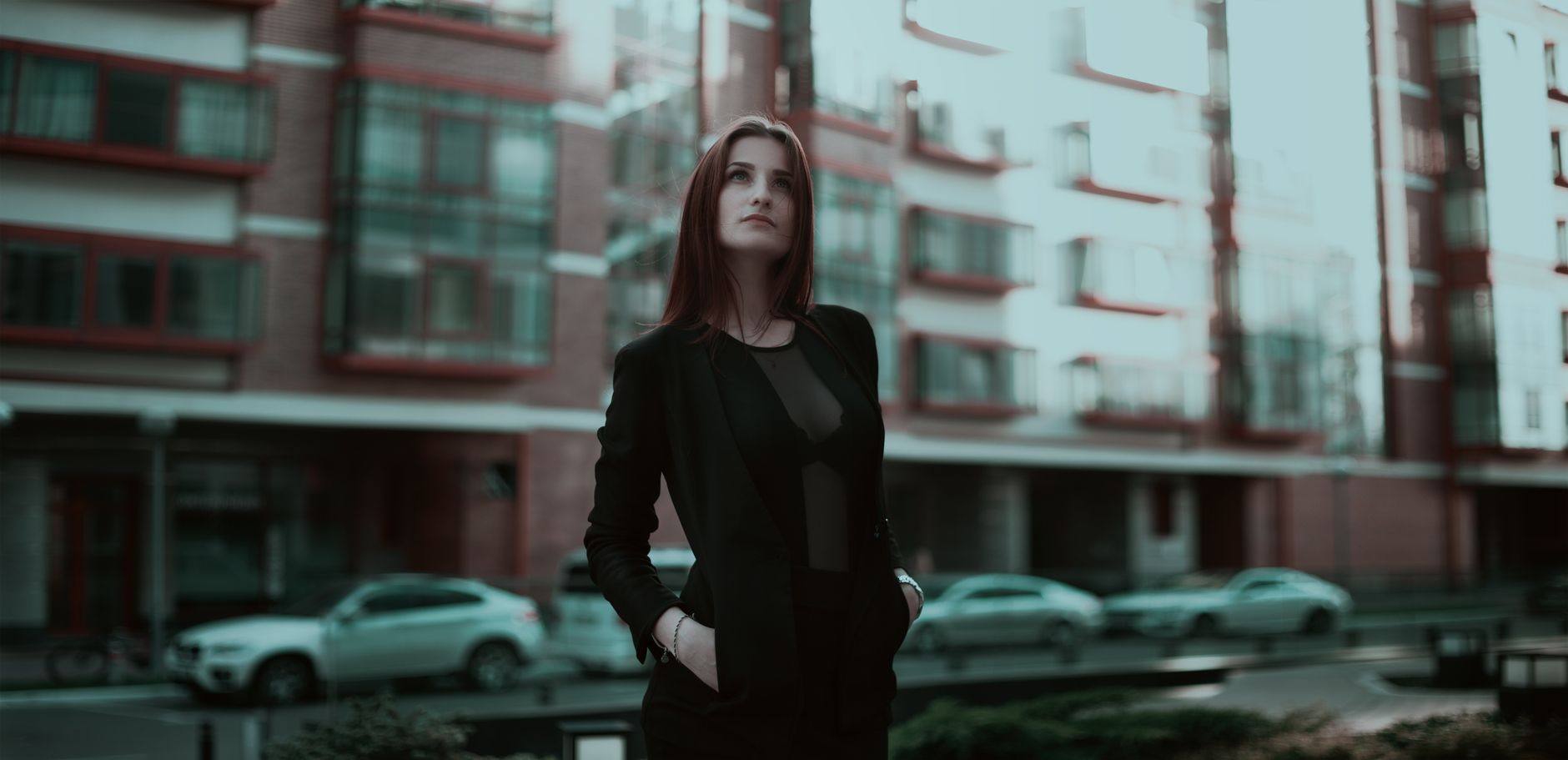
The sound that comes out of Zola Echeverría’s mouth in the second act of “Perihelion” is not singing. It is reckoning. That is the difference between a good performance and a great one, and Echeverría is doing the great thing, every night, at the Harrington Theatre.
“Perihelion” is a rock musical about Cosimo Aldari, a fictional sixteenth-century cosmologist who bets his life on a heliocentric model that the Church has already decided is heresy. Composer-lyricist C. Kent Ashworth writes harmonically dense, electroacoustic scores that belong in some tradition between Sondheim’s contrapuntal architecture and the chest-open rawness of punk, and most of the time that tension is exactly right for this story. Director Priscilla Navarro has built the production around a central visual conceit: a massive suspended orrery that rotates slowly throughout the whole evening, its brass rings casting grid-like shadows across every scene. When Cosimo’s argument is winning, the shadows align. When he is losing, they fracture. It is the best piece of direction I have seen this season.
So why is Act One such a problem? Because Ashworth and his book collaborator Tomas Hecht have packed forty-five years of Cosimo’s biography into ninety minutes, and the compression turns characters into argument-delivery systems instead of people. Marcus Deng, who plays the Chief Inquisitor, gets one song and three scenes. In those three scenes he is mesmerizing, because Deng has this quality where stillness reads as violence and you cannot look away from him. He deserved a full through-line. He got a cameo.
The ensemble numbers in Act One are also fighting an enemy that is invisible: the sound design. The Harrington is a mid-size house and the balance between the live band, which sits in a visible pit upstage, and the singers keeps tilting toward the band. In the opening number, “Celestial Bodies,” I lost the lyric almost entirely. Ashworth’s harmonies are built on specific text. When you can’t hear the text, you lose the point.
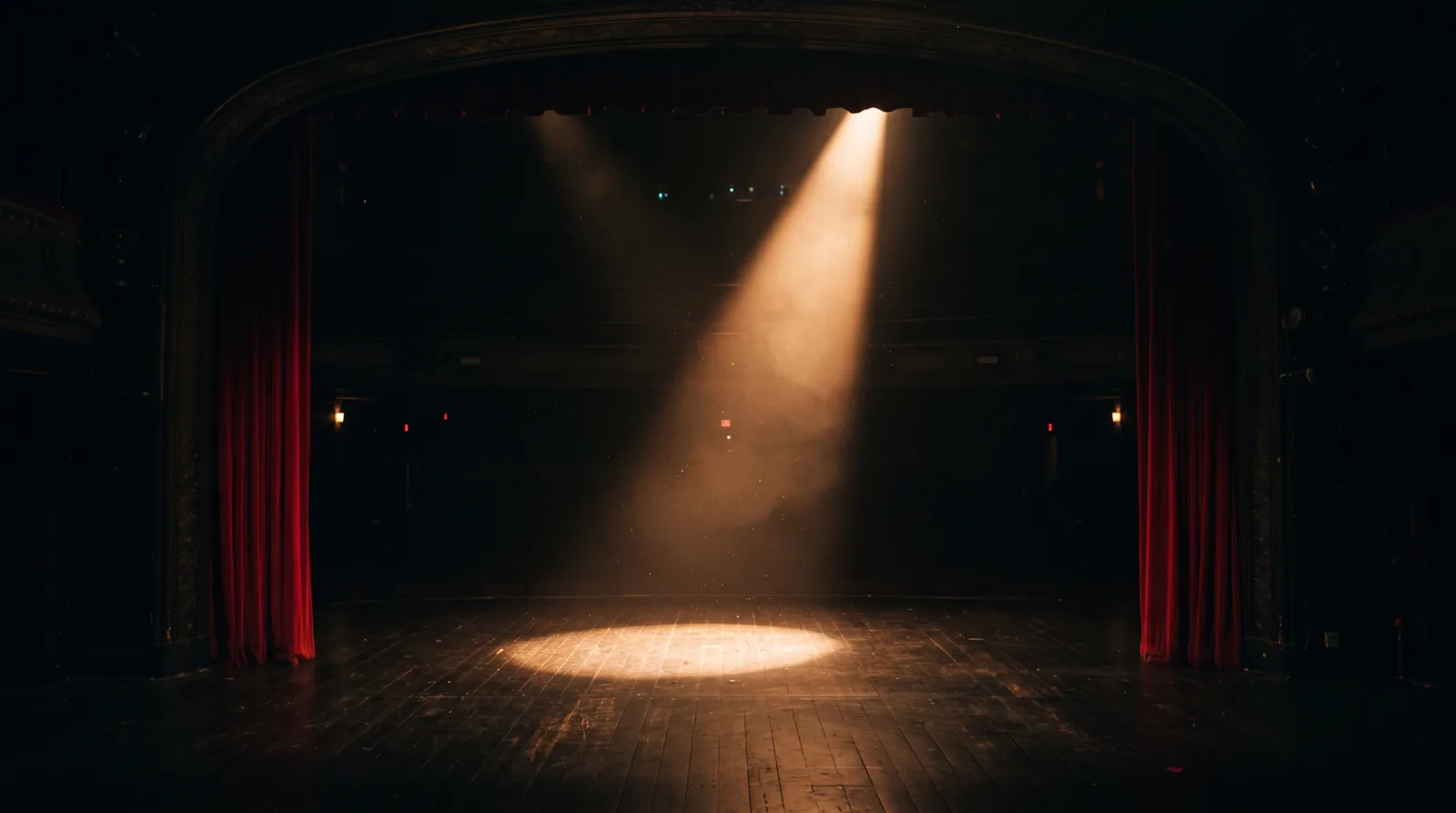
But then the second act opens, and the orrery starts turning faster, and Echeverría steps to the lip of the stage and sings “Fixed Star” directly into the house, and you remember why you keep buying tickets. The audience around me stopped shifting. Stopped checking watches. I watched the woman in the seat next to mine grip the armrest with both hands. That is not a metaphor. That is what a great musical theater performance does to the room: it makes the room hold still.
Navarro’s final staging, Cosimo’s recantation, is played not as defeat but as strategy, and the choice reframes everything that came before it. The orrery drops to just above the actors’ heads, the shadows close in, and Cosimo signs his name to the document while the ensemble hums the harmonic fragment from his great argument, now in a minor key. It is heartbreaking. It is also precise. Those two things together are rarer than people pretend.
Pero here is the real question: what do you do with a show this uneven? You go, mija. You go because the second act is doing something this Broadway season has mostly been too cautious to attempt, which is asking you to sit inside a genuine philosophical argument and feel it in your body. You go because Echeverría’s performance is going to outlast this run in the conversation. You go because Marcus Deng is there, doing more with three scenes than most leads do with a full arc, and you want to be able to say you were in the room.
Arrive knowing the first act is going to ask for patience. The orrery will be right above you and you won’t yet understand what it’s doing, and a few of the songs will wash over you without quite landing. Stay. Because when “Perihelion” decides to be what it can be, it is the real thing. I’ve seen it twice now. Both times, the second act made me forget how to breathe.
Estamos aquí.