
Okay, so. Let me tell you what I have been watching happen in this industry for the past eighteen months, because it is either the most exciting trend in theatrical casting or it is the longest-running experiment in managing audience expectations, and I have finally made up my mind about which one it is.
It started, roughly, when the awards circuit started reading like a Broadway Playbill in a parallel universe. Name after name: people who did their time in regional theater before cable decided to pay them better. They go to TV, they get acclaimed, and then something in them, some muscle memory, some need the camera cannot satisfy, pulls them back to eight shows a week. We have been getting a lot of that lately. Some of it has worked. Some of it has not.
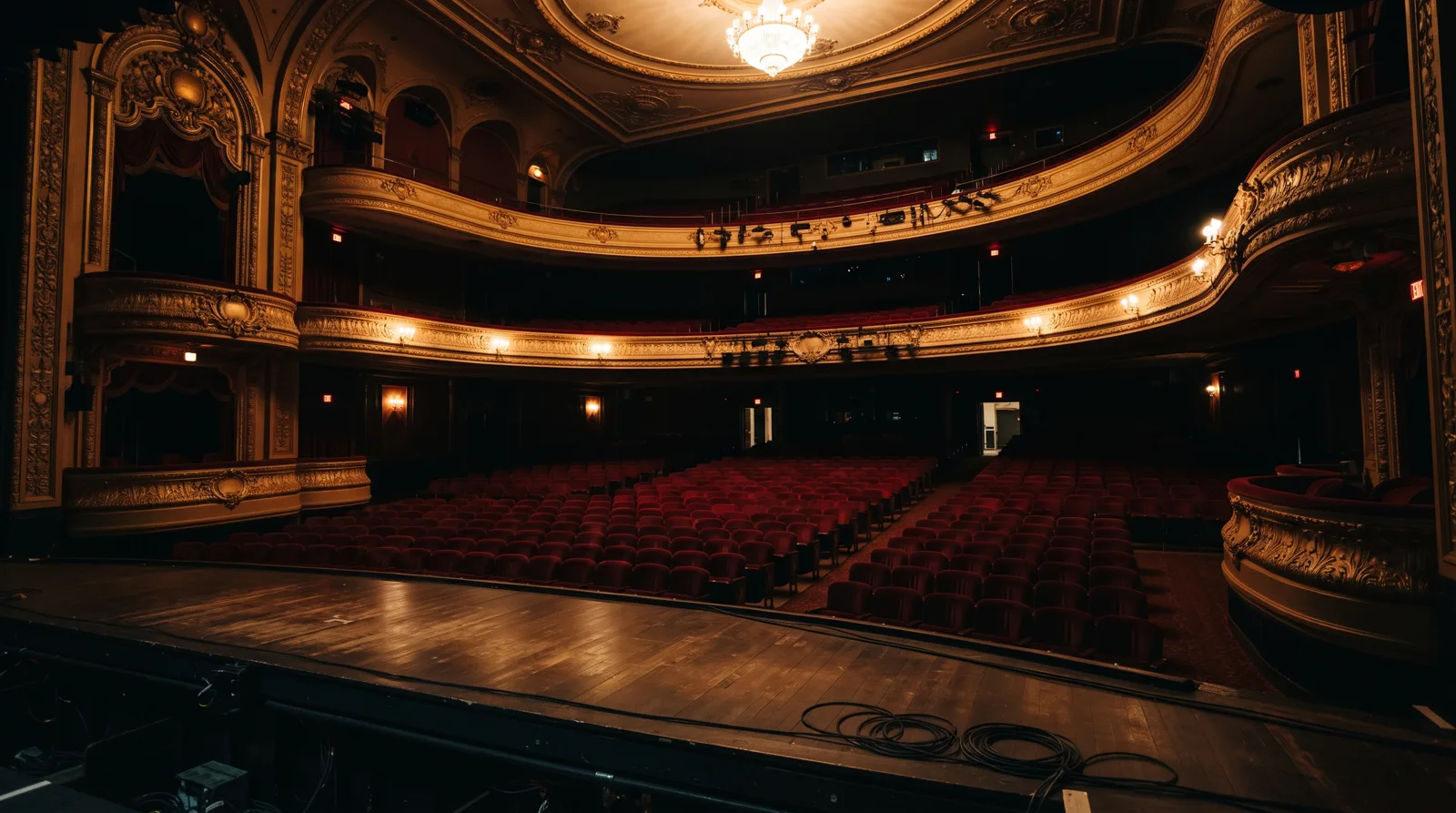
Then I saw Devorah Lattimore step onto the stage at the Aldus Theatre in “Cascade” last Tuesday, and I understood EXACTLY why this particular experiment is worth watching.
For people who don’t know Lattimore from her three seasons on the acclaimed drama “Clear Signal”: she is one of those performers the camera loves almost too much. It flattens the room for her. You watch her on screen and you think: that is a complete artist. Then you sit thirty feet from her in a live house and you realize the camera was only getting a quarter of what she does. The other three-quarters are architecture, the way she fills a physical space, the way her stillness in a scene makes the audience stop breathing.
“Cascade,” directed by Nadine Saulsberry and choreographed by Jerome Whitfield, is the right vehicle for her for reasons that go beyond smart casting. Whitfield has built the entire show around a tension between solo precision and ensemble mass. There is a sequence midway through the second act where Lattimore stands at the absolute center of the stage and does almost nothing, while twenty-six dancers orbit her in expanding and contracting circles, the formation tightening each time until they are shoulder to shoulder around her in a complete ring. It is a staging choice that only works if the person at the center has the kind of presence that justifies twenty-six other bodies serving as a frame. Lattimore justifies it. The whole room understood what the geometry meant.
Here’s the thing about Whitfield’s choreography more broadly: he is doing something sophisticated with weight transfer that I have not seen used this deliberately since the mid-career work of people who understood pedestrian movement as theatrical language. His ensemble does not dance at you. They move like their bodies have a relationship with gravity that is specific to each of them, and then that relationship becomes collective in the group numbers. The unison is not synchronized precision, it is synchronized weight. That is a different accomplishment. That is HARDER.
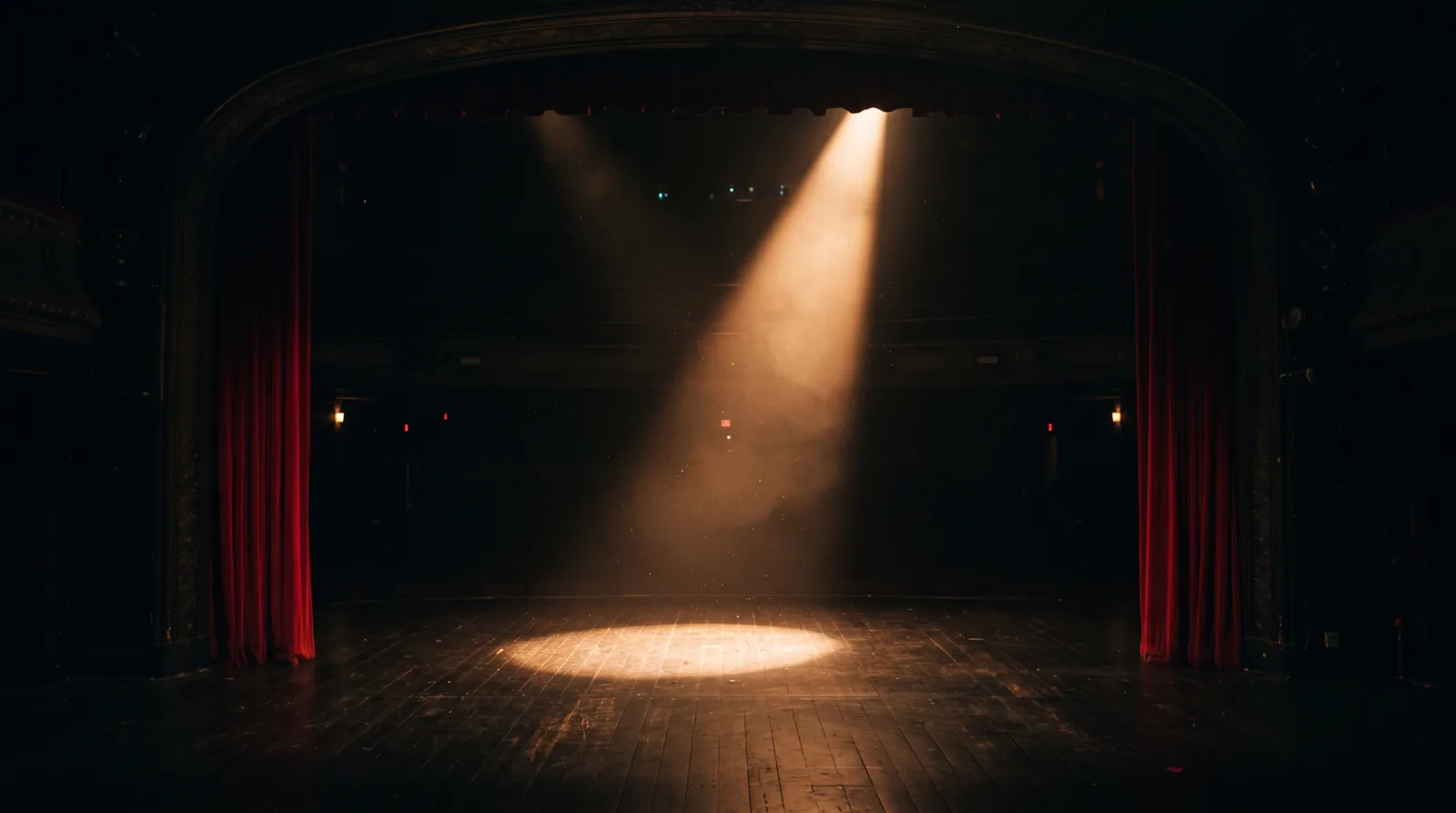
Lattimore herself gets a diva entrance in act one that I will not spoil, except to say that lighting designer Petra Cho makes a choice about fixture angle that explains everything about the character before a single word of exposition lands. Cho is hitting on all cylinders in this show.
Okay, here is where I have to be honest with you. The book, written by Marcus Brill, does not always rise to the level of what is happening around it. There is a monologue in the final scene that is reaching for something transcendent and lands somewhere closer to sincere. The production is so much more precise than that monologue deserves that you feel the gap. Saulsberry stages it beautifully. Lattimore delivers it with everything she has. But the writing is the one place where “Cascade” is not yet what it is trying to be.
That said: this is the kind of show I wait for. The kind where the industry’s circular pipeline between television fame and theatrical credibility actually produces something that could only exist at this specific intersection. Devorah Lattimore has been WORKING for a decade across two mediums, and she brought all of it to this stage. The result is a spectacle that keeps its promise to everyone who walks in.
Go see “Cascade.” Make noise when the ring forms. Watch Whitfield’s ensemble when Lattimore is not moving, because they are the argument the show is making.