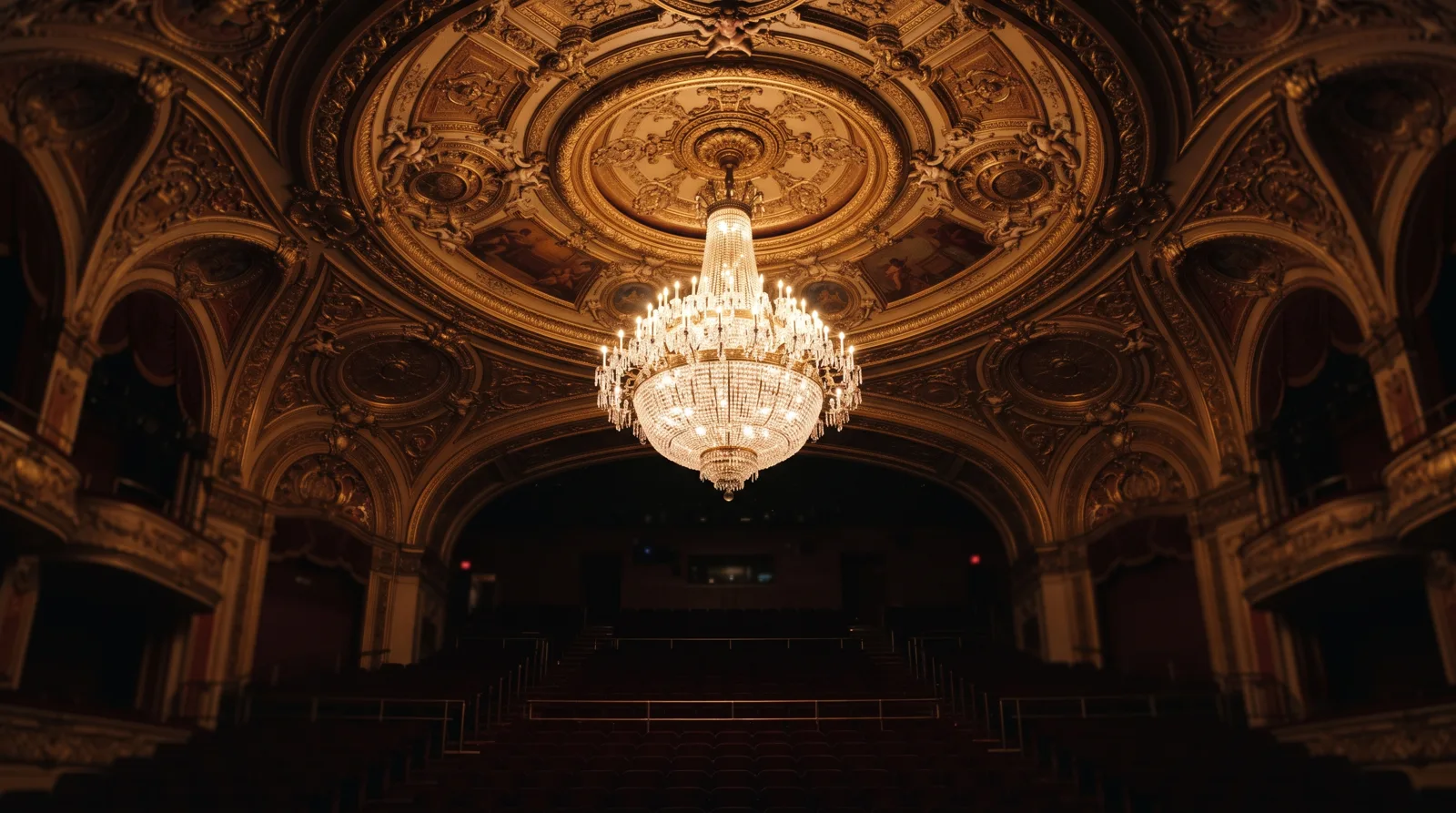

Ava Patel’s newest play “Echoes of Eden,” directed by Rajiv Gupta, is set to make its world premiere at the newly renovated East River Theatre this month. The play intertwines narratives through a non-linear structure that disrupts traditional chronology, placing it in conversation with the avant-garde works of Sarah Kane and Caryl Churchill. This bold choice positions “Echoes of Eden” as both commentary on and continuation of postdramatic theater’s exploration into form.
Patel’s script is characterized by its fragmented dialogue, which Gupta has directed to create an immersive experience for the audience. Using a rotating set design that transforms the East River Theatre into various settings within the play, Gupta invites viewers to be active participants in each scene shift. This interactive approach echoes the work of director Katie Mitchell, whose productions have similarly used intricate set designs to enhance narrative complexity.
The cast includes debutante Aisha Malik as the central character, a woman grappling with memory and identity, while longtime theater veteran Akhil Patel portrays her estranged brother, providing a strong emotional anchor for the play. Despite their nuanced performances, the writing occasionally falters in maintaining a coherent through-line amidst its structural daring. Certain moments feel like they drift into mere exercises in form rather than advancing the narrative or character development.
In his directorial choices, Gupta prioritizes Patel’s formal experimentation over narrative clarity at times, which can make for a challenging audience experience. It’s a risk that comes with the territory — one that rewards those willing to stay engaged with its intricate layers and bold concept.
“Echoes of Eden” is as much about the construction and deconstruction of storytelling as it is about the characters’ own struggles with reality. Patel’s script challenges our understanding of time, memory, and identity through a kaleidoscopic lens, but it may leave a gap in emotional resonance for some viewers expecting more traditional narrative arcs.
It’s a very good play that wants to be a great one. Whether “Echoes of Eden” reaches that benchmark remains to be seen, but the ambition is undeniably there. And if you’re looking for theater that makes you think as much as it moves you — and you have an appetite for complex formal experimentation — then yes, this play is worth your time.