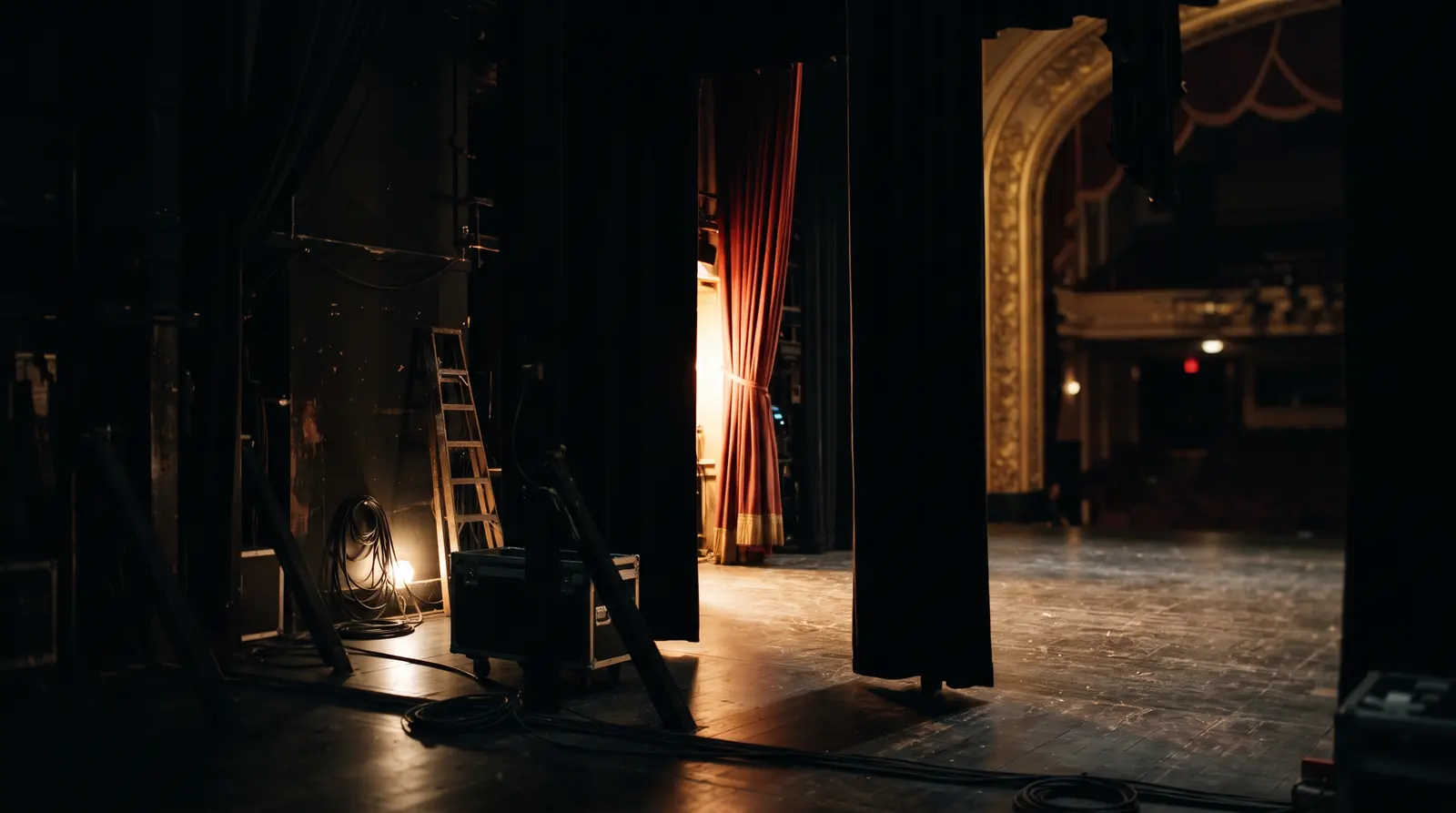

Off-Broadway newcomer Alok Sharma’s “The Echo of Silence” debuts at The Living Room Theatre in a production that ambitiously blends elements of Brechtian theater with contemporary queer storytelling. Directed by the innovative Ajay Patel, this play digs into the complexities of identity, love, and silence through a fragmented narrative structure.
Structured like a series of interlocking vignettes, “The Echo of Silence” presents a non-linear exploration of its characters’ lives that challenges traditional notions of linear storytelling. The form is reminiscent of Caryl Churchill’s fragmented narratives in plays such as “Cloud 9,” but Sharma’s work takes this approach to question the silence and erasure experienced within queer communities.
Sharma, whose previous works have been celebrated for their bold explorations of queerness, further pushes his craft here by incorporating elements of verfremdungseffekt, or alienation effect. This technique, famously employed by Brecht, is meant to disrupt the audience’s emotional identification with the characters so they can more critically consider the social and political implications of the story.
Patel’s direction masterfully navigates these ambitious formal choices, using a stark, deconstructed set that mirrors the play’s fragmented approach. The actors move smoothly between roles and time periods, using minimal props and lighting to emphasize the interwoven nature of their characters’ experiences.
One notable aspect is the way Sharma uses silence as both a character and a motif. There are moments where the text is deliberately silent, forcing the audience to confront what is not said, which ties into themes of queer invisibility and oppression. However, while this formal choice adds depth to the narrative, there’s a moment where it feels underutilized, particularly in Act Two, where certain scenes rely too heavily on exposition rather than allowing the silence and fragmented storytelling to carry the emotional weight.
Though “The Echo of Silence” occasionally stumbles due to some structural elements feeling slightly unresolved or over-explained, the overall impact is profound. It’s a play that demands its audience sit with discomfort and question their perceptions, which is exactly what makes it worth your time.