

Carmen:
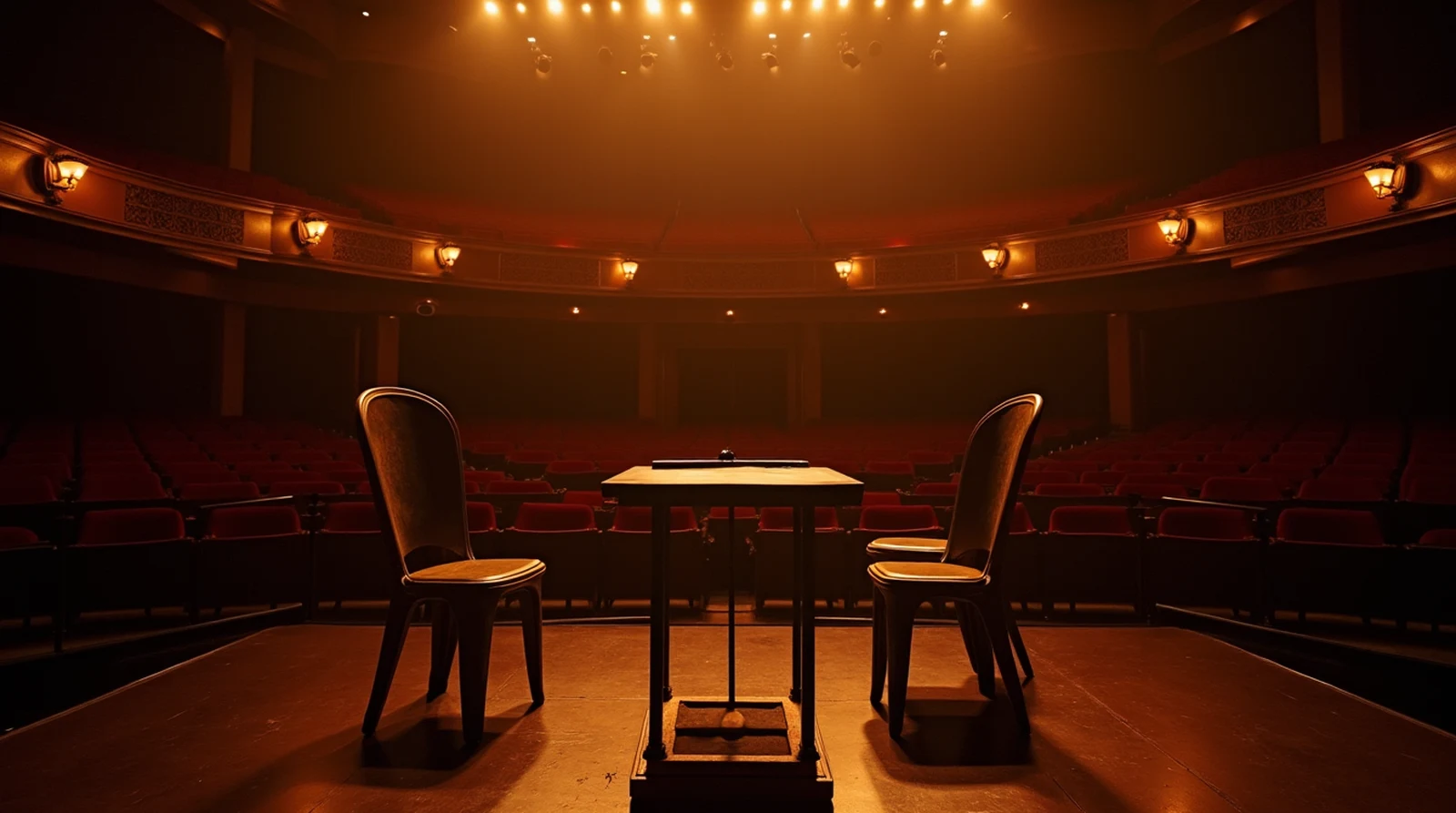
“Rhapsody in Steel” is a tricky beast. I mean, it’s trying to do so much that the challenge is almost admirable on its own. Director Lucio Fuentes hasn’t skimped on ambition here and, ay, let me tell you, when he hits his notes, he hits them hard. The set, designed by René Alvarado, gives an authentic sense of gritty New York streets in the early 1900s; it’s like walking into a museum dedicated to this city’s industrial heritage. But that’s also part of what makes it confusing: where is the show trying to go? When the title character, played with raw emotion by Juan Carlos López, takes the stage and belts out his first solo, he brings the kind of intensity you can feel in your gut. The audience leans in; they’re hanging on every word, especially when it’s delivered with such power.
But then Act Two comes along, and suddenly we’re seeing a very different show from what opened last night. I’m not saying that isn’t allowed, hell, theater should challenge us, but the shift feels abrupt, as if someone flicked a switch. The choreography by Marisol Cruz starts to feel like it’s overcompensating for gaps in the story rather than complementing them; the moves are there, but they don’t always land with the emotional weight needed. And when that happens? You can almost see the audience members looking at their watches.
Let me be clear: I’m not writing this off because of these missteps. “Rhapsody in Steel” is a work by real artists trying to make something meaningful. But it’s also evidence that not every piece in development has found its voice yet, and sometimes that’s the whole point, if you believe in the music and you’re willing to stick around for when those sparks finally catch fire. Estamos aquí.
Priya:
“Rhapsody in Steel” opens with a bold formal claim; it is, at its heart, an attempt to blend the historical specificity of 1900s New York with contemporary sensibilities. The set design by René Alvarado, which Carmen rightly praises for its authenticity and attention to detail, is one of the strongest elements here; it grounds the story in a time when steel mills and tenement life were the backdrop against which many American stories unfolded. However, this show’s ambitions are not solely formal; it wants us to feel something too.
The score by Juan Carlos López, who also stars as the titular character, is indeed arresting. It’s an amalgamation that pays homage to historical musical traditions while layering in modern motifs and rhythms. But López’s performance, for all its intensity, seems at times like a directorial attempt to paper over narrative inconsistencies rather than a natural extension of the character’s arc. The first act brims with this tension: it’s clear that “Rhapsody” wants to interrogate the human condition in industrial America, but its methods are as messy as they are passionate.
In Act Two, however, the work falters not because of underdeveloped characters or thin plot, which Carmen alludes to, but due to a formal structure that, despite its initial promise, fails to sustain the weight of its ambitions. There’s a sense throughout that the script by Elena Rodríguez lacks the depth necessary to fully explore the themes it introduces. The narrative shifts abruptly, leaving us with a sense that we’ve seen this story before, only now it’s set in a steel mill rather than on an island.
Ultimately, “Rhapsody in Steel” is too ambitious for its own good; while it aspires to craft something new from old materials, it often feels like the seams are showing. It wants to say something important about work and community but does so without fully interrogating these themes with the formal precision they deserve. If “Rhapsody in Steel” can find a more coherent voice, a grammar that allows its story to breathe as fully as its score demands, it could have real staying power. As it stands, though, it’s best experienced with eyes peeled for glimpses of promise rather than full-blown triumphs.
Imani:
Okay here’s where I have to be real with you. Carmen and Priya both hit on some crucial points about the production of “Rhapsody in Steel,” but let me tell you something straight from my dancer eye. René Alvarado’s set design, while praised by both of them, is not just the backdrop for this story; it is a choreographic partner to every single move made on stage. The way Marisol Cruz has worked with the space to create moments where dancers duck under industrial beams only to rise into the air in unison – that kind of precision and use of architectural elements as choreographic tools is pure brilliance.
Choreography, ladies and gentlemen, can tell a story just as powerfully as lyrics or script. And here’s the formation shift for you: Juan Carlos López’s performance does bring raw emotion to the stage, and while Priya suggests it masks narrative inconsistencies, I say it’s precisely those moments of high-intensity vocals that give us a glimpse into his character’s soul, which might otherwise be lost in the clutter of historical detail.
Let me go further: Act Two’s abrupt shift isn’t a miscalculation but rather an intentional deconstruction of the story structure. The choreography does feel like it’s overcompensating at times, but to say this is a failure ignores the sheer audacity of its ambition. “Rhapsody in Steel” is not just trying to tell us about industrial America; it’s asking us to live inside it with all its complexity and contradiction.
This show isn’t for everyone – it’s rough around the edges and at times feels like it’s showing its work, but that’s exactly what gives me hope. “Rhapsody in Steel” is not fully-baked, yet it’s a promise to explore something bigger than just nostalgia or musical craft. It asks us to consider how history shapes us, and it does so with an unapologetic modern twist.
So yes, go see “Rhapsody in Steel.” Expect to feel a little lost at times. That’s okay – that’s part of its daring. Make noise when the ensemble hits those formation shifts. Be ready for the unexpected, because this musical might surprise you more than it disappoints. Go with an open heart and a curious eye; “Rhapsody” is worth the trip.