

Carmen:
Muse is the best musical of this season, and I’m not interested in arguing about it — only in making sure you see it before someone talks you out of it.
Delphine Okafor has written something that earns its ambition. The premise sounds like it could go sideways fast: we’re inside the head of a model who has been painted, sculpted, and mythologized by the men around her, and the show is asking what happens when she finally speaks back. That’s a dangerous tightrope, and lesser writers tumble off it into didacticism. Okafor doesn’t. The score does the work — harmonically, these songs are doing something layered and careful, where the protagonist’s voice keeps interrupting the ensemble’s grand proclamations about her, cutting them down to size.
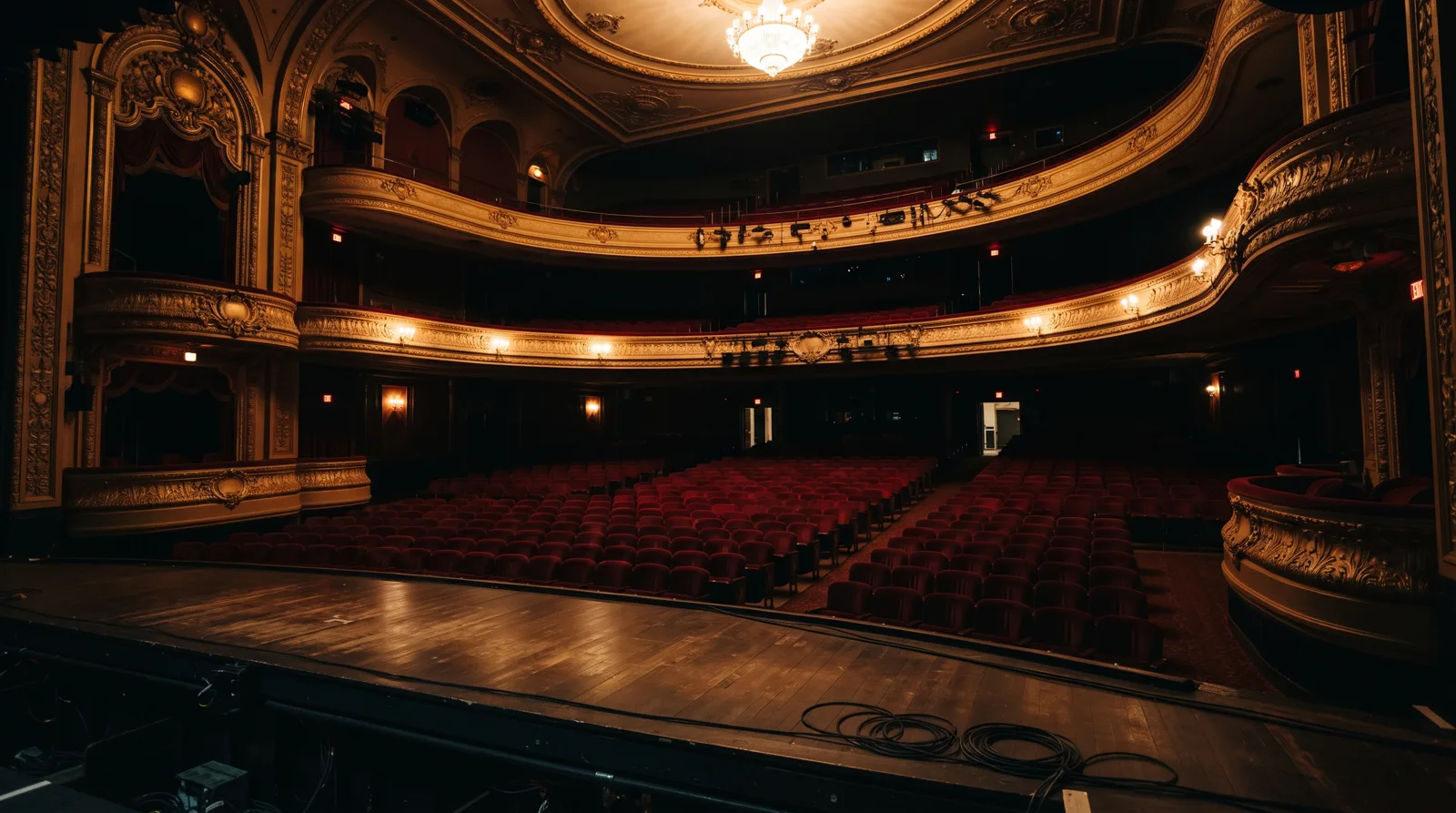
And then there’s Celestine Bautista. Ay, mija. Her second-act number — the one they’re calling “The Painter’s Eye,” where she turns every compliment she’s ever received into an indictment — that number is the best eight minutes of theater I’ve sat through this season. She does the thing great musical theater voices do where the technique disappears entirely and all you feel is the thought happening in real time. The Breckenridge Theatre went so quiet during that number that I could hear the woman next to me stop breathing.
Marcus Vail’s direction makes intelligent use of the scrim work in Act One — the layers of what’s seen versus what’s real are handled with precision, not pretension. When the scrims drop for good, it lands.
Yes, the book has a structural wobble in Act Two, Scene Two. Priya and I will not agree on how much that wobble costs the show. But a wobble is not a collapse. You go. You sit through all of it. You let Bautista show you what a performance at full extension actually looks like. Estamos aquí.
Priya:
Here is what I will grant Carmen: Celestine Bautista is doing something technically accomplished, and the harmonic interruptions in Act One are the most formally interesting idea in the show. The protagonist’s voice cutting through the ensemble’s grand declarations — that’s a real structural conceit, and for about forty minutes it works.
The problem is that Okafor doesn’t trust it.
By Act Two the show has abandoned the interruption logic almost entirely, and what replaces it is exactly the kind of legible emotional arc you would find in any well-made musical from the last twenty years. The form that made the first act interesting gets traded in for resolution. The protagonist doesn’t find a new grammar — she finds a ballad. Carmen calls what happens in Scene Two a wobble. I’d call it a capitulation, because the wobble is structural: the show stops being formally risky precisely at the moment the formal risk is most required.
This premise has serious predecessors. Adrienne Kennedy built entire plays out of the psychic violence of being mythologized by other people’s stories, and she never let her protagonists off the hook with clarity. What Okafor has written is a show that gestures at that tradition and then walks back from it, because it wants to be loved by the full house, not just the front third.
Muse is a very good musical that wants to be a great one, and the distance between those two things is the book’s unwillingness to follow its own formal logic to the end. Bautista earns everything she’s given. I wish the script had matched her.
Go if you want spectacle with a genuinely strong first act. Don’t go expecting the show that Act One promises.