
Okay, so. The thing about Broadway and activist biography is that everybody argues about whether it deserves the big treatment. Everybody. And then a choreographer like Damaris Ekwu walks into a rehearsal room and makes the argument for you, in the bodies of forty-three dancers, and suddenly the conversation is over.
Let me tell you what is happening with “Fault Lines,” which just closed its out-of-town engagement at the Meridian Theater in Philadelphia to something approaching a religious experience. The production, directed by Theo Nakamura and built around the story of fictional disability rights organizer Josephine Mercer, ran twenty-one minutes of continuous standing applause on its final Philly night. Twenty-one minutes. The ushers ran out of tissues. The theater’s own publicist posted about it from the parking lot at midnight.
Now look: I am not here to tell you that a long ovation equals a great show. I have given long ovations to things that did not hold up in the daylight. But I am here to tell you what I saw when I was in that room on the second-to-last Philadelphia performance, and what I saw was a production that understands spectacle as moral argument, not decoration.
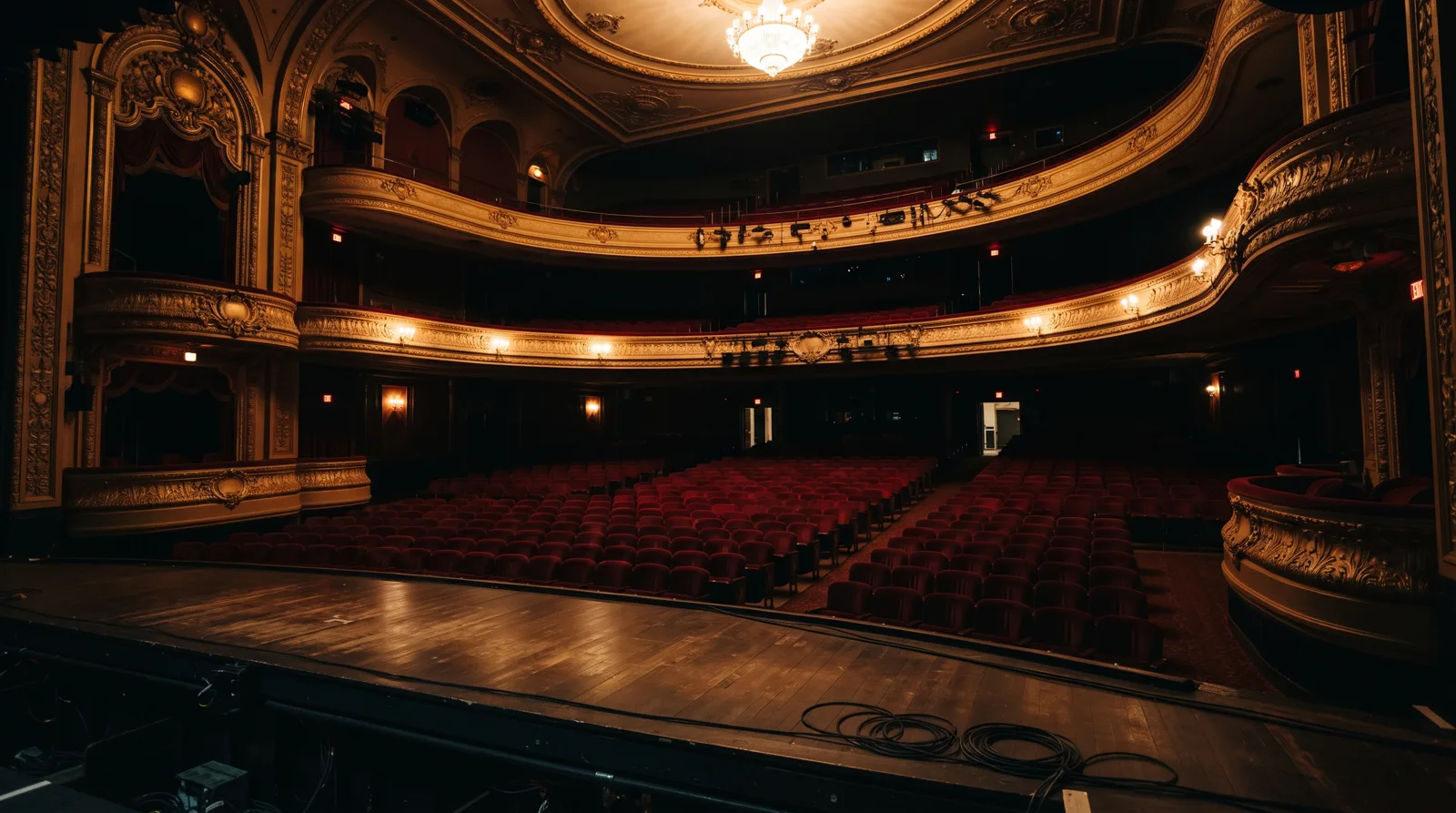
Here is the thing. Ekwu has built the second act around what I can only describe as a compression sequence. The ensemble begins scattered across the full width of the Meridian’s sixty-foot stage, bodies distributed in loose clusters, and over the course of eight minutes they converge, physically, into tighter and tighter formations, until the final image has all forty-three performers pressed into a column roughly ten feet wide at center stage. Lighting designer Britta Solms dims everything but a single backlit panel above them so that what you see is one mass of silhouette. Not dancers. A body. One consolidated body. In a show about organizing. I watched that happen and I forgot to breathe.
THAT is what technical direction in service of a story looks like.
Here’s where I have to be real with you: the first act has a pacing problem. Three scenes in the middle stretch reach for emotional ballast through exposition rather than through action, and the result is that the ensemble sits. Literally sits, on risers, while two characters work out the political stakes of a fictional 1978 congressional hearing. Nakamura is too smart a director to have missed this, which makes me think it was a choice, but it is a choice that costs the show about fifteen minutes of forward momentum. I noticed. The audience around me noticed. Someone behind me very quietly unwrapped a candy.
But then Solange Webb opens her mouth for the Act One closer, and the room reorganizes itself around her. Webb plays Josephine Mercer with the kind of specific physical intelligence that reminds you what this whole form is for. She does something in the staging of her breakdown number, “What the Body Remembers,” that I have to describe carefully: she starts the number standing completely still while the orchestra builds around her, and she lets the music reach a full eight-count of climax before she moves at all. Not late. Not behind. DELIBERATE. She is teaching the audience how to watch her, and by the time she finally commits to the first movement, they are so ready that the response is almost involuntary. The whole theater gasps. I gasped. It is surgical.
The industry conversation around “Fault Lines” right now is the same tired conversation it always runs on this kind of material: does the glam treatment do justice to the source? Does spectacle trivialize struggle? And my answer, after sitting in that theater and watching Ekwu’s compression sequence pull forty-three bodies into one, is that the question is backwards. The spectacle IS the argument. The body IS the politics. When you put radical content into a form that demands forty-three trained dancers and a sixty-foot stage and a lighting grid that costs more than my first three apartments combined, you are saying that this story is worth the full resources of the art form. You are saying: this belongs here, at this scale, in front of this many people. That is not diminishment. That is an act of insistence.
Solange Webb, for the record, is going to become one of those names you say at an opening-night party and the stranger next to you immediately knows who you mean. Mark it now so you can say you were early.
“Fault Lines” opens at the Hendricks Theater on November 14th. The industry is watching this one, and the industry is right. Get there before the word is so loud you cannot find a seat.