
Yes, Broadway musicals have live musicians playing with the cast at each performance. What you hear may also include electronic instruments, programmed sounds or recorded elements; the sound depends on the production. If a first-timer asks me one question about the music, that is the one, and the answer is the reason I still get a little rush when the lights go down.
Now let me tell you who is down there, because most people never find out.
The pit and the person facing the wrong way
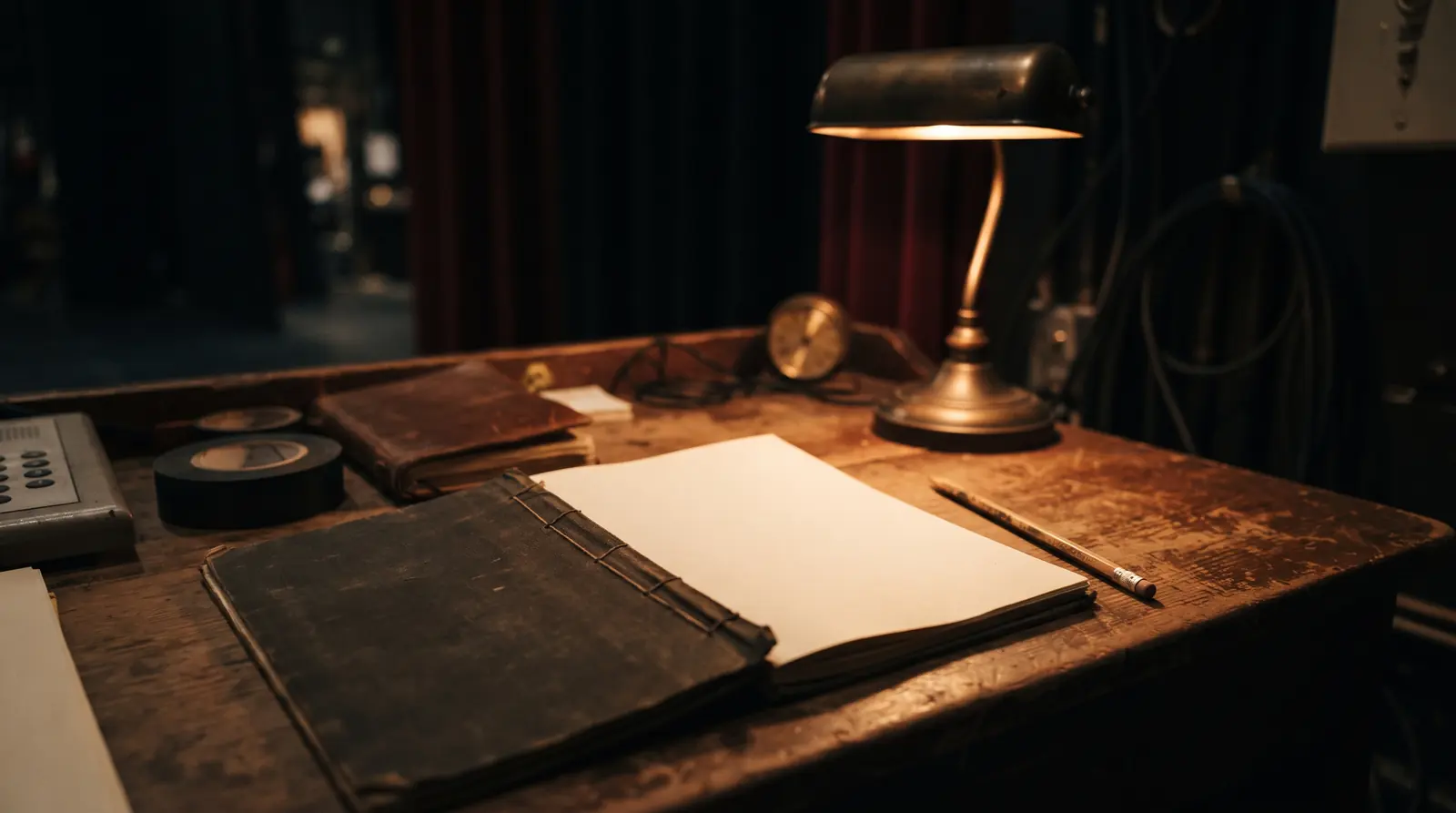
The orchestra pit is the sunken space between the front row and the stage. Look down over the edge before the show and you will often see music stands, a few instrument cases, and a glow of small lamps. That is the band’s office.
When the conductor is in the pit, they face the stage, with their back to you. They help hold the cast and band together, watching performers while the musicians follow their cues. A singer holds a note a beat longer on a Tuesday than on a Saturday, and the conductor helps the band follow. That is live theater in one gesture: the show breathes, and somebody is there to breathe with it.
Don’t mistake this for the film-score idea of an orchestra. Film music can be recorded in separate sessions and mixed afterward. A theater has a physical space and a budget, and the music has to work night after night. The score is orchestrated for the production.
Why the band is smaller than you expect
Here is where people get cheated in their own heads. They hear “orchestra” and picture the whole symphony. What they may get is a compact band. The mix of strings, winds, brass, percussion, keyboards and guitars or bass depends on the show.
Doubling is the secret. One player might sit with a clarinet, a flute and a saxophone within reach and switch mid-song. That is a real skill and nobody applauds it, so I will.
Picture a song first arranged for several acoustic instruments, then reorchestrated for fewer players with a keyboard covering some parts. The melody can stay while its color changes. Whether that is a loss depends on what the new arrangement does. A small band can sound rich; a large one can sound thin.
The musician in another room
Some players are not in the pit at all. Depending on the production, a musician may play onstage or in another room in the theater. A player away from the pit can follow the conductor on a video monitor and hear the rest of the performance through a monitor mix.
It sounds like a trick. It isn’t. The remote player still performs in the moment, while the sound team brings that instrument into the house mix. How naturally it joins the rest of the band depends on the room and the sound design.
Subs, deputies and the chair that never goes empty
Musicians get sick, have family emergencies and take other work. So there is a system of substitutes, often called subs or deputies, who prepare the book and can cover a chair for a performance. Think of it as the pit’s version of the understudy, only quieter. You may not see their name announced in your program.
This is normal and it is not a downgrade. Subs study the part and often observe a performance before playing it. If you hear something different from the cast album, remember that an album is a recording and tonight’s music is a performance. That is the point.
What a reduced orchestration means for your ears
A reduced orchestration is the version of a score written for fewer players. Some shows start that way and some get trimmed when they move to a different house, tour or revive. The consequences are practical.
You might hear different instrumental colors: a line once shared by several strings could sit on a keyboard, or a brass phrase could be reassigned. A smaller group does not automatically make lyrics clearer or big numbers less forceful; the arrangement, amplification and room all affect what reaches you. I want you to listen for those choices before deciding what the band can do from its size alone.
Where you sit decides what you hear
This is the part that actually helps you choose a seat. In the front rows, you may hear individual instruments cutting through, the snap of a snare, a trumpet hitting you in the sternum. You may also hear less of the overall blend. The balance varies with the theater and its sound system.
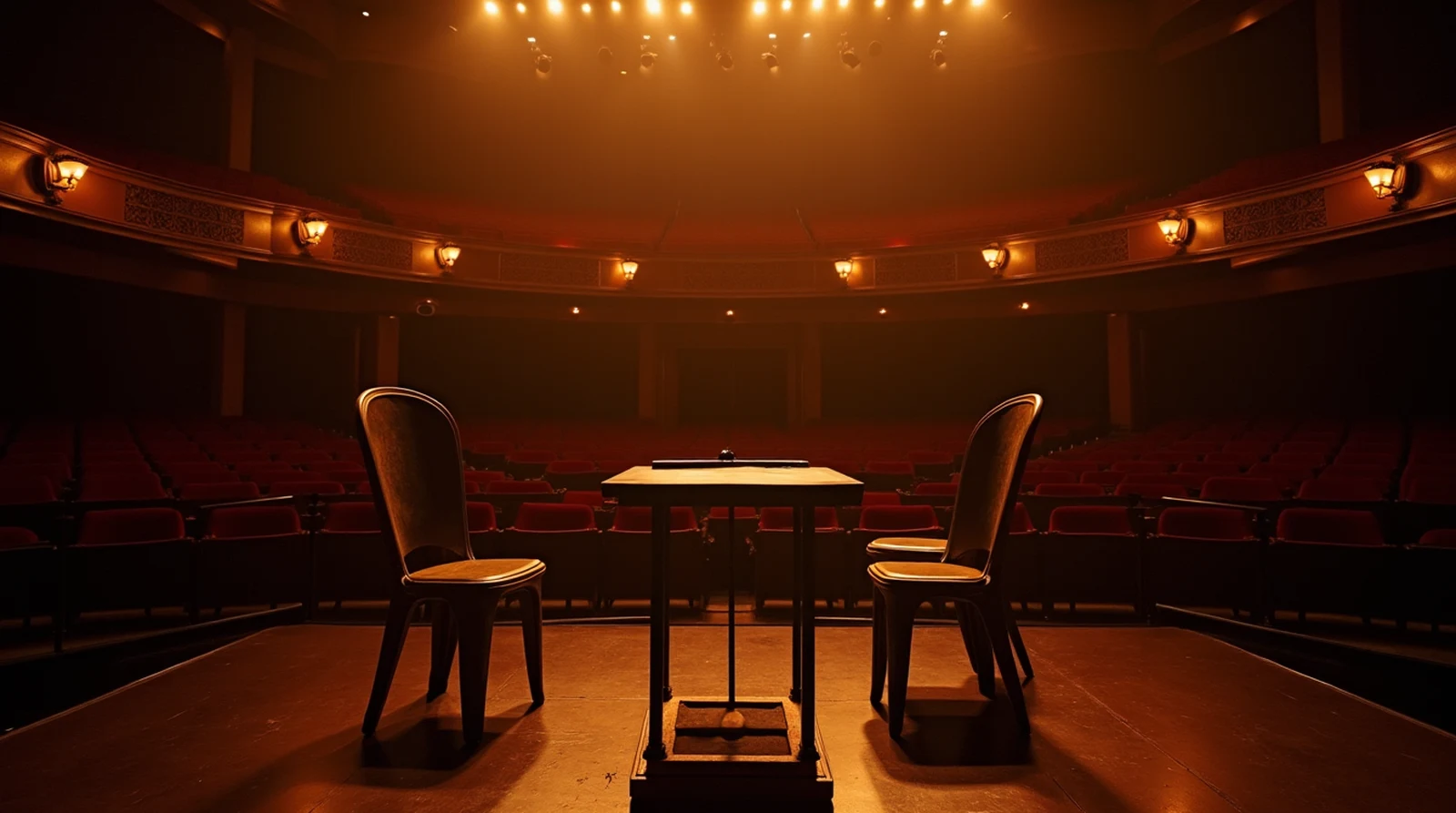
The front mezzanine is my first pick if you want to hear the band as a whole. You are farther from any one instrument, and high enough to see the stage picture clearly. For a longer comparison of every section, read my guide to the best seats in the house. The right choice depends on the show and the house, but for a score I came for, I start there.
One last thing, mija. When the lights come up for the bows, clap for the pit too. They are still playing you out, and half of them cannot see you at all. Estamos aquí.
Questions, answered
Is the music at a Broadway musical really live?
Broadway musicals have live musicians playing with the cast at each performance. Electronic instruments, programmed sounds and recorded elements can also be part of a production, so not every sound you hear necessarily comes from a musician in the pit.
Why can’t I see all the musicians?
The pit sits low in front of the stage, and a production may place players onstage or elsewhere in the theater. Players away from the pit can follow the conductor on a video monitor.
What is a sub or deputy musician?
A sub, sometimes called a deputy, prepares a regular musician’s part and covers that chair for a performance. Substitutions are a routine part of keeping a show running.
Do the seats I choose change how the orchestra sounds?
They can. Close seats may let you hear individual instruments more clearly; the front mezzanine often offers a more blended sound. Amplification and the theater’s acoustics also matter.