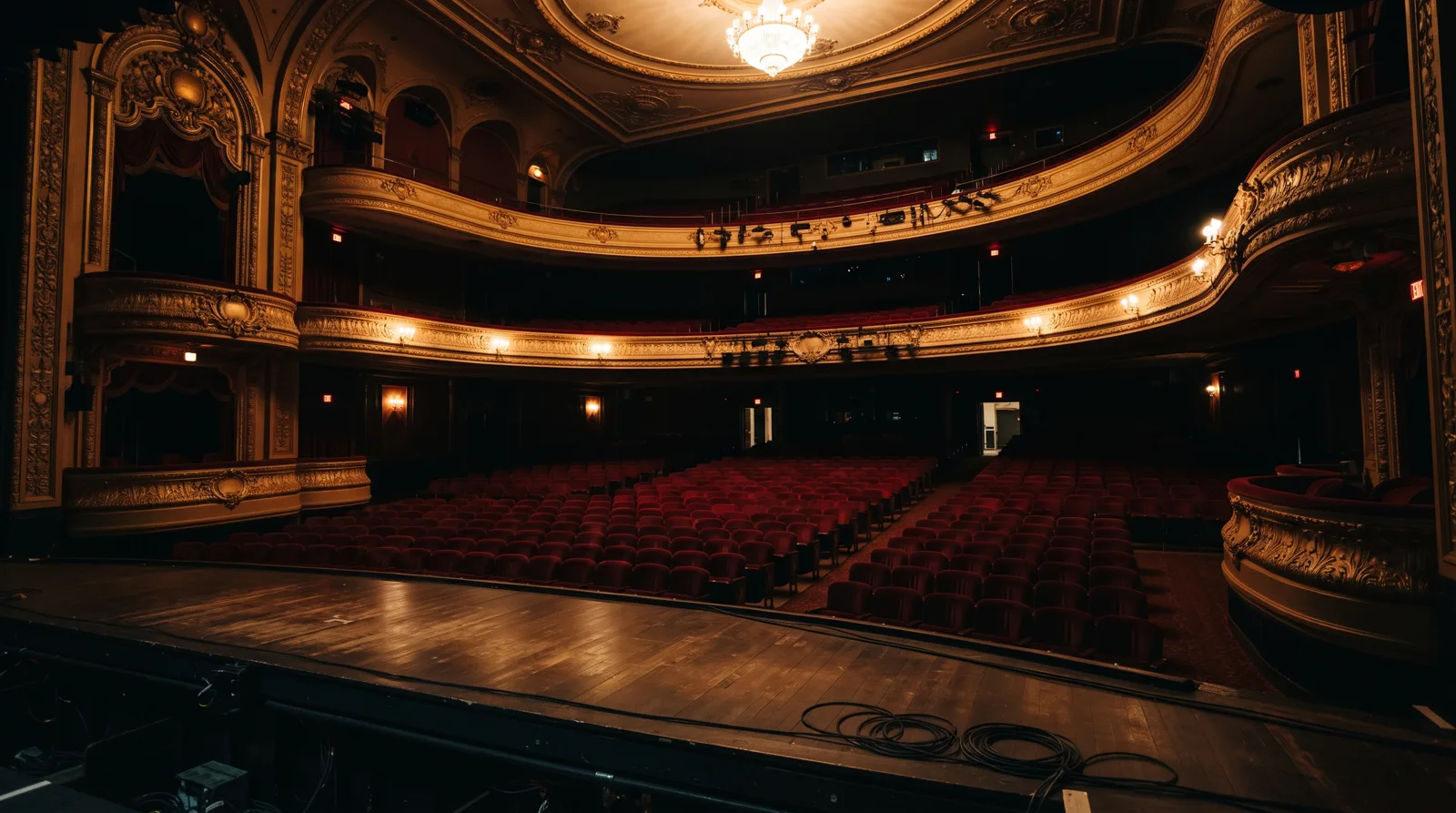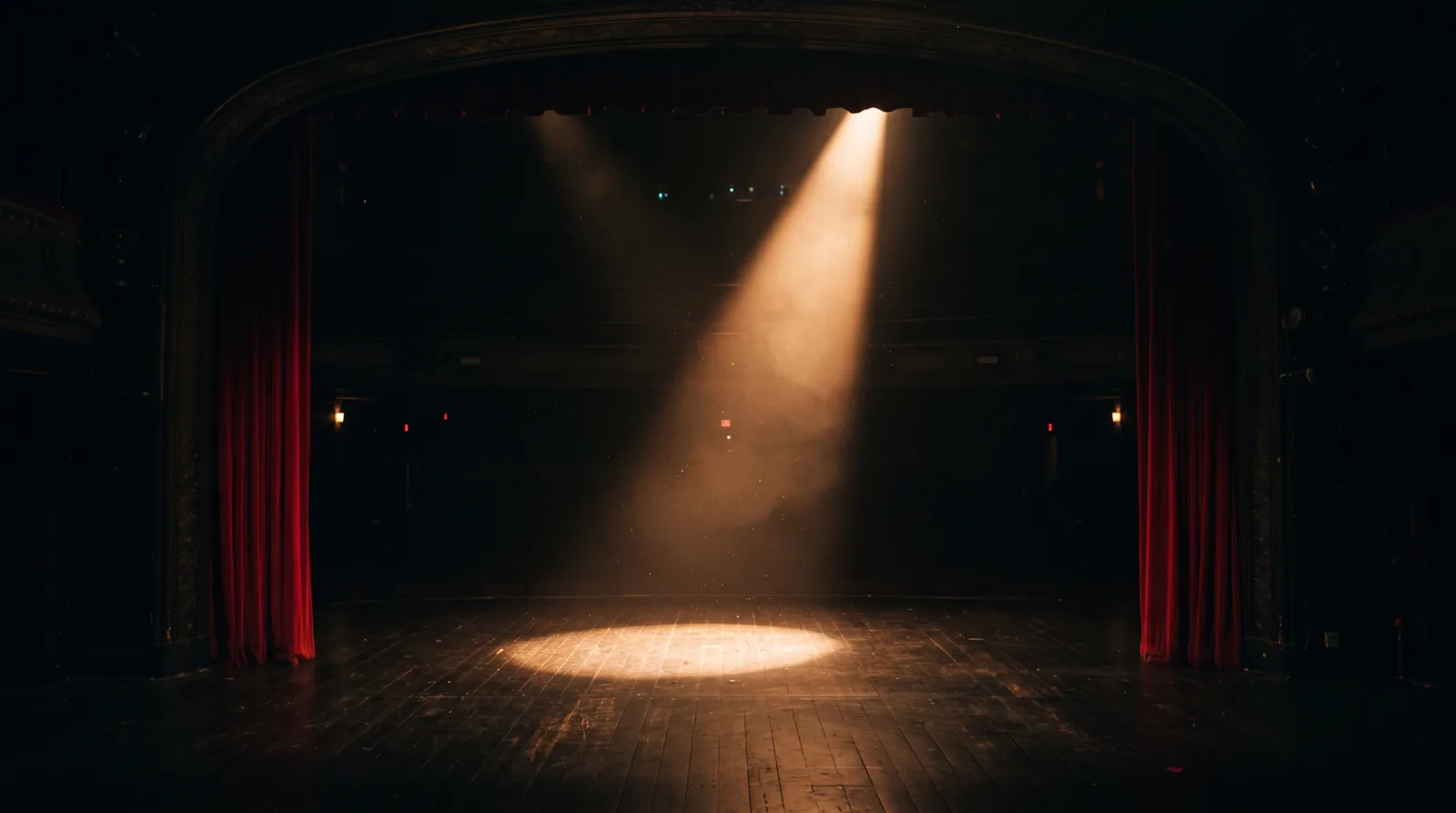

Okay, I need you to hear me clearly on this one: the licensing boom is not the enemy of the stage, and the choreographers who keep saying it is are missing the bigger picture. When a film property gets released for regional licensing, the industry’s first instinct is usually to groan about Hollywood strip-mining theater’s credibility. My first instinct was different. My first instinct was: somebody is about to need a LOT of ensemble.
Here’s what I’m watching right now. The development production of The Long Signal — adapted from the fictional 1977 international spy thriller of the same name, directed by Ottoline Marsh, choreographed by Jerrell Augustus — just finished its out-of-town run at the Caldwell Repertory in New Haven, and it is a case study in what happens when you put the right creative team on a cinematic property and let them do something the camera literally could not do in 1977. The camera could frame a woman running across a rooftop. It could not put thirty-two bodies moving in simultaneous radial formation with her at the center and give you the sensation of watching someone escape a collapsing world. That is what Jerrell Augustus has built in Act One, Scene Six, and it is SOMETHING.
Let me tell you exactly what it is. Augustus uses a technique I can only describe as pulse-and-scatter — the ensemble begins in tight clusters of four, each cluster moving in locked unison, and then on a single downbeat they break outward in simultaneous diagonals, bodies radiating from center stage in a pattern that looks, from the mezzanine, like a shockwave. The whole sequence is counted in seven, which is an uncomfortable meter that keeps your body just slightly off-balance as a viewer, and that is absolutely intentional. You are watching a woman running for her life and your nervous system is doing it with her. That’s choreography doing something a tracking shot cannot do.
Delphine Okoro — who originated a smaller role in the New Haven production but stepped up mid-run when the original lead withdrew — has been the conversation since February, and she deserves every syllable of it. Watch the moment in the second act where her character finally stops running. The breath she takes — not a performance breath, a decision breath — holds for four full counts before she moves again. Okoro understands that stillness is the loudest thing a body can do on a large stage. The audience in New Haven apparently went quiet at that moment. Loud theaters don’t go quiet for nothing.
The ensemble is doing the work that regional theater ensemble dancers almost never get credited for. Eighteen people holding the pulse-and-scatter formation at the top of Act Two while the lighting rig shifts from amber to cold blue — twenty-three gel changes across six seconds — is a physical and technical feat that requires the kind of collective breath awareness you usually only see in companies that have been working together for years. Lighting designer Paloma Ikeda is doing something very specific with that shift: she’s washing the floor first and letting the light rise, rather than hitting from above, which means the dancers’ faces stay in relative dark while their bodies become luminous. For a scene about a woman trying to be invisible, that is the correct call, and it’s a call that reads exactly once in a camera frame and lives forever on a stage.
Now here’s where I have to be real with you: the book, adapted by Tomás Veguilla from the original screenplay, is still fighting the plot. The second-act love interest subplot is paced like someone realized at the last minute that the original film had a love interest and decided to account for it in three scenes instead of earning it. It pulls tension from a second act that has otherwise been relentless. Ottoline Marsh is a precise director and I trust she will address this before the commercial transfer, but right now it is the one place where the stage is losing to the film’s tighter editorial cut.
What I keep coming back to is this: when a property gets released for regional licensing, hundreds of companies can now try this. Some will get the choreography right and the book wrong. Some will have eighteen ensemble dancers who have been dreaming of this kind of precision work. All of them will give somebody in a regional market an experience that no streaming platform can provide. That is the industry finally doing something useful with its own archive — and doing it LOUDLY.
See these shows. Support your regional theater. Make noise when the lighting rig hits the floor.