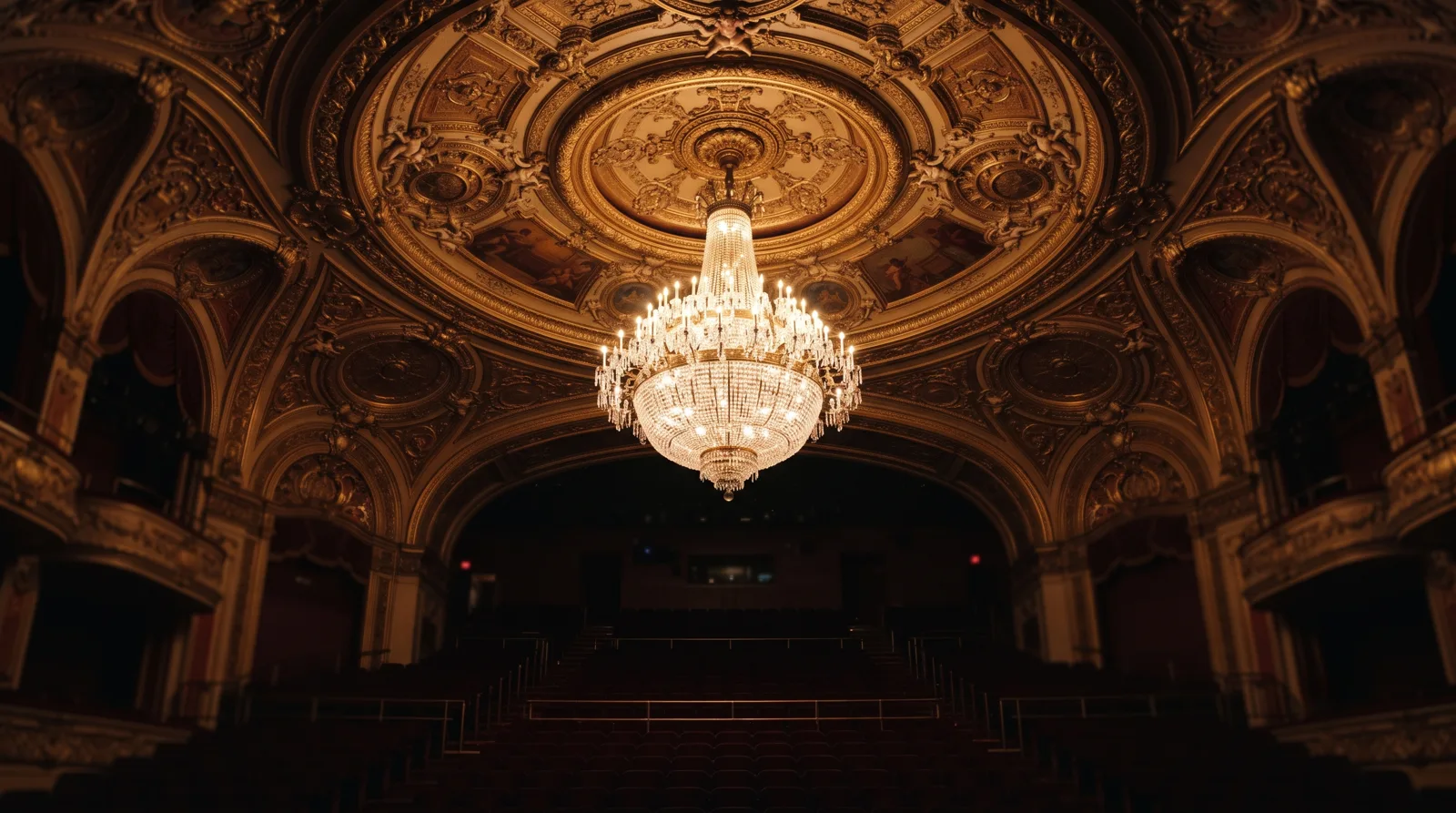

The Foundling Stage filmed “The Inventory of Damage” over three performances last winter, and the announcement that the stage film will debut on Clearview next month means that Celeste Vásquez-Tomlin’s most formally dangerous work is about to reach an audience that probably never would have sat in one of the Foundling’s famously uncomfortable fold-down seats. This is both good news and a test. The work does something specific with the conditions of live performance, and I am watching to see whether a camera can hold it.
What “The Inventory of Damage” does structurally is use the stage directions as live text. Not projected, not prerecorded: three ensemble members stand at the edges of the stage and read them aloud in real time, narrating the action as it happens. A woman removes her mother’s cardigan from a closet. Four plates wrapped in newspaper. One photograph, undated. Vásquez-Tomlin is working in the territory that Suzan-Lori Parks opened with her texts on the spells, the repetition-and-revision structures, the insistence that the written play and the performed play are not the same object. But Vásquez-Tomlin goes further into the breach. The gap between the narrating voice and the physical action becomes the play’s actual subject: what language can hold of grief, and what it cannot.
The script is quietly extraordinary. I say quietly because it does not announce its innovations. The stage directions are written in the second person, addressed to the woman performing them: “You move toward the window. You do not look out.” This creates a strange recursive loop in which the actress is simultaneously being instructed and observed, a closed system that somehow breathes. Director Rahel Asante controls the staging with enough restraint to let the text’s architecture do the work, which is exactly the right call. Over-directing this material would be fatal. Asante resists.
Lead performer Amara Diallo locates something very still at the center of the daughter character, which is where the role has to live. She is being narrated even as she acts. The potential for self-consciousness is enormous. Diallo does not play against it; she absorbs it into her physicality, so the instruction and the action become indistinguishable. It is very controlled and very exact work in a role that would swallow a less technically disciplined performer.
The limitation I have to name: the second act, in which the play extends its structure into the daughter’s confrontation with her absent brother by phone, runs about twelve minutes too long and loses the formal pressure it spent the first act building. Vásquez-Tomlin adds a fourth narrating voice during this section, and the addition dilutes rather than compounds. The architecture momentarily becomes schematic where it was precise. You feel the seams.
Now: will the film hold the play? The honest answer is partially. What Asante directed for the stage depends on the viewer’s physical co-presence with the instruction loop, the sense of occupying the same space as the narrating voices. The camera collapses that. Director of photography Tomás Wren was clearly thinking about this problem; he shoots the narrators in profile, rarely frontal, so they remain figures at the edge of the image rather than subjects of it. The choice is defensible. It is not the same thing as being in the room.
What it does preserve is the script. And the script, on its own formal terms, is one of the more genuinely structured new plays I have encountered in the last three years. Vásquez-Tomlin is working in a tradition that runs from Parks through the Sarah Kane of “Crave” and into the contemporary experimental playwriting that is still figuring out what the written text and the live body owe each other. She is adding something to that conversation, not just participating in it.
If you saw “The Inventory of Damage” at the Foundling and are wondering whether to revisit it on screen: yes, with the understanding that you are watching the recorded evidence of a play rather than the play itself. If you did not see it and this is your entry point, it is the right entry point. Vásquez-Tomlin is a playwright whose work you should know before everyone else starts citing her. You now have the chance.